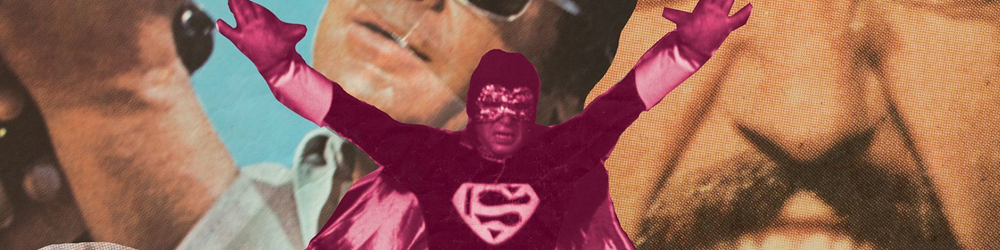
Contemporary Balkan Cinema: Transnational Exchanges and Global Circuits

Edited by Lydia Papadimitriou and Ana Grgić
Edinburgh University Press, 2020

Reviewed by Anna Batori, Babes-Bolyai University
DOI: 10.15664/fcj.v0i18.2273 

Following Dina Iordanova’s iconic monographs, and Dijana Jelača meticulous investigation on post-Yugoslav cinema and trauma, Contemporary Balkan Cinema: Transnational Exchanges and Global Circuits continues the exploration of Europe’s Other by focusing on the region’s post-economic crisis cinematic landscape.[1] Although the new millennium brought about remarkable achievements in terms of film festival successes, the significance of “the second century of Balkan cinema” (xxii) often remains unrecognised and under-negotiated in Anglophone scholarship. As part of the Edinburgh University Press’s ongoing series Traditions in World Cinema, Contemporary Balkan Cinema: Transnational Exchanges and Global Circuits aims to bridge this gap by country-by-country chapters on regional national cinemas, which lists Albania, Bosnia and Herzegovina, Bulgaria, Croatia, Cyprus, Greece, North Macedonia, Serbia, Slovenia, Romania, Turkey, Kosovo and Montenegro. The studies in the book primarily focus on transnational links in Balkan cinema in this way to bring the aesthetical, industrial, socio-historical as well as political perspectives of the often-overlooked cinematic region into a productive dialogue. More than that, one of the biggest achievements and novelty of Lydia Papadimitriou and Ana Grgić’s edited collection is that, as Iordanova herself also highlights in the book’s foreword, it veers away from the male-dominated cinematic historiography which put women filmmakers and the investigation of gender roles into scholarly background. Chapters on cinema of Cyprus (Constandinides and Papadakis, 87-100), Kosovo (Borrione and Muco, 121-139), Serbia (Daković, Milovanović and Leković, 190-208) or Slovenia (Petek, 208-228) all survey outstanding female directors -such as the Croatian Vlatka Vorkapić or Vanja Sviličić, the Bulgarian Mina Mileva, the Slovanian Maja Weiss, the Greek-Cypriot documentary filmmaker, Danae Stylianou, the SerbianVanja Kovačević, or the Kosovar Blerta Zequiri- whose work informs audiences of sexist and patriarchal traditions in society, and the struggle of female as well as queer characters in contemporary social sets. This refreshing perspective makes the collection challenge the old-fashioned and well-known scholarly consensus which declared that Balkan cinema “is brimming with testosterone”.[2]

The collection reconceptualizes contemporary Balkan cinema not only by adopting female perspectives on filmmaking but, instead of focusing on the system change and post-Yugoslav wars, it puts the year of the global economic crisis as starting point. Characterized by severe unemployment, migration, new tendencies of neoliberal policies, and the European Union’s neocolonist framework, the new era saw the re-birth of nationalist and racist ideologies which clearly left an imprint on cinematic productions.[3] Be that Bosnian (Jelača, 34-50), Montenegrin (Jovanovic, 139-154), Cyprian (Constandinides and Papadakis, 87-100), Serbian (Daković, Milonanović and Leković, 190-208) or Turkish cinema (228-250), the narratives of several films reflect upon contemporary existential stuckness and financial hardship – something that Pavičićearlier named as the “cinema of normalisation”.[4]

On the other hand however, the post-crisis years opened up ways to international and cross-border collaborations as well as film festivals that helped contemporary Balkan cinema to receive more attention and create in a great variety of (popular) genres (Doncheva, 52). The Montenegrin-Serbian Igla ispod praga/The Black Pin (Ivan Marinović 2016), the North Macedonian-Kosovar Vrakanje/ The Return (Kastriot Abdyli, 2018), the Bulgarian-Croatian Voevoda (Zornitsa Sophia, 2017) or the Croatian-Serbiab-Montenegrian Svećenikova djeca/The Priest’s Children (Vinko Brešan, 2013) are only a few of the collection’s mainstream examples, which, thanks to the inter-Balkan/inter-European coproductive background, successfully question orientalist approaches, while also sharing a unique South European flavour.[5] Paradoxically, the economic crunch thus fostered transnational and trans-ethnic interactions among filmmakers and production companies and resulted in a new wave of quality art as well as mainstream films and the growth of regional film festivals and participation. This “affinitive cosmopolitanism” (Williams and Myftari, 29), has provided “an opportunity for working through collective and individual trauma’ and strengthened cinema’s role to ‘destabilise dominant (…) hegemonic narratives about war and ethno-national belonging on a transnational scale” (Jelaća, 38). It seems that, while topics of war, trauma, ethnic and religious conflicts are still key topics of Balkan cinema, the new (cross-border) films communicate a more universal image of the region and its inhabitants. For instance, Constantin Popescu’s Pororoca (2017) presents a father’s personal crisis as he is trying to find her disappeared daughter, Erion Bubullima’s Sex, Storytelling and Cellular Phones (Sex, përrallë dhë cellular, 2015) narrates a domestic crisis and infidelity, while Miloš Avramović’s The South Wind (Južni vetar, 2018) and Janez Burger’s Ivan (2017) mirrors everyday crime, societal corruption and one’s trapped-like situation in the contemporary crisis-laden economic context. While the national past and present as socio-political frameworks cannot be overlooked in the post-2008 filmic corpus, new cinemas often reckon with the explicit representation of war, ethnic conflicts and stereotypical Balkan representations. The edited collection enumerates several less-known examples which operate on a global level and are worth of future examination. As the chapters illustrate, Balkan cinema has arrived in a new stage: the growing presence at prestigious film festivals, the increased participation of female filmmakers and new topics and perspectives all predicate a promising next decade for the region’s film industries and urgently call for further scholarly analysis. These might include gender perspectives in recent Balkan cinema, the impact on and presence of the economic crisis on screen and contemporary topics of migration, Europeanization and the very position, identity and role of the Balkans in contemporary socio-political and filmic discourses. As an institutional survey on the post-2008 cinematic Balkan landscape, Contemporary Balkan Cinema: Transnational Exchanges and Global Circuits is definitely the zero ground for that.


Notes

[1] See Dina Iordanova. Cinema of Flames: Balkan Film, Culture, and the Media. (London: BFI, 2001); Dijana Jelača, Dislocated Screen Memory. Narrating Trauma in Post-Yugoslav Cinema. (Cham: Palgrave Macmillan, 2016); and The Cinema of the Balkans (London: Wallflower Press, 2006); Slavoj Žižek, The Plague of Fantasies (London: Verso, 1997), 61-65.

[2] Mima Simić, “Gender in Contemporary Croatian Film,” in Contrast: Croatian Film Today, edited by Aida Vigan and Gordana P. Crnković, 89-100. (Zagreb, Croatia: The Croatian Film Association in Association with Berghahn Books, 2012)

[3] Dušan Bjelić,  “Introduction: Balkan Transnationalism at the Time of Neoliberal Catastrophe”, Interventions, Volume 20, Number 6 (2018), 751-758.

[4] Pavičić, Jurica, ‘“Cinema of Normalization”: Changes of Stylistic Model in Post-Yugoslav Cinema After The 1990s”, Studies in Eastern European Cinema, Volume 1, Number 1 (2010), 43–56.

[5] See for instance Jameson, Fredric. “Thoughts on Balkan Cinema.” In Subtitles: On the Foreignness of the Film, edited by Atom Egoyan and Iain Balfour, 232-256. (Cambridge, MA: MIT Press, 2004) and Longinović, Tomislav. “Playing the Western Eye: Balkan Masculinity and Post-Yugoslav War Cinema.”, In Eastern European Cinemas, edited by Anikó Imre. (London: Routledge, 2005), 35-47


The Pig’s Gaze: Human-Animal Mutuality in Kira Muratova’s Chekhovian Motifs

Based on Anton Chekhov’s short story “Difficult People” (Tiazhelye liudi, 1886) and one-act play Tatiana Repina, Kira Muratova’s Chekhovian Motifs (Chekovskie motivy, 2002) begins in a din of noise. A farmer traipses through the mud against a backdrop of squawking birds. He then starts chasing a goat, trying to corner it before the distressed animal outruns him.[1] These farmers are watched by a boy, who asks when they will finish work on the new barn. He is told that it will not be a barn but a store. Oddly agitated, the child responds: “No, it’ll be a barn.” Their conversation devolves into a shouting match over the building’s fate: “Barn!” (sarai!), “No, store!” (net, magazin!), “No, barn!” (net, sarai!). Their fighting startles the barn animals, and the soundtrack backslides into a garble of unintelligible yells and animal cries. From its outset, Chekhovian Motifs establishes the centrality of animals to its visual and aural economy. Not only are animals in close quarters with human beings, but language itself turns into a kind of non-linguistic noise resembling animal “talk.” This interspecies proximity, I argue, is the main theme of Chekhovian Motifs that invites us to interrogate the human’s separation from and, by implication, superiority over animals.

In line with what Mikhail Iampolskii calls Muratova’s “cine-anthropology” – that is, the ways in which Muratova harnesses moving images to probe questions of what constitutes humanness – Chekhovian Motifs draws analogies between humans and animals to expose their likenesses and to reiterate how humans work to establish difference.[2]  The film undertakes this deconstructive project through its topical and aesthetic mobilisation of cross-species looking, distorted language, non-narrative time, and allusions to the violence humans inflict on animal life.

The Pig’s Face

After the discord settles down in the opening of Chekhovian Motifs, Muratova presents an extreme close-up of her protagonist, Evgrav Shiriaev, the father of the farmstead’s family, played by the Russian actor Sergei Popov (a standby performer for Muratova). This close-up, though, is a disorienting one. It is a magnified image of Shiriaev’s facial hair and nose, with his upper face is cut out of the frame. The camera holds its focus, compelling us to linger on the matted texture of the man’s goatee. We notice stray black and grey hairs climbing up his cheeks, the slight wrinkles of his lips, his bulbous (Gogolian?) nose, and droplets of rain clinging to his coiling whiskers.

This textural image evokes what Laura Marks calls a “tactile gaze,” a mode of looking in which our encounter with an image is processed by drawing on other forms of sense experience.[3] Most often enacted through visual obfuscation, images of texture, or tracking shots, tactile looking frustrates our ability to engage an image purely optically. It appeals to our sensorial apprehension of an image’s material qualities. This bushy, somewhat indistinct close-up in Chekhovian Motifs (Chekhov famously sported a goatee) engenders a wandering gaze that registers the image’s texture.

The camera tracks upward to reveal Shiriaev’s face. We watch him wearily shut his eyes. The camera then cuts to the mud-spattered face of a pig staring back at Shiriaev staring at it. The extreme close-up of the pig’s snout replicates the previous image of Shiriaev: the thin hairs covering its face are similarly soaked by rain, its nostrils dominate the frame, and its eyes and cheeks are splotched by the wet dirt. We again register all the textural subtleties of this close-up.

Figure 1 and 2: Alternating close-ups of Shiriaev and the pig, which draw a parallel between the two.

The next image turns back to Shiriaev, who begins complaining about the rainfall and the wages he pays his laborers for what will be another lousy harvest. Cycling between close-ups of Shiriaev and the pig, which are shot in coarse black-and-white film that accentuates their bedraggled features, Muratova communicates the shared misery of a human and an animal on a decrepit farm that seems pulled out of the nineteenth century, Chekhov’s era. This scene of interspecies intimacy relayed by close-ups does not invite identification but tactile apprehension.

The close-up of this pig looking directly at Shiriaev – and, by turn, the camera – begs the question with which every scholar writing about animals in film must grapple. As John Berger asks in his seminal essay “Why Look at Animals?”[4] : What do we see when we look at an animal? Though we detect apparent layers of familiarity in any animal’s look, especially in one that is close to us, we must acknowledge, “despite all our convictions, all our knowledge, all our reasoning […] that we are looking at something that eludes our ability to form a concept.”[5] Though we know that animals cannot participate in human speech, their muteness “always accompanies us in the realm of our language.”[6]We lack the resources to fully articulate what we are watching and what is watching us. The animal look refuses more than it allows; it reminds us of a life, an existence, that echoes our own but remains distantly outside of language, and, therefore, the (human) mind’s reach.

Does this distance, though, foreclose possibilities for meaningful cross-species exchange? The shot-reverse-shot alternation between textural close-ups of Shiriaev’s face and the pig’s in Chekhovian Motifssuggests otherwise. The human-animal look incites what Barbara Creed calls a “creaturely gaze” – a mode of cross-species recognition that appeals to the viewer’s awareness of, and sensitivity toward, bodily engagement.[7] The absence of language in human-animal relations necessitates that they consist instead of “superficial” encounters, oriented in an appreciation for the material, surface qualities of living beings. The creaturely gaze “speaks to the viewers’ familiarity with […] bodily engagement, thus bringing into the relationship the animal body covered variously in fur, hair, wool, feathers, scales, skin […] The creaturely gaze draws on a range of senses.”[8] It presents an alternative mode of interspecies engagement beyond the operations of language. In Chekhovian Motifs, we develop an appreciation for Shiriaev and the pig as two bodies subject to harsh conditions; they are pelted by rain and dappled in mud, inciting our tactile awareness of their skin surfaces. The human’s presumed difference with animal life melts away. These haptic close-ups posit a human-animal mutuality that language precludes.

More than unflatteringly equating Shiriaev to a pig, Muratova here uncovers life’s creatureliness, the way all bodies are, first and foremost, corporeally exposed to the elements.

Kasha, Kasha, Televizor

After this noisy outdoor sequence, Muratova brings us inside Shiriaev’s family home. He enters the dining room, his family members rise, and they begin reciting grace. Yet everyone riffs on the before-dinner-prayer in their own way (or rehearses the father’s words at an uneven pace). In doing so, they create a similar cacophony to the one heard in the barn. Distorted, unintelligible noise invades the Muratovian home. It is not incidental that Muratova spotlights a wall-hanging quilt with an ear on it (another Gogolian grotesquery) to call attention to how Chekhovian Motifs strains listening. The quilt is cleverly placed under a portrait of Chekov himself.

Figure 3: The provincial family sitting down for dinner.

Shiriaev’s wife asks about the state of the barn being built, whereupon the children again launch into the argument of whether it will be a barn or a shop (Sarai!; net magazin!). Their back-and-forth has the effect of overwhelming our ears, so the words are uncoupled from their meaning, triggering a psychological phenomenon that linguists call “semantic satiation.”[9] This process occurs when our extended encounter with a given word (by durationally staring at or hearing it) generates a kind of mental fatigue. This linguistic oversaturation weakens our semantic associations with words, impressing upon us their status as acoustic constructions. Put simply, there is nothing inherent about the idea of a “barn” (or a “store”) that would lend it the sound designation of “b-a-r-n” or “s-t-o-r-e.” Semantic satiation waterlogs perceptual input, laying bare the fundamental arbitrariness of words’ (i.e., signs’) relations to that they intend to signify.

In Chekhovian Motifs, the children’s back-and-forth of whether the edifice will be a “barn” or a “shop,” repeated ad nauseam, suggests language’s unstable relation to the essence of a thing. To call a building a sarai is as arbitrary as to designate it as a magazin. Throughout this dinner table scene, which mirrors the Last Supper, Muratova intensifies our feelings of semantic satiation. The children stop squabbling about the barn only to start repeating the words of gratitude expressed by Shiriaev’s eldest son for being given money to start a new life out of town. They regurgitate the phrase “thank you” (blagodariu vas) at least thirty times, whereafter Shiriaev’s wife starts urging her husband to lend their son more so that he can purchase nicer clothes. “At least for a sweater for him to buy,” she demands, “it’ll look bad [smotret’ stydno] if not.” Every request she makes, she repeats at least three times. In the background, the children then start chanting: “Oatmeal, oatmeal, television” (kasha, kasha, televizor). The chant is occasionally broken up by their intoning of “mormyshka,” an alliterative Russian word for a “fishing lure.” This hurricane of speech pulverises our aural capacities into something akin to “kasha,” a soup of sound and affect.

Incited by this din, Shiriaev jumps out of his chair and expels a frustrated cry. Then, he starts slamming his head with his fists and growling in exasperation. His capacity for “semantic satiation” has reached its breaking point; he reacts to the phenomenon of linguistic overstimulation in exaggerated nonverbal gestures, like an animal. It as if this outburst represents the human’s inability to confront the fundamental arbitrariness of language. Shiriaev’s family has been reduced to a kind of pre-semantic state in which language loses its capacity for meaning-making. One can only “meaningfully” express oneself through gestures, guttural noises, and emotive displays.

Figure 4: Shiriaev explosively reacting to his family’s incessant talking.

In this way, Chekhovian Motifs replicates an animal’s auditory experience of the world. Animals navigate their world via sound devoid of linguistic “content”: by grunts, murmurs, screeches, roars, yelps, and growls. For animals, it is the material texture of sound that is of importance. Muratova, I suggest, here exposes the arbitrariness by which humans have historically privileged and fetishised their own peculiar mode of communication of words and syntax over the nonverbal interactions of animals. It was Aristotle in Politics who wrote:  “The mere making of sounds serves to indicate pleasure and pain, and is thus a faculty that belongs to animals […] But language serves to declare what is advantageous and what is the reverse, and it is the peculiarity of man, in comparison with other animals, that […] makes a family and a city.”[10]For Aristotle, language is the fault line between humans and animals because it allows individuals to construct a society, a polis, separate from nonhuman life. In Chekhovian Motifs, however, Muratova disabuses us of the illusory distinction between language and animal-speak. What is a word, after all, if not the “mere making of sound”? We have erroneously convinced ourselves that speaking people are of a higher order than non-linguistic animals. If the pig’s gaze seen in the film’s opening suggests that there might be more to human-animal relations than language allows, then this following episode lays bare the animality of language: repetition, alliteration, vowels are our own animal cry.

Be quiet!

The dinner table scene gives way to the second act of Chekhovian Motifs, which, for nearly an hour, takes place at a church ceremony. After Shiriaev’s eldest son leaves home, he is picked up by a Toyota truck, alerting viewers that Chekhovian Motifs unfolds not in the nineteenth century but at the time of the film’s release in 2002. He is taken to a wedding ceremony at an Orthodox church, where Muratova satirises the wealthy attendees who perfunctorily go through the motions of the liturgy, suggesting the performative status of religion and piety in the post-Soviet world.[11] The church bells are, indeed, replicated by the car horns of fancy automobiles; wealth has become the new religion of modern Russia and Ukraine. However, this scene is more than simply social critique.

Muratova decided to shoot the wedding in real-time so that her viewers could experience the ritualistic ceremony, which recalls certain scenes from Sergei Eisenstein’s Ivan the Terrible (1944; 1946), as her characters do. “Muratova has made time the central hero of this film,” Zara Abdullaeva wrote.[12]  It invites an alternative encounter with eventhood and duration unlike our traditional experience of film rhythm. The narrative logic of classic cinema, as the film theorist Gilles Deleuze says, is relayed through the “movement-image,” revealing itself through fast-paced action and a forward-moving plot, propelling viewers to eventual climax and resolution.[13] In Chekhovian Motifs, however, Muratova has us dwell in the liturgy in which “nothing” happens. The episode studies how humans confront non-narrativised, non-instrumentalised time.

Figure 5: The elaborate church ceremony, filmed in real-time.

In the church, some onlookers distract themselves with inappropriate jokes, others whisper secrets and pass judgements, and almost everyone vacantly gazes ahead. The church’s solemn music is matched by incessant coughing, sneezing, and exaggeratedly loud yawning, and the “chorus” of guests telling each other to “Be quiet!” (tikho!) creates an ironic parallel soundtrack. Without narrative, humans devolve into restlessness, chatter, and absent-mindedness. The church attendees, like Muratova’s viewers, await a return to the time-based order outside the liturgy. Chekhovian Motifsanalogises the durational wedding with an earlier sequence of animal feeding.

Sandwiched between the dinner table and the liturgy, the two poles of Chekhovian Motifs, Muratova takes us back to the barn, where we first see several pigs fitfully walking in and out of the frame. The snouts and eyes of these pigs are obscured as they sniff out food on the ground, so the viewer struggles to determine where one animal ends and another begins (fig. 6). These amorphous porcine bodies then give way to a shot of geese, whose elastic necks similarly disorient the visual field as they haphazardly stretch forward and backward. Muratova calls attention to the peculiar spectacle of goose necks in a few close-ups of the birds staring and squawking at the camera. More birds enter the frame loudly clucking and gobbling. This barnyard episode depicts animals in chaotic formations that generate an intense multiplicity of affect, bodies, and sounds.

Figure 6: The bodies of pigs filling the visual field.

The restlessness and disruptiveness of animals here anticipate the behaviour, looks, and noise of the humans seen at the wedding ceremony. The crowd of churchgoers blurs together the same way that the pigs do in a welter of ornaments, fabrics, and relics that dislocates our perceptual coherency as viewers, and the peculiar physicalities of the geese mirror the grotesque expressions of the outlandish churchgoers, who boorishly comport themselves in God’s house. Released from the pressures of time and narrative, Muratova shows how humans “devolve” into unruly animal-like configurations. Stripped of “plot,” the artifice of “humanity” collapses. Our humanness, for Muratova, hinges not only on the arbitrary privileging of speech over non-linguistic noise, deconstructed at the dinner table but also on time-based narrative. Dwelling in time, Muratova shows we behave no different than fidgety, raucous geese and pigs.

Humanness, Chekhovian Motifs suggests, is a façade; we employ language and narrative time to distance ourselves from animality, to lacquer over our likeness to barn animals. And this façade has consequences. After the feeding scene, a shot presents two horses standing in the frame, and the background fills with the sound of a chainsaw. Their ears perk up, registering the clangour. The contrast between the grating noise and the gorgeous visuals of the horses conjure up an unnerving feeling, alluding to the ways barn animals are processed – literally sawed up – for human consumption (fig. 9). This fleeting montage suggests animals are threatened in ways humans are not, despite what Chekhovian Motifs posits as their intrinsic yet obscured similarities. Besides language and narrative, Muratova implies, humans uphold humanity through violence. To kill an animal to eat it – we recall an earlier image of a man dismantling a chicken carcass (a close-up that itself reminds us of scenes of meat-eating in Asthenic Syndrome) – is to simultaneously announce and renounce human likeness with animals (fig. 10). It is a radical act of identification, an engulfment of animals into the body, made possible by annihilating animal lives. Chekhovian Motifs urges sensitivity not only to how we resemble animals but also to how we establish difference from animals – a difference that, for Muratova, is both artificial and lethal.

Figure 7 and 8: Close-ups of the elongated necks of geese and grotesque facial expressions of the churchgoers.

Figure 9: A shot of two horses backdropped by the sound of a chainsaw.

Figure 10: A shot of a man’s hands stripping meat from animal bones at the beginning of the film.

Conclusion

Certainly Muratova, as Nancy Condee writes, dismantles the boundaries between humans and animals in Chekhovian Motifs, as she does in all her films, to expose and mock the “predatory ambitions,” stupidities, and pretensions of humankind.[14] But perhaps Muratova also analogises humans and animals in a more ethically minded mode? Muratova portrays human beings in ways that do not place them on the other side of a divide with animals. Muratova’s “failure” to affirm human uniqueness might be a basis for cross-species solidarity in which any being’s claim to superiority is undercut. Demoting human ontology is another version of promoting that of the animal. The goal is not to treat people like animals – at least as humans presently treat them – but to extend animals the consideration that we reflexively do to other humans. Chekhovian Motifs invites recognition that we inhabit the world with nonhuman lifeforms with whom we are dangerously alike yet whose likeness we disguise to preserve a stable, exclusive category of who “we” are. Animalising her humans and anthropomorphising her animals, Muratova puts pressure on that binary. “Maybe,” Erica Fudge says, “animals are more like us than we want to imagine and the label ‘anthropomorphism’ merely allows us to recognize and devalue it simultaneously.”[15] The human-animal levelling in Chekhovian Motifs is not simply an anti-human polemic. It urges awareness of the human’s animal latency which might generate the foundation needed not for a Hobbesian, dog-eat-dog world but a more capacious vision of species community and belonging.


Notes

[1] This episode recalls the tormented cat pinned down by several construction workers in a grave-like pit at the start of Muratova’s Asthenic Syndrome (Astenicheskii sindrom, 1989).

[2] Mikhail Iampol’skii, Muratova: Opyt kinoantropologii (Sankt Petersburg: Seans, 2008).

[3] Laura U. Marks, Touch: Sensuous Theory and Multisensory Media (Minneapolis: University of Minnesota Press, 2002), 2.

[4] John Berger, “Why Look at Animals?”, Why Look at Animals? (London: Palgrave, 2009), 35.

[5] Marcus Bullock, “Watching Eyes, Seeing Dreams, Knowing Lives,” Representing Animals, ed. Nigel Rothfels (Bloomington: Indiana University Press, 2002), 99.

[6] Ibid.

[7] Barbara Creed, “Animal Deaths on Screen: Film and Ethics,” Relations 2.1 (June 2014): 15-31.

[8] Ibid., 26-27.

[9] John Kounios, Sonja I. Kotz, Phillip J. Holcomb, “On the Locus of the Semantic Satiation Effect: Evidence from Event-Related Brain Potentials,” Memory and Cognition 28.8 (2000): 1366-77.

[10] Aristotle, Politics, trans. Ernest Barker (Oxford: Oxford University Press, 1995), 11.

[11] Jane Taubman describes the ceremony as “another superficial affectation of the New Russian style.” Taubman, Kira Muratova (London: I.B. Tauris, 2005), 101.

[12] Zara Abdullaeva, “Sarai ili magazin?”, Iskusstvo kino 11 (2002): 37-44; also, cited in Taubman, 103.

[13] Gilles Deleuze, Cinema 1, trans. Hugh Tomlinson and Barbara Habberjam (Minneapolis: University of Minnesota Press, 1986).

[14] Nancy Condee, The Imperial Trace: Recent Russian Cinema (Oxford: Oxford University Press, 2009), 130.

[15] Erica Fudge, Animal (London: Reaktion, 2002), 144.

Bibliography

Abdullaeva, Zara. ‘Sarai ili magazin?” Iskusstvo kino 11 (2002), pp. 37-44.

Aristotle. Politics. Trans., Ernest Barker. Oxford: Oxford University Press, 1995.

Berger, John. “Why Look at Animals?” Why Look at Animals? London: Palgrave, 2009, pp. 12-37.

Bullock, Marcus. “Watching Eyes, Seeing Dreams, Knowing Lives,” Representing Animals. Ed., Nigel Rothfels.

Bloomington: Indiana University Press, 2002, pp. 99-118.

Condee, Nancy. The Imperial Trace: Recent Russian Cinema. Oxford: Oxford University Press, 2009.

Creed, Barbara. “Animal Deaths on Screen: Film and Ethics.” Relations 2.1 (June 2014), pp. 15-31.

Deleuze, Gilles. Cinema 1. Trans., Hugh Tomlinson and Barbara Habberjam. Minneapolis: University of Minnesota Press, 1986.

Fudge, Erica. Animal. London: Reaktion, 2002.

Iampol’skii, Mikhail. Muratova: Opyt kinoantropologii. Sankt Petersburg: Seans, 2008.

Kounios, John, Sonja I. Kotz, Phillip J. Holcomb. “On the Locus of the Semantic Satiation Effect: Evidence from Event-Related Brain Potentials.” Memory and Cognition 28.8 (2000), pp. 1366-77.

Marks, Laura U. Touch: Sensuous Theory and Multisensory Media. Minneapolis: University of Minnesota Press, 2002.

Taubman, Jane. Kira Muratova. London: I.B. Tauris, 2005.

Author Biography
Raymond De Luca is a Ph.D. candidate in Slavic Languages and Literatures with a secondary field certification in Art, Film, and Visual Studies at Harvard University. He is currently writing a dissertation on animal life in Soviet culture and film, tentatively titled “The History of Animal Life and Death in Soviet Cinema, 1917-1991.” The project explores how humans’ ever-fluid attitudes toward and ideas about animals were translated onscreen throughout the Soviet period. Raymond’s writings on film have been published in Canadian Journal of Film Studies, KinoKultura, Slavic and East European Journal, and Film Criticism. Raymond received his B.A. in history from Haverford College in 2014 and an M.A. in Russian Studies from Middlebury College in 2018.

Escape to Totality: Realist Commitments in The Florida Project’s iPhone Finale

DOI: 10.15664/fcj.v18i1.2260


Halley and her daughter Moonee – the family at the centre of Sean Baker’s The Florida Project (2017) – live in the Magic Castle hotel on the outskirts of Disney World Resort in Florida. They survive on the edge of homelessness, vacating their flat every month to avoid establishing the “permanent residency” prohibited by the hotel. Halley makes money via occasional grifts and sex work, and relies on her neighbours for meals and childcare. Moonee spends her days roaming the complex and its surroundings with her friends Scooty and Jancey. Like Vittorio De Sica’s Umberto D (1952), the film’s structure hinges on the clockwork uncertainty of paying rent. And, as in Ken Loach’s Ladybird, Ladybird(1994), the regulation of the family, at the hands of child welfare services and the police, hangs over the film. The spectre of state intervention materialises in the final sequence, as a pell-mell of officials attempt to take Moonee into custody. Halley screams and protests. Moonee escapes to Jancey’s apartment, but she can only communicate in heaving sobs. At this point, the footage switches from 35mm to iPhone 6s Plus. Jancey takes her friend’s hand, and they run through car parks, highways, tunnels, and crowds, to the real Magic Castle in Disney World. The editing is accelerated – 17 shots over an 80 second sequence – and there is the second use of non-diegetic sound – an orchestral version of Kool and the Gang’s funk classic, “Celebrate”, referring back to the use of this track during the opening credits.

The Florida Project works in the lineage of social realism, with its use of locations, non-professional actors, long shots, and its rejection of non-diegetic sound. Echoing contemporary reviews, scholarly responses to the film’s ending have emphasised its departure from this realist aesthetic.[1] The finale certainly constitutes a rupture with the version of realism that precedes it, particularly in its self-conscious use of music; this rupture is intensified by the shift from celluloid to the infinitely-manipulable pixelation of the iPhone, severing the film’s ontological connection to an antecedent reality. Those who dismiss the realist credentials of this scene out of hand are indebted to a reading of André Bazin that connects a set of stylistics conventions typified by Italian neorealism to film’s privileged access to the real via its indexical quality.[2] For Bazin, realism is an “achievement”, a moral quality that films attain when their style fully expresses cinema’s photochemical foundation.[3] This essay is less concerned with the ontological, stylistic, or ethical meanings of realism than with the ways that the final sequence of The Florida Project aims towards the illumination of a “social totality”, the sum of present relations that constitute the social order.[4] Designating the scene as realist is a way of rescuing the intimate relationship between this seemingly fantastical, anti-realist moment and the external world of production, circulation, social relations, and technology. The film’s ending reaches beyond profilmic reality and speaks to the material conditions of filmmaking while grounding its representational content in the reality of labour, affect, contingency, and media ecology.

Social Reproduction

Critical responses to this finale ranged from disappointment to adoration.[5] The antipathy can be explained, in part, by how the sequence challenges the typical function of the child character as witness to the suffering and social ills of the adult world.[6] Moonee and Jancey abrogate their observational responsibilities – denying the audience further insight into the unfolding drama – as they supplant the inertia of looking with the activity of refusal. Their escape returns us to the self-sufficiency that the children display throughout the film: in this respect, the sequence is not a departure from the narrative that has preceded but an intensification of it. The friends’ clasped hands, centred for most of the shots, are a foundational image of empowered interdependence, distilling the film’s fundamental orientations: towards roving, under-supervised children and the autonomous social relations of survival that they cultivate. Like the film as a whole, the scene appears, on first blush, to be preoccupied with play, but it is more interested in a neglected form of labour. These children experience a dearth of care, and their itinerant roaming throughout the film is a manifestation of this. The labour of creating and recreating healthy subjects capable of producing value – social reproduction – is in short supply.

The transition to iPhone is preceded (possibly precipitated) by Moonee’s tears. The moment is moving but unsettling: as Karen Lury points out, “messy behaviour” like crying always opens the possibility that the filmmakers are exploiting a child’s genuine distress.[7] Regardless of whether Lury unfairly effaces the craft of child performers, the corporeality of Moonee’s snot and tears emphasises the actor’s labouring body. The subsequent flight to Disney World also gave the filmmakers the chance to underline the work of the child performers. Explaining the decision to let the children enjoy the park for a few days after shooting, Baker said “How can you bring two little children into that park and just have them work and go home? I’m not evil!”[8] Baker counters the myth of spontaneous, play-based child performance, focusing instead on the work of acting and his status as a manager. Complimenting this paratextual discourse, The Florida Project’s narrative reveals that child labour is not an aberration of the film industry: Moonee works with her mother on stings and scams, and these survival skills become, in Achille Mbembe and Janet Roitman’s words, “new forms of public knowledge” that they use and exchange in order to sustain their precarious lives.[9]Unchaperoned and left to wander freely, Moonee and her friends are also responsible, in part, for their own social reproduction: they provide themselves with food and support, and, in a more long-term process of self-transformation, they socialise themselves towards their future status as consumers and producers within the capitalist economy.[10] The children’s escape in this final sequence does not eschew representational realism but, by bringing the film’s promotional materials into contact with the profilmic world, serves to reinforce the film’s most trenchant interventions around reproductive labour within contemporary capitalism.

Affect and Contingency

The ending is an extension of the partial, fragmented, child’s eye perspective present throughout the film. Except for two brief pairs of smile, the audience is denied Moonee and Jancey’s faces, the usual vector of affective transmission from the sovereign character to the sovereign spectator; instead, we have what Eugenie Brinkema calls the “forms of the affects”, emotional states that reside not in spectatorial embodiment but in the “details of specific forms and temporal structures”.[11] The plenitude of movement, sound, and colour articulates the form of joy: joy is the excess of form itself, the fulness of music and image. The glut of edits provides a plenitude of perspectives and vistas, each cut conjuring the joy of the new. Images of bodily touch – the compositional centrality of clasped hands, the children jostling past tourists, the camera brushing against blades of grass – express the form of neediness, the sense of fragility that comes from a realisation of dependency on others. Touching bodies always underscore this fundamental capacity to be affected. The iPhone photography also provides the impression of contact between all the onscreen bodies, as the lower resolution creates a more porous border between objects than 35mm. In bringing these forms together, the film draws our attention to the transcendental relation between them: neediness is the necessary condition for the possibility of the experience of joy. Francesco Stichhi identifies this as the film’s “affective integration” of happiness and precarity.[12] Similarly, Jennifer Kirby sees the co-presence of a “utopian feeling” with a “seemingly hopeless environment”.[13] This binary that Stichhi and Kirby locate throughout the film can be extended into more material terrain when considered in relation to the denouement. On one side is the state, represented by social workers and police, that via the “organized abandonment” of certain (often racialised) populations metabolises neediness into a vulnerability to violence and premature death.[14] On the other side, represented by Moonee and Jancey’s escape, is the possibility of the mutual recognition of neediness in autonomous social relations of care and joy. The realism of the finale rests, then, in its aspiration to present an affective totality.

By entering the walls of Disney World, the film opens up to the chaotic possibilities of contingency. This realm of unpredictability is constituted via the crowd, a body stubbornly opposed to orchestration or mapping. It is this recalcitrance to authorship that grants contingency its key role in classical theories of realism. For Bazin, contingencies of production and profilmic reality are the greatest markers of realism. It is the haphazard fact of Louis the XVI’s skewed wig in Jean Renoir’s La Marseilleise (1938), for example, that definitively indexes the medium’s privileged ontological relation to external reality – a rupture with scenic or narrative determinism that refers back to the material foundation of the film.[15] Kracauer’s account of realism, on the other hand, centres the contingent moment in film, not for its relation to indexicality, but for its deep affinity with the lived experience of modernity.[16] Images of the “incalculable movements” of crowds represent, for Kracauer, cinema’s unique capacity to capture the contingencies of “transient material life”.[17] It is significant that the final shot ends, not when the children enter the Magic Castle, but when they are subsumed into the crowd. The hope of this ending lies in this process of assimilation: Moonee and Jancey enter an aleatory world in which things could be otherwise. This is why Kracauer’s vision of the inherently contingent crowd opens a “tiny window of survival”.[18] The close of The Florida Project delinks contingency and indexicality, sacrificing the photochemical reference to film’s material foundation embedded in 35mm, while, from shot 11 onwards, venturing to a site of extreme contingency, the clandestinely filmed crowd. This move not only imbues iPhone footage with the quality of the real by virtue of its capacity to capture the contingent; it also proffers a definition of realism that emphasises access over reference. The scene is a totemic instantiation of what Mary Anne Doane has called cinema’s “ongoing structuring of the access to contingency”.[19] By virtue of its ubiquity and consequent capacity for accessing otherwise proscribed spaces, the iPhone is automatically a technology of realism. Lucía Nagib notes that digital cinema can capture “risk, chance, the historical contingent and the unpredictable real” in part because it enables shooting in locations that would be otherwise impossible to reach.[20] Again, this frames the question of realism around the edicts of access.

Figure 1, 2 and 3: Images of bodily touch

Figure 4: The children are subsumed into the crowd in the final shot

Media Embeddedness

Writing about realism in contemporary art, Gail Day argues that a totalising picture emerges from three distinct registers of historically situated engagement: “the dialectics of the materiality of the image qua image, of materiality in the image, and the materialism of representation’s own embeddedness”.[21] The first two “materialisms” are familiar: roughly, indexical correspondence and representational verisimilitude. The third is thornier: the imperative to engage with the cultural and technological context that produces the image’s meaning. The Florida Project’s finale is an engagement par excellence with (post)cinematic representation’s embeddedness in a material ecology of image production. The idea of embeddedness was expanded and nuanced through the discursive materials around the film. A mythology emerged around the film’s conclusion which highlighted the necessity of employing iPhone footage to circumvent the prohibition against filming inside Disney parks – a discourse that underscores the question of access. In this context, it was easy for some commentators to trivialise the formal shift as a merely functional consequence of particular production circumstances. Without falling into a crude intentionalism, it is worth noting that the creative team chose to use the iPhone 6s Plus, with its distinctive rolling shutter, because it produced a more obviously “jarring” aesthetic shift than the iPhone 5.[22] As such, the spectatorial experience of a formal disjuncture does not emerge purely from circumstantial problem-solving. Nevertheless, the discourse of necessity seeped into reviews, interviews, and other promotional materials, creating a platform to discuss The Walt Disney Company in the register of securitisation, surveillance, and cultural enclosures. Through the paratextual realm of press junkets and director profiles, The Florida Project casts Disney, not as a joyous dream-weaver, but as secretive and authoritarian. The film positions itself in the banlieues of an image economy in which Disney, with its increasing monopoly on distribution and intellectual property, is at the core, mirroring the characters’ residency on the periphery of the amusement park.[23]

The Disney corporation is present throughout the sequence, well before Mooney and Jancey cross the gates of Disney World. The children run past the Disney Souvenir Gift Shop and the Disney Gifts Outlet Store. In the seventh shot in the sequence, the camera is positioned low in the grass as the children rush past, and the camera tilts upwards to reveal a metal sculpture of the Mickey Mouse silhouette. The sculpture is positioned along an axis that contains streetlights and pylons, analogising Disney’s fundamental embeddedness within the cultural economy to the infrastructural primacy of electricity. Once Moonee and Jancey arrive inside Disney World proper, the brand iconography is omnipresent: in shot 12 they walk past a man on a mobility scooter wearing a Disney logo shirt; three cuts later, they squeeze past two women wearing matching Mickey Mouse t-shirts. Here, the radical contingency of the crowd meets the flattening necessity of corporate imperialism. “Huge crowds always transcend the given frame”, writes Kracauer.[24] These tourist masses do suggest an outside to the profilmic world, but it is not the unrepresentable social movement and its attendant horizon of alterity, but rather the insuperable cannibalism of Disney in its acquisition of endless new companies and consumers. This is the best way to read the introduction of the music, which distorts an immediately recognisable funk classic into something other yet familiar. This familiarity is the form of the Disney ballad—the kind of melody that would play during a montage of self-discovery in a Disney cartoon. The music is not an arch moment of oneiric fantasy but a further inscription of the insatiable monopoly of Disney.

The shift to iPhone also reveals the film’s embeddedness within an image ecosystem that is increasingly dominated by and dependent upon the material infrastructure of mobile phone technology. In his discussion of the iconomy – the smooth regulation of the image economy – Peter Szendy justifies his focus on the cinematic image with the claim that cinema is merely the “name for a generalization without limit of the economic equivalence between image and money”.[25] Often mediated through mobile technology, social media is an equally valid candidate for this tendency towards the collapsing of the image form into the money form. Or, in a more provocative formulation, the moving image is now under the financial fiat to translate into Tik-Tok virality, rather than a motion picture. In his critique of plenitude, Christopher Pavsek berates GoPro footage for containing a familiar, paralyzing immediacy: it is a “constitutive a priori of experience today”.[26] While the claim to ubiquity is overblown for the GoPro camera, it could be more reasonably made for the iPhone. However, the use of the iPhone as a formal disjuncture in The Florida Project does not have this anti-interpretive effect. From the iPhone’s everyday imagery an iconomic totality unspools: the absolute mediation of modern life through images; the infamous chains of commodity production involved in Apple products; and the place of data extraction, gamification, and surveillance within contemporary platform capitalism.

Figure 5 and 6: The presence of the Disney Corporation

Figure 7 and 8: Disney’s fundamental embeddedness within the cultural economy.

Any film that makes the material context underpinning its production transparent is also working to destabilise its own realist authority. Ironically, this movement in The Florida Project is what ensures the film’s realist status: to repurpose Marxist philosopher Karil Kosík, realist art shows itself to be “determining while being determined… exposed while being decoded”.[27] The conditions of contemporary image production are exposed through the shift to iPhone footage, making it a key node in this strategy of destabilisation. Cinematic realism cannot be reduced to correspondence, verisimilitude, or even indexicality. Rather, a film qualifies as realist when it critically “raises the question of realism, whether to problematize it or to attempt to reinvent it”.[28] Like Jeanne Dielman, 23 Commerce Quay, 1080 Brussels(1975), The Florida Project arrives at the constitutive limits of realism—affect divorced from story—presenting realism as the dialectical form tout court.[29] A rigorously realist approach is pursued until the last moment, when the form that went before is globally undermined. The iPhone camera’s “access to contingency” transforms the film from a declaration to a question, and the answer lies in affect, crowds, and the empowered interdependence of clasped hands.


Notes

[1] Jennifer Kirby, “American Utopia: Socio-economic Critique and Utopia in American Honey and The Florida Project”, Senses of Cinema, 92 (October): sensesofcinema.com/2019/feature-articles/american-utopia-socio-economic-critique-and-utopia-in-american-honey-and-the-florida-project/; Francesco Sticchi, Mapping Precarity in Contemporary Cinema and Television: Chronotopes of Anxiety, Depression, Expulsion/Extinction (Palgrave Macmillan, London: 2021), 223.

[2] See, for example, André Bazin, “Cinema and Exploration”, in What is Cinema? Volume One. Translated by Hugh Gray (Berkeley, CA: University of California Press, 2005) 154-163.

[3] Daniel Morgan, “Rethinking Bazin: Ontology and Realist Aesthetics”, Critical Inquiry, Volume 32, Number 3 (Spring 2006), 457.

[4] For the canonical discussion of literature as the medium capable of grasping the “social totality”, see György Lukács, “Narrate or Describe?”, in Writer and Critic and Other Essays: Georg Lukács, edited by Arthur D. Kahn (New York: The Merlin Press, 1970), 111-148.

[5] Corey Atad, ‘The Florida Project Has the Most Perfect Ending of Any Movie in Years’, Slate (Oct 19, 2017) Accessed: 15.4.2021, slate.com/culture/2017/10/the-florida-project-s-ending-is-perfect.html; Kate Stables, ‘Film of the Week: The Florida Project Paints a Hardscrabble Wonderland in Candy Colours’, Sight and Sound (November 2017).

[6] Giovanna De Luca, ‘Seeing Anew: Children in Italian Cinema-1944 to the Present’, in The Italian Cinema Book, edited by Peter Bondanella (London: BFI, 2014), 101.

[7] Karen Lury, The Child in Film: Tears, Fears, and Fairytales (New Brunswick: Rutgers University Press, 2010), 182.

[8] Ashley Lee, “The Florida Project: Director Sean Baker Explains Why and How He Shot That Ending”, The Hollywood Reporter, 10.11.2017. Accessed: 15.4.2021: hollywoodreporter.com/news/florida-project-ending-director-sean-baker-explains-meaning-how-he-did-it-1047215

[9] Achille Mbembe and Janet Roitman, “Figures of the Subject in Times of Crisis”, Public Culture, 7 (1995), 340.

[10] Susan Ferguson, “Children, Childhood, and Capitalism: A Social Reproduction Perspective”, in Social Reproduction Theory: Remapping Class, Recentering Oppression, edited by Tithi Bhattacharya (London: Pluto Press, 2017) 113.

[11] Eugenie Brinkema, The Forms of the Affects (Durham, NC: Duke University Press, 2014), 33.

[12] Sticchi (2021), 223.

[13] Kirby (2019).

[14] Ruth Wilson Gilmore, Golden Gulag: Prisons, Surplus, Crisis, and Opposition in Globalizing California (Berkeley, CA: California University Press, 2017), 178.

[15] André Bazin, Jean Renoir, edited with an introduction by François Truffaut, translated by W. Halsey II and William H. Simon (New York: Simon and Schuster, 1971–73), 67.

[16] Miriam Bratu Hansen, Cinema and Experience: Siegfried Kracauer, Walter Benjamin,

and Theodor W. Adorno. (Berkeley, CA: University of California Press, 2012), 279.

[17] Siegfried Kracauer, Theory of Film: The Redemption of Physical Reality (Princeton, NJ: Princeton University Press, 1997), 47, ix.

[18] Hansen (2012), 265.

[19] Mary Anne Doane, “The Object of Theory” in Rites of Realism: Essays on Corporeal Cinema, edited by Ivone Margulies (Durham, NC: Duke University Press, 2003), 88.

[20] Lucía Nagib, World Cinema and the Ethics of Realism (London, Continuum, 2011), 7-8.

[21] Gail Day, “Realism, Totality and the Militant Citoyen: Or, What Does Lukács Have to Do with Contemporary Art?” in Georg Lukács: The Fundamental Dissonance of Existence: Aesthetics, Politics, Literature, edited by Timothy Bewes and Timothy Hall (London: Continuum, 2011), 217.

[22] Lee (2017).

[23] After its acquisition of Marvel Studios, Lucasfilm, and 20th Century Fox, Disney represented nearly 40% of US box office share in the last (normal) year of releases: Sarah Whitten, “Disney Accounted for Nearly 40 Percent of the 2019 US Box Office”, CNBC.com, 27th December, 2019 (Accessed: 4.4.21).

[24] Kracauer (1997), 218.

[25] Peter Szendy, Supermarket of the Visible: Toward a General Economy of Images, translated by Jan Plug (New York: Fordham University Press, 2019), 8.

[26] Christopher Pavsek, “Leviathan and the Experience of Sensory Ethnography”, Visual Anthropology Review, vol. 33, issue 1 (2015), 9.

[27] Karil Kosík, Dialectics of the Concrete (Boston: D. Reidel Publishing Company, 1976), 24.

[28] Fredric Jameson, “Antinomies of the Realism Modernism Debate”, Modern Language Quarterly, vol. 73, issue 3 (September 2012), 478.

[29] See Ivone Margulies, Nothing Happens: Chantal Akerman’s Hyperrealist Everyday (Durham, NC: Duke University Press, 1996).

Bibliography

Atad, Corey. “The Florida Project Has the Most Perfect Ending of Any Movie in Years.” Slate. Oct 19, 2017. Accessed: 15.4.2021. slate.com/culture/2017/10/the-florida-project-s-ending-is-perfect.html

Bazin, André.  Jean Renoir, translated by W. W. Halsey II and William H. Simon. New York, NY: Simon and Schuster, 1971.

Bazin, André.  “Cinema and Exploration”, in What is Cinema? Volume One. Translated by Hugh Gray. Berkeley, CA: University of California Press, 2005. 154-163.

Brinkema, Eugenie. The Forms of the Affects. Durham, NC: Duke University Press, 2014.

Day, Gail. “Realism, Totality and the Militant Citoyen: Or, What Does Lukács Have to Do with Contemporary Art?” Georg Lukács: The Fundamental Dissonance of Existence: Aesthetics, Politics, Literature. Edited by Timothy Bewes and Timothy Hall. London: Continuum, 2011. 203-220.

De Luca, Giovanna. “Seeing Anew: Children in Italian Cinema-1944 to the Present.” The Italian Cinema Book. Edited by Peter Bondanella. London: BFI, 2014. 101-8.

Doane, Mary Anne. “The Object of Theory.” Rites of Realism: Essays on Corporeal Cinema. Edited by Ivone Margulies. Durham, NC: Duke University Press, 2003. 80-92.

Ferguson, Susan. “Children, Childhood, and Capitalism: A Social Reproduction Perspective.” Social Reproduction Theory: Remapping Class, Recentering Oppression. Edited by Tithi Bhattacharya. London: Pluto Press, 2017. 112-130.

Gilmore, Ruth Wilson. Golden Gulag: Prisons, Surplus, Crisis, and Opposition in Globalizing California. Berkeley, CA: California University Press, 2017.

Hansen, Miriam Bratu. Cinema and Experience: Siegfried Kracauer, Walter Benjamin,

and Theodor W. Adorno. Berkeley, CA: University of California Press, 2012.

Jameson, Fredric. “Antinomies of the Realism Modernism Debate.” Modern Language Quarterly. 73:3. September 2012. 475-485.

Kirby, Jennifer. 2019. “American Utopia: Socio-economic Critique and Utopia in American Honey and The Florida Project.” Senses of Cinema. 92, October. sensesofcinema.com/2019/feature-articles/american-utopia-socio-economic-critique-and-utopia-in-american-honey-and-the-florida-project/

Kosík, Karil. Dialectics of the Concrete. Boston, MA: D. Reidel Publishing Company, 1976.

Kracauer, Siegfried. Theory of Film: The Redemption of Physical Reality. Princeton, NJ: Princeton University Press, 1997.

Lee, Ashley. “The Florida Project: Director Sean Baker Explains Why and How He Shot That Ending.” The Hollywood Reporter. 10.11.2017. Accessed: 15.4.2021: hollywoodreporter.com/news/florida-project-ending-director-sean-baker-explains-meaning-how-he-did-it-1047215

Lukács, Georg. “Narrate or Describe?” Writer and Critic and Other Essays: Georg Lukács. Edited by Arthur D. Kahn. New York, NY: The Merlin Press, 1970.

Lury, Karen. The Child in Film: Tears, Fears, and Fairytales. New Brunswick: Rutgers University Press, 2010.

Margulies, Ivone. Nothing Happens: Chantal Akerman’s Hyperrealist Everyday. Durham, NC: Duke University Press, 1996.

Mbembe, Achille and Janet Roitman. “Figures of the Subject in Times of Crisis.” Public Culture. Vol. 7. 1995. 323-352.

Nagib, Lucía. World Cinema and the Ethics of Realism. London: Continuum, 2011.

Pavsek, Christopher. “Leviathan and the Experience of Sensory Ethnography.” Visual Anthropology Review. Vol. 33, Issue 1. 2015. 4-11.

Stables, Kate. “Film of the Week: The Florida Project Paints a Hardscrabble Wonderland in Candy Colours.” Sight and Sound. November 2017.

Sticchi, Francesco. Mapping Precarity in Contemporary Cinema and Television:

Chronotopes of Anxiety, Depression, Expulsion/Extinction. London: Palgrave Macmillan, 2021.

Szendy, Peter. Supermarket of the Visible: Toward a General Economy of Images. Translated by Jan Plug. New York, NY: Fordham University Press, 2019.

Whitten, Sarah. “Disney Accounted for Nearly 40 Percent of the 2019 US Box Office.” CNBC.com. 27th December, 2019. Accessed: 4.4.21. cnbc.com/2019/12/29/disney-accounted-for-nearly-40percent-of-the-2019-us-box-office-data-shows.html

Filmography

The Florida Project. 2017. Dir. Sean Baker

Jeanne Dielman, 23 Commerce Quay, 1080 Brussels. 1975. Dir. Chantel Akerman

Ladybird, Ladybird. 1994. Dir. Ken Loach

Umberto D. 1952. Dir. Vittorio De Sica

Author Biography
Sam Thompson is a PhD student at Concordia University (Montreal), where he researches the relationship between social reproduction and media, and organises with the teaching and research assistants’ union. He holds an MPhil in Film and Moving Image Studies from The University of Cambridge and a BA in Philosophy from University College London. Sam has engaged in political struggles around housing, childcare, and work. His popular writings on film and politics have appeared in the BFI, Little White Lies, and The Baffler. In 2019, he co-programmed the film strand of The World Transformed, a festival of politics, art, and ideas that takes place alongside Labour Party Conference.

Selfie-Portraits: Agnès Varda, JR, and the Politics of Sharing


About once a week I wake up to a message on my phone that tells me: “You have a new memory.” The second person address is always disarming: “Do I?” I respond. But my phone is generally right. Clicking on the link brings up a series of photos that I supposedly took at one time or another and that have now found their way into the obscure recesses of my phone. I had forgotten them as soon as they were taken, and they now seem entirely new.

It is this ephemerality of the personal snapshot, particularly in its most contemporary form, the phone camera selfie, that filmmaker Agnès Varda and photographer JR try to disrupt in their 2017 ensemble piece, Visages Villages. In an early scene in the film, Varda tells us that she takes photos of people so that they will not “fall down the holes in [her] memory.” While photography had always played a significant role in Varda’s aesthetics, in Visages Villages, it is used to transform personal portraits into public monuments. In this way, Varda and JR strive to create a new kind of community, based on a politics of sharing. This involves bringing a new kind of awareness to how we take, consume, and distribute phone camera images of one another, an awareness that Varda and JR both model and facilitate in their film.

The idea that the photographic portrait sits in a liminal space between remembering and forgetting is nothing new. In Camera Lucida, Roland Barthes famously quoted Kafka’s comment that “we photograph things in order to drive them out of our minds.”[1] Barthes, for his part, reflects on the gap that separates the viewer from the photographs he or she observes: “with regard to many of these photographs, it was History which separated me from them.”[2] But the logic of the phone camera seems to make that disconnect even more palpable. Given that I now carry around all of my photos with me, literally at my fingertips, I am all the more aware of how divorced I feel from them. When my phone shows me a selfie and tells me that I have a “new memory,” it is not just that I end up looking, like Barthes did, “at eyes that looked at the Emperor”; the more unnerving reality is that I am looking at my eyes as they once looked at me.[3] Those are eyes that I no longer know.

Given the personalism of this discussion (Geoffrey Batchen writes that Camera Lucida inaugurated a “narcissistic way of speaking” about photography), I find Visages Villages notable for how it disrupts the form of the self-reflective essay or personal film.[4] Firstly, and most obviously, the film is a dialogue rather than a monologue, a generally friendly but occasionally testy conversation between two artists. Secondly, its ethos seems to be based primarily on coming to know the lives of others rather than oneself (“we’re getting to know each other”, Varda comments at one point). Both the film’s politics and its aesthetics, in other words, are based on sharing rather than self-discovery, recalling what So Mayer has identified as the importance of exchange in cinema, most notably in the works of another feminist filmmaker, Sally Potter. Mayer argues that Potter’s work is based on a “politics of love” created through an exchange “between characters, and between the film and the viewer”.[5] We might see Varda’s and JR’s project as a similar attempt “to restore love to its political efficacy” through sharing.[6]

This is evident from the very start of the film, as the two artists reflect on each other’s work, rather than their own: “I remember the images from your films,” JR tells Varda (in French, the emphasis is specifically on not forgetting: “je n’ai pas oublié les images de tes films”). He gives a few examples: “Cléo’s face … Mur Murs in Los Angeles … Those giant murals made such an impression on me.” Varda, in turn, tells JR what she loves about his work: “I loved seeing out the train window the eyes you pasted on cisterns.” If this seems self-congratulatory, this sense quickly passes, as the film’s main focus is not on elevating JR and Varda, but on extending this ethos of sharing to the people whom they encounter. It is this focus, moreover, that gives the film its structure. In an early scene in which they discuss the kind of film that they want to make, Varda tells JR: “What I liked was meeting amazing people by chance.” “Chance,” she continues, “has always been my best assistant.” From this point on, the film takes the form of a journey that goes “here and there,” as JR and Varda travel across France, seeking out people and their unique, personal stories.

Along the way, Varda and JR encounter people rooted in their everyday lives, many of whom are either personally or socially isolated: a farmer who takes care of 500 acres on his own, for example, or a group of women whose husbands work as sea freight operators. In an early scene, the duo visit an old mining village and speak with a woman named Jeanine. She is “the sole survivor” in a block of old miners’ homes that are soon to be demolished. Her life and her memory are deeply connected to the space in which she lives: “I have too many memories here,” she tells us. “No one can understand what we lived through.” In response, Varda’s and JR’s task is to allow other people to visualise those memories, to recognise that, even if they cannot “understand” what Jeanine’s life was like, they can still “pay homage” to her, as Varda puts it. Using the photo booth contained within JR’s van, JR and Varda print out a large-scale, black-and-white portrait of Jeanine, which they then attach to the house in which she lives, transforming her home into a piece of art, a public work that anyone can observe.

Figure 1: Jeanine stands in the doorway of her house, surrounded by her large-scale portrait. Visages Villages, 2017, dir. Agnès Varda.

The most important part of this process, though, is what happens next. Once Jeanine’s house becomes an artwork, people are encouraged to gather around it. Like crowds in art galleries or tourists visiting monuments around the world, these people begin taking selfies and pictures outside Jeanine’s house, linking her life with theirs. While it is easy to be cynical about the circle of narcissism that this process entails (or, more mundanely, to recall the annoyance one may sometimes feel when phone cameras crowd around paintings in a gallery), it is Varda’s and JR’s ability to let people share in the lives of others that marks the true power of their political project. In Varda’s and JR’s hands, and then in the hands of people on their phones, Jeanine’s story rises out of obscurity to the status of public art, creating what Richard Brody has called the film’s “trans-ideological vision of curiosity, empathy, and dignity.”[7] In this scene, therefore, the phone camera becomes an important focal point for a new community, even though it is neither the technology that JR uses to create his portraits nor the medium through which we, as film viewers, experience them. The groups of young people who photograph Jeanine’s home and take selfies next to the miners’ images provide an example of phone cameras being used to foster connections with others, celebrating the social, artistic, and political power of mobile phone images.

Figure 2: A group of people take a selfie in front of JR’s murals of miners. Visages Villages, 2017, dir. Agnès Varda.

This kind of communal activity was something that Varda cultivated, in different ways, throughout her career. In her final film, Varda par Agnès (2019), Varda picked out three words that she said had motivated her: “inspiration, creation, sharing.” The concept of “sharing” has a prominent place in many of her late works, from films like Les glaneurs et la glaneuse (2000) to Les plages d’Agnès (2008), where she frequently picks up on the small titbits of other people’s lives so that she can share them with the world. As she puts it in Varda par Agnès: “We don’t make films to watch them alone; we make films to show them.”

It is primarily in Visages Villages, though, that we see how that project takes on new meaning with the modern technological apparatus that most effectively combines image production with communication: the mobile phone. It was while she was making this film that Varda started her own Instagram account, opening with a typically quirky image that she captioned “welcome cat”, self-reflexively recalling the feline friends found throughout her films. As Varda quickly adapted to the half-private, half-public realm of Instagram, the platform became a regular mechanism for her documentary aesthetic, as well as a publicity hub for Visages Villages. Varda’s and JR’s accounts played off against one another, and JR’s one million Instagram followers were frequently referenced in the build-up to the film’s release. There was undoubtedly a commercial impetus behind this. Visages Villages was entirely crowdfunded, so Varda and JR presumably relied on the platform to connect with supporters and donors. At the same time, however, this crowd-sourced approach also allowed Varda and JR to adopt their free-wheeling approach to filmmaking, travelling across France almost at random. In this way, the process of producing and funding the film helped to orientate and structure its content, bringing together isolated individuals through new forms of multimedia connectivity.

Figure 3 and 4: Instagram posts from Agnès Varda (left, featuring “The welcome cat”, 6 May 2017) and JR (right, featuring Varda looking at JR’s murals on cisterns, 4 July 2015).

In the film, this kind of community building works not only in the present but also in the past, as the new technology of the phone camera meets with earlier forms of image production. In another of their many encounters, Varda and JR speak to a brother and sister in Bonnieux, a small town in southeast France. The siblings show Varda and JR a daguerreotype of their great-grandmother and great-grandfather. From a digital scan that interlayers this nineteenth-century image into an oval picture frame, JR creates a supersized version of this old family portrait, which is again then printed and glued to the wall of their family home. The family speaks to Varda and JR as they sit in front of their personalised portrait gallery, and their excitement is palpable. The brother tells Varda: “It’s a picture of our ancestors on their wall. On their very own façade. It’s truly a great joy.” Sparked by this excitement, the moment launches a new kind of participation and sharing. Speaking off-camera, Varda says that she can tell that the brother and sister “want to be part” of this process and to involve themselves in the new artistic environment that she and JR have created. The siblings take out their phones, and the brother announces that it is “selfie time.” Varda encourages them, announcing that the whole process is about “transmission”: the transmission of a personal legacy into the public domain; the transmission of a genealogical line from great-grandparents to great-grandchildren; the transmission of a memory across multiple generations.

This process also continues beyond the people featured on screen. The sister tells us that her daughter has used a shot of the mural “for her Facebook profile,” and it is precisely this kind of amateur image creation and distribution that Varda hopes to inspire. While taking a picture of another mural with his phone later on, a young boy tells Varda, “I’m not a specialist,” and this is exactly the point. Varda and JR use their own technical skills to create artworks that allow others to share them. By raising the private lives of strangers to the status of public monuments, Visages Villages invites entire communities of non-specialists to participate in a new kind of memorialisation, building history from the ground up. Rather than monuments being imposed on public spaces by governments or councils (leading to the debates over statues that have gripped so many Anglo-European cities in recent years), JR and Varda build monuments out of the lives and memories of the people who occupy those spaces today.

That said, the film also captures some of the ambivalence of taking and sharing phone camera photos. In an encounter that immediately follows the one with the brother and sister, JR and Varda photograph a young woman whom Varda has met in a café. Once they affix her image to a wall on the other side of the street, however, it becomes clear that the woman was not fully informed about (or had not fully considered) the reality of what the process would entail. “I didn’t realize that the picture would be so big. I worked nearby. Seeing people take my picture every day bothered me… I’m pretty shy, so it made me uncomfortable.”

“I wish it had made you feel good,” Varda replies, but the individuals taking photos and selfies on their phones are clearly distressing to the subject. “It’s pretty weird to see a picture of yourself on the internet, on Instagram, everywhere,” she says. The woman, who is named and thanked in the credits, must have given her consent to appear in the film. In that sense, she was aware that her image would enter into a logic of distribution and a certain forum for reproduction and dissemination. But the phone cameras, specifically, distress her because they transform her into a tourist attraction. “She’s been photographed millions of times,” the owner of the café remarks. “We hired her as a waitress back in late May, early summer. Now she’s become Bonnieux’s most famous face.”

The moment is a counterpoint to the sense of community that the film’s politics of sharing hopes to create. The woman highlights the negative side to social media’s valuation of distribution networks and the “like” economy. We do not hear from the waitress after her boss describes the “millions of photos” taken of her, but it is clear that her image has taken on a life of its own, and the waitress’s complaints bring to mind the difficulties that women in particular face around issues of non-consensual image sharing, as well as contemporary debates about the “right to erasure” and the “right to be forgotten”.[8]

Figure 5: Tourists take photos of a mural of a woman in Bonnieux. Visages Villages, 2017, dir. Agnès Varda.

In fact, watching the film now, after Varda’s death, it is hard not to reflect on how she herself might have responded to such calls for a “right to be forgotten.” In the film, Varda frequently meditates on her own mortality. At one point, when she and JR visit the grave of the photographer Henri Cartier-Bresson, she claims that she is “looking forward” to death. When JR asks why, she simply responds: “Because it will be finished.” There is a sense, therefore, that even though Varda and JR place memory and memorialisation at the heart of their political and aesthetic projects, Varda also recognises that being able to forget and be forgotten may also be a powerful release, a release whose end point is, ultimately, death.

This longing for release seems to build as the film progresses, and the viewer gains a profound sense of the weight of history Varda herself carries with her. This takes centre stage in the film’s closing scene, when two of its most pronounced absences coincide – one of them highlighting the need to be remembered, the other the importance of the right to be forgotten. The first absence is that of Varda’s deceased husband, Jacques Demy, who died in 1990. The second absence is that of Jean-Luc Godard, who stands Varda and JR up for an appointment at his house in Switzerland. When he does not show up, Godard leaves Varda a “cryptic message” from their past: “À la ville de Douarnenez. Du côté de la côte.” The first line, which means “In the town of Douarnenez,” is a reference to a restaurant where Varda, Godard, and Jacques Démy used to eat together. It was also what Godard wrote to Varda when her husband died. The second line is the title an early documentary by Varda from 1958, called Along the Coast in English. Varda, who is visibly moved to tears, tells the camera, “if he wanted to hurt me, he succeeded,” and she labels Godard “a dirty rat.”

The hurt, of course, comes from the variously distributed forms of memory and forgetfulness that the scene conjures up. Godard, who is remembered in Varda’s film for covering up his face, like JR, behind dark glasses (and who only appears in the film in a clip from Cléo de 5 à 7 that Varda shows JR on her iPad), refuses to come alive again in Visages Villages as another of Varda’s images. In this way, he interrupts her aesthetics of sharing, perhaps insisting on his own “right to erasure” (“he’s very solitary, a solitary philosopher,” Varda tells JR). He insists on his right to erasure, though, only by wielding images and memories whose pain, in these late years, Varda can neither afford nor hope to forget. “It means that he knows I’m here,” she says. “It means he’s thinking of Jacques; but it’s not very funny.” It seems, in other words, that in these genuinely poignant scenes, Varda is haunted as much by the images of people she cannot forget as by those for whom she is prevented from memorialising. As with the young woman in Bonnieux, here we encounter a fraught space in which different people contest the politics, aesthetics, and ethics involved in the sharing of their personal image. Godard’s non-appearance highlights the nuanced situatedness of image sharing, suggesting that the types of community that Varda and JR hope to construct depend first and foremost on participants consenting to the distribution of their image.

Despite these important issues, when I scroll through Varda’s Instagram account today, I am ultimately struck by the enduring power of her politics of sharing. Unintentionally, her final post ended up recalling her first. It is an image of her cat lounging in a director’s chair, which Varda herself will never again occupy. The image is dated 18 March 2019, not even two weeks before her death. The post continues to garner new comments every few weeks. I wonder how long this image, which was presumably not intended to be her last, will stand as a permanent testament to her life. This unanticipatedly permanent image, captured and posted in the instant but now recalling a static JR mural, suggests to me that living up to the full force of Varda’s politics of sharing requires us to bring a newfound awareness to how we create and distribute images, on our phones and elsewhere. It demands that we do not simply let our phone camera images drift into the holes of our memory. At the same time, Varda’s legacy invites us to use our images to uplift those who want to be uplifted, rather than focussing on ourselves. Grappling with this in a new age of distributed social media will always be difficult, but it might stand as a fitting continuation of Varda’s and JR’s complex, dynamic, and generous art.

Figure 6: Agnès Varda’s final Instagram post, 18 March 2019.


Notes

[1] Roland Barthes, Camera Lucida: Reflections on Photography, trans. Richard Howard (London: Vintage, 2020), 67.

[2] Barthes, Camera, 76.

[3] Barthes, Camera, 3.

[4] Geoffrey Batchen, “Palinode: An Introduction to Photography Degree Zero,” in Photography Degree Zero, ed. Geoffrey Batchen (Cambridge: MIT Press, 2011), 3.

[5] So Mayer, The Cinema of Sally Potter: A Politics of Love (New York and London: Wallflower Press, 2009), 23.

[6] Mayer, Cinema, 26.

[7] Richard Brody, “Agnès Varda and JR’s Faces Places honors ordinary people on a heroic scale,” New Yorker, October 10, 2017, www.newyorker.com/culture/richard-brody/agnes-varda-and-jrs-faces-places-honors-ordinary-people-on-a-heroic-scale.

[8] “Right to erasure (‘right to be forgotten’),” Article 17, GDPR, gdpr-info.eu/art-17-gdpr/.

Bibliography

Barthes, Roland. Camera Lucida: Reflections on Photography. Translated by Richard Howard. London: Vintage, 2020.

Batchen, Geoffrey. “Palinode: An Introduction to Photography Degree Zero.” In Photography Degree Zero, edited by Geoffrey Batchen, 3-30. Cambridge: MIT Press, 2011.

Brody, Richard. “Agnès Varda and JR’s Faces Places honours ordinary people on a heroic scale,” New Yorker, October 10, 2017, www.newyorker.com/culture/richard-brody/agnes-varda-and-jrs-faces-places-honors-ordinary-people-on-a-heroic-scale.

GDPR. “Right to erasure (‘right to be forgotten’).” Article 17. gdpr-info.eu/art-17-gdpr/.

Mayer, So. The Cinema of Sally Potter: A Politics of Love. New York and London: Wallflower Press, 2009.

Filmography

Varda, Agnès. Cléo de 5 à 7. Athos Films, 1962.

——— Les Glaneurs et la glaneuse. Ciné Tamaris, 2000.

——— Les Plages d’Agnès. Ciné Tamaris, 2008.

——— Varda par Agnès. Ciné Tamaris, 2019.

——— Visages Villages. Ciné Tamaris, 2017.

Author Biography
Tomas Elliott has a PhD in Comparative Literature and Literary Theory from the University of Pennsylvania, specialising in Anglo-European film adaptation and theory. His previous work has been published in Adaptation, and his translation of The Limit of the Useful by Georges Bataille is forthcoming with MIT Press.

Rear-facing camera: Cell phone cinematography in Midnight Traveler (Hassan Fazili, 2019)

“The camera is an instrument that teaches people how to see without a camera,”

-Dorothea Lange[1]

This article explores the aesthetic potentiality of handheld documentary cinematic techniques, including use of the smartphone camera, in a transnational context. Approaching the topic from a transnational perspective supported by functional cinematographic analysis, I explore one case of documentary cinema: Midnight Traveler.[2] [3]As cell phone camera quality has increased and the diffusion of capable devices has widened, cell phone footage has increasingly been incorporated into modern storytelling.[4] The caveat is that cell phones are largely considered low-tech and amateurish as filmmaking tools in Hollywood-influenced industry contexts. Despite this standard, films like Tangerine (2015), Unsane (2018), and Searching for Sugar Man (2012) have been held up as credible examples of cell phone-shot movies.[5] I find three salient functions of cell phone camera movement in the cinematography of Midnight Traveler: focalization, reflexivity, and orientation. These functions create intimacy between the audience and subject-cinematographers, spatially orient the viewer, and encourage empathy which can have implications for social change. The cell phone becomes a companion and lifeline to the subjects; its camera/operator intimately guides the viewer’s gaze as it captures their journey.

Midnight Traveler tells a story of the Fazili family: Hassan, Fatima (Hossaini), Nargis, and Zahra. Hassan and Fatima are both filmmakers and married, and after the threat to Hassan’s life for exposing Taliban leaders in his documentary work, they flee their home in Afghanistan with their two young daughters, seeking refuge in neighbouring Tajikistan. The story begins when their paperwork is rejected by Tajikistan authorities, and they are forced to travel in search of safety. The family are cinematographers of their own journey, with all family members holding a phone camera at various points throughout the film.

The case of Midnight Traveler provides an interesting and uniquely global contextual lens through which to view its cinematographic functions, since its production was influenced by a variety of cultures and countries of origin – including the U.S., Qatar, United Kingdom, and Canada — and was filmed in Afghanistan, Hungary, Turkey, Bulgaria, Serbia, and Iran. Though the film was released in 2019, from a Hollywood-influenced western perspective the cinematographic technology used is commonly considered outdated and/or amateur compared to typical filmmaking equipment (i.e. a high-definition digital cinema camera, various lenses, stand-apart microphone(s), stabilizers, etc.). Despite utilising equipment not conventionally considered at the fore of modern filmmaking (handheld cell phone cameras), this film has resonated with viewers – winning awards and enjoying a measure of critical success.[6]

In this featurette, I highlight the imperialist and class-based patriarchal implications of the stigma around films shot on cell phones, to “rethink what it is to bear witness to brutality in the age of fundamentally camera-mediated mass self-publication.”[7] Through handheld cinematographic movement, the Fazili family tell their story from their perspective. This point of view visually captures their progressive ethos and builds empathy – a critical component for social change. This aesthetic, similar to a feminist documentary approach, is characterised by “biography, simplicity, [and] trust.”[8] The crux of the political aim here is liberation – filmmaking provides a window into the lives of those seeking freedom from hierarchically-imposed restrictions. Midnight Traveler, like the feminist political documentaries described by Julia Lesage, is made using simple and unimposing equipment, relying on trust between filmmaker and those filmed, and focusing on the lived experiences of human beings. These characteristics generally result in films which have great potential to build empathy for and further the political aims of the filmmakers.[9]

Cell phone-shot films are a prime example of technological democratisation resulting in greater access and more varied representation of perspectives. Media scholars have long theorised the tension between high and low culture that accompanies technological democratisation.[10] When a technology becomes accessible to more people, its products cease to indicate high cultural value. Consider for example the cultural weight of auteur cinema, literature, and fine art compared to documentary filmmaking, citizen journalism, and folk art, and the divide based on class and access is apparent. When considering intersections of class with nationality and gender, Chandra Mohanty’s multi-generational work uses feminist and anti-colonial discourses to identify the capitalist roots of the cultural devaluation of accessible technology.[11] There is much more to say about strengthening connections between transnational feminist anti-capitalist aims but for our purposes here, it is sufficient to say that they are contextually relevant to the analysis of Midnight Traveler.[12]

Beginning in 1996, the Taliban “decreed that moving pictures were heretical and had to be destroyed.”[13] The existential threat to nationally produced Afghan cinema is central to the context of Midnight Traveler’s production.[14]The film industry and creative cinema of Afghanistan are therefore precious during this twenty-first century rebuilding period, and since Hassan and Fatima are both Afghani filmmakers and owners of Kabul’s Art Cafe and Restaurant (a progressive cultural venue raided by police in 2014), they must know this on a more intimate and personal level than most.[15] Though the focus of the film is familial, the Fazilis’ social position as cultural influencers is important for understanding how the urgency of their departure displayed in the film could be indicative of threats posed to publicly and politically progressive artists, thinkers, and media creators, even in post-Taliban-controlled Afghanistan.

Functions of movement

Cultural media scholar Jakob Isak Nielsen enumerates the functions of camera movement as orientation, pacing, inflection, reflexive, abstract, and focalization.[16] This framework for understanding the functions of camera movement, though theorised in reference to narrative cinema, provides a succinct and useful lens for this analysis of documentary cinema. Nielsen defines focalization as “associating the movement of the camera with the viewpoints of characters or entities in the story world.”[17] This is a primary function of camera movement in Midnight Traveler. The camera moves in much the same way as it would in a home movie, or according to our own sense of sight – it goes where the action is. Throughout the film, the viewer begins to differentiate between the camera operators. At first this is based deductively on who is not pictured in the frame; later, we get to know the way each family member moves the camera based on the rapidness with which the camera pans, the length of the shots, and the direction from which it is moving. The difference between the measured, comparatively steady hands and eyes of the parents and the rapid, jerking, excited hands of the daughters is most evident. The effect of this focalization is that the viewpoints of the characters – and by extension, their characterisations in the film – become distinct. To the viewer, this cultivates a deep sense of familiarity with the characters. This is deeper than the familiarity engendered by a typical film because rather than getting to know a person by watching them move on screen, we are being moved by the person – our very gaze directed by them, as if we are seeing the world through their eyes.

Reflexivity refers to the direction of focus back onto the subject. The reflexive function of camera movement encourages viewers to engage with the camera itself. This is first done explicitly, with Hassan showing his older daughter Nargis “our film camera” – an Android phone.

Figure 1: The camera itself is exposed as a reflexive subject for the first time.

A shot follows her excitement to the mirror and shows the phone for the first time as it is filming from Hassan’s hand. After this expository segment of the film, the reflexive function of camera movement is less obvious, but the phone of which it is part itself features heavily. For the most part, the family is on an off-road, on foot journey: the phone is shown being used not only as a recording device, but as a map, compass, GPS, and sometimes a mirror for plucking eyebrows, a music player, television and entertainment device for the kids. These functions illuminate the phone as a companion and lifeline rather than simply a device for capturing footage. This makes the process of capturing footage more personal than it would be with, say, an intrusive high-definition camera and gear setup. The reflexive nature of the camera is also highlighted in several moments when an individual asks not to be filmed, usually during a particularly dangerous or emotional part of the journey. The voyeuristic nature of cinema is immediately palpable. The viewer is seeing another human being that does not want to be seen in that moment, yet the viewer is not in control of the device; thus, awareness of the device is heightened in that moment of discomfort, challenging the basic assumptions of capitalistic filmmaking.[18]

Another paradigmatic example of the reflexive nature of camera movement is in an absence of first-hand footage in conjunction with narrative audio that was recorded post facto. In this scene at 1:12:57, we see footage from a generic perspective without human subjects that helps the viewer visualise abstract ideas and concepts while Hassan narrates an experience for which they have no footage: the night their youngest daughter Zahra went missing. Hassan recounts how, as he is searching the woods frantically for his daughter, the thought pops into his mind, “what a scene you’re in,” both referring to the film they are collaboratively making and also how the experiences they are having will eventually become scenes in the film.

Figure 2: Footage without subjects helps us visualise the experience that Hassan is describing.

Figure 3: In the absence of footage from the experience we are keenly aware of the lack of camera/sight.

He recounts thinking that maybe he should turn on the camera while he looked for Zahra, but a visualisation of him finding his daughter in distress and his wife seeing him filming that moment brought him to tears. “I hated myself so much. I hated cinema. I couldn’t do it,” he said. Through this reflection, the viewer is forced to consider the Fazilis’ experience as cinematographers of their own experience: a meta-reflexive endeavour encouraging empathy in the viewer and deepening the connection between audience and subject.

The last major function of camera movement within Midnight Traveler concerns the spatial orientation of the viewer. As a film about a journey, it makes sense that orientation would be crucial. There are moments when the camera moves to show the map and to capture conversations about navigating upcoming terrain. These movements function to orient the viewer geographically and topographically. Beyond these overt moments, there are also subtle ways in which the camera moves and is moved that orient the viewer. For example, there are multiple scenes when the family is in a car. Sometimes these scenes are shot during the day, sometimes night, when the darkness seems to make the very real danger they are facing yet more ominous. More than that, during the car scenes, the camera moves with the bumps in the road. The camera movement coincides with the audio of the various older cars’ metal clanging as they hit potholes, giving the viewer a sense of being in the car, looking out the window, sharing the journey of the Fazilis.

Meaning-making

The resulting meanings that are constructed by the functions and effects of camera movement described above can be elucidated through contextualisation within the story being documented. Camera movement in Midnight Travelerfunctions to focalize Hassan, Fatima, Nargis, and Zahra Fazili through familial connection and intimate collaboration, resulting in a deep connection between the viewer and subjects. I would expand “subjects” to include the camera itself; the reflexivity created through calling attention to the camera as an entity serves to establish it as a non-human actor and companion, a position not without theoretical precedent in media studies.[19] Midnight Traveler represents international conflict alongside interpersonal and familial tension and care. Through their cinematography, the Fazili family capture not only their progressive ideals explicitly on camera, but the implicit results of holding such ideals publicly. In a globalized context in which their national film industry and legacy had been recently threatened by extremists, these filmmakers took action that kept their family safe and produced a film that mattered in telling their story, quite literally, from their point of view. Empathy is often advocated as foundational to democracy and social change, and for good reason. Midnight Traveler is one case that shows through cinematographic techniques and reflexive filmmaking, empathy can naturally follow.


[1] Robert Kirsch, “Dorothea Lange: The Photographer Who showed Americans how to See Themselves: Photographer Who Helped America See itself,” Los Angeles Times, Aug 13, 1978, N1.

[2] Hassan Fazili, dir. Midnight Traveler. 2019; Old Chilly Pictures.

[3] This film was released in the UK using the spelling “Traveller,” but because it was produced in the U.S. and distributed elsewhere using the original spelling, “Traveler” is used here throughout.

[4] Daniel Bean. “A Near-Complete History of Movies and TV Shows Shot on Smartphones.” The Observer. March 29, 2019; Kate Erbland. “11 Movies Shot on iPhones, From ‘Tangerine’ to a Charming Short By Michel Gondry.” March 22, 2018; Marta Falconi. “Documentary Shot with Cell Phone Camera.” NBCNews.com. June 14, 2006.

[5] Jourdan Arnaud, “5 Films Shot with a Smartphone.” The Los Angeles Film School. September 9, 2020.

[6] Manohla Dargis, “’Midnight Traveler’ Review: A Refugee Family’s Search for Safe Harbor.” The New York Times. September 17, 2019; IMDb, “Midnight Traveler (2019).” IMDb.com. Accessed February 12, 2021; The Society of American Archivists (SAA), “2008 SAA Award Recipients.” SAA: Awards Acknowledge Outstanding Achievements. 2008.

[7] Kari Andén-Papadopoulos, “Citizen camera-witnessing: Embodied political dissent in the age of ‘mediated mass self-communication,’” new media & society 16, no. 5 (2014): 754.

[8] Julia Lesage, “The political aesthetics of the feminist documentary film,” Quarterly Review of Film & Video 3, no. 4 (1978): 507-508.

[9] Ibid.

[10] Dick Hebdige, Subculture: The Meaning of Style. New York: Routledge, 1979: Walter Benjamin, The work of art in the age of mechanical reproduction. Penguin UK, 2008.

[11] Chandra Mohanty, “Under Western eyes: Feminist scholarship and colonial discourses.” Feminist review 30, no. 1 (1988): 61-88; Chandra Talpade Mohanty, ““Under western eyes” revisited: Feminist solidarity through anticapitalist struggles.” Signs: Journal of Women in culture and Society 28, no. 2 (2003): 499-535.

[12] For further reading, see Davis, The meaning of freedom, 2012; McCabe, Race, 65, 2004; Ponzanesi, Postcolonial, 25, 2017, and Jaikumar, Feminist, 205, 2017.

[13] Erlend Clouston, “If I find one reel, I must kill you.” The Guardian, February 19, 2008.

[14] The Society of American Archivists (SAA), 2008; Clouston, The Guardian, 2008.

[15] Pamela Constable, “Kabul Cafe Is a Front Line in a War over Culture and Social Mores in Afghanistan.” The Washington Post. WP Company, August 16, 2014.

[16] Jakob Isak Nielsen, Camera Movement in Narrative Cinema-Towards a Taxonomy of Functions. 2007; Jakob Isak Nielsen, “Five Functions of Camera Movement in Narrative Cinema,” in Transnational Cinematography Studies. United States: Lexington Books, 2016.

[17] Nielsen, 2007, 220.

[18] Laura Mulvey, “Visual pleasure and narrative cinema,” in Visual and other pleasures. Springer, 1989.

[19] Bruno Latour, “On actor-network theory: A few clarifications.” Soziale welt (1996): 369-381.

Bibliography

Andén-Papadopoulos, Kari. “Citizen camera-witnessing: Embodied political dissent in the age of ‘mediated mass self-communication.’” new media & society 16, no. 5 (2014): 753-769.

Arnaud, Jourdan. “5 Films Shot with a Smartphone.” The Los Angeles Film School. September 9, 2020. https://www.lafilm.edu/blog/5-films-shot-with-a-smartphone/.

Bean, Daniel. “A Near-Complete History of Movies and TV Shows Shot on Smartphones.” The Observer. March 29, 2019. https://observer.com/2019/03/smartphone-filmmaking-movies-tv-music-videos-shot-camera-phones/.

Benjamin, Walter.  The work of art in the age of mechanical reproduction. Penguin UK, 2008.

Clouston, Erlend. “If I find one reel, I must kill you.” The Guardian, February 19, 2008. https://www.theguardian.com/film/2008/feb/20/features.afghanistan.

Constable, Pamela. “Kabul Cafe Is a Front Line in a War over Culture and Social Mores in Afghanistan.” The Washington Post. WP Company, August 16, 2014. https://www.washingtonpost.com/world/asia_pacific/kabul-cafe-is-a-front-line-in-a-war-over-culture-and-social-mores-in-afghanistan/2014/08/14/5d72f972-23b5-11e4-8b10-7db129976abb_story.html.

Dargis, Manohla. “’Midnight Traveler’ Review: A Refugee Family’s Search for Safe Harbor.” The New York Times. September 17, 2019. https://www.nytimes.com/2019/09/17/movies/midnight-traveler-review.html.

Davis, Angela Y. The meaning of freedom: And other difficult dialogues. City Lights Publishers, 2012.

Erbland, Kate. “11 Movies Shot on IPhones, From ‘Tangerine’ to a Charming Short By Michel Gondry.” March 22, 2018. https://www.indiewire.com/2018/03/movies-shot-on-iphones-unsane-tangerine-shorts-1201941565/.

Falconi, Marta. “Documentary Shot with Cell Phone Camera.” NBCNews.com. June 14, 2006. https://www.nbcnews.com/id/wbna13325356.

Fazili, Hassan, dir. Midnight Traveler. 2019; Old Chilly Pictures. Amazon Prime via Oscilloscope; https://www.amazon.com/Midnight-Traveler-Hassan-Fazili/dp/B0811B6YH5/ref=sr_1_1?dchild=1&keywords=midnight+traveler&qid=1622492325&s=instant-video&sr=1-1

Hebdige, Dick. Subculture: The Meaning of Style. New York: Routledge, 1979.

IMDb. “Midnight Traveler (2019).” IMDb.com. Accessed February 12, 2021. https://pro.imdb.com/title/tt8923500/details.

Jaikumar, Priya. “Feminist and non-western interrogations of film authorship,” in Hole, Kristin Lené, Dijana Jelača, E. Ann Kaplan, and Patrice Petro, eds. The Routledge Companion to Cinema & Gender. Taylor & Francis, 2017. 205-214.

Kirsch, Robert. “Dorothea Lange: The Photographer Who showed Americans how to See Themselves: Photographer Who Helped America See itself.” Los Angeles Times (1923-1995), Aug 13, 1978. N1. ProQuest Historical Newspapers.

Latour, Bruno. “On actor-network theory: A few clarifications.” Soziale welt (1996): 369-381.

Lesage, Julia. “The political aesthetics of the feminist documentary film.” Quarterly Review of Film & Video 3, no. 4 (1978): 507-523.

McCabe, Janet. “Race, ethnicity, and post-colonialism/modernism,” in Feminist film studies: Writing the woman into cinema. Wallflower Press, 2004.

Mohanty, Chandra Talpade. ““Under western eyes” revisited: Feminist solidarity through anticapitalist struggles.” Signs: Journal of Women in culture and Society 28, no. 2 (2003): 499-535.

Mohanty, Chandra. “Under Western eyes: Feminist scholarship and colonial discourses.” Feminist review 30, no. 1 (1988): 61-88.

Mulvey, Laura. Visual and other pleasures. Springer, 1989.

Ponzanesi, Sandra. “Postcolonial and transnational approaches to film and feminism,” in Hole, Kristin Lené, Dijana Jelača, E. Ann Kaplan, and Patrice Petro, eds. The Routledge Companion to Cinema & Gender. Taylor & Francis, 2017. 25-35.

The Society of American Archivists (SAA). “2008 SAA Award Recipients.” SAA: Awards Acknowledge Outstanding Achievements. 2008. http://www.archivists.org/recognition/sanfrancisco2008-awards.asp#spotlight.

Author Biography
Miche Dreiling is a doctoral candidate in Media Studies with a certificate in Women, Gender, and Sexuality Studies at the University of Oregon. Miche is a scholar-filmmaker whose research and creative work explores social constructions of identity and portrayals in media, queer theory and praxis, and intersectional solidarity. Their current work focuses on nonbinary gender as a medium of communication using documentary filmmaking and collaborative ethnographic methods. Previous work has centred on themes of transitioning, labour organizing, adoption, trauma, and food insecurity. In moments outside of academia, they enjoy spending time with family and in creative pursuit. In order to live on a graduate wage in the United States, they teach courses as an adjunct, work as a freelance video producer, and market handmade wares that they create from repurposed materials.

Sickhouse and the “Snap Cinema”


Sickhouse (Hannah Macpherson, 2016) is a feature-length horror film made solely of “snap” files: videos of up to 10 seconds, produced by smartphones and posted on the social media app Snapchat. The main character, Andrea Russett, a digital influencer with millions of followers, plays herself in the film. This allowed it to be exhibited on Snapchat as she shared movie scenes to her Snapchat Stories.[1] In this way, her followers could watch them in “real time” over the course of five days, without realizing they were watching a scripted story. Many followers interacted with the snaps, demonstrating concern with the safety of Russett and her friends as the horror events unfolded and the characters were put in apparently dangerous situations. This first version of the film was available for a very short period, since Snapchat automatically deletes each snap 24h after its posting. After this first exhibition, the snaps were put together forming a typically cinematographic block of shots, later exhibited on streaming platforms.[2] For this reason, I categorise Sickhouse as a found footage horror film. Rodrigo Carreiro defines found footage as a genre characterized by presenting fictional plots, however utilizing stylistic devices associated with documental verisimilitude, aiming to simulate the discovery of real footage.[3] In the case of Sickhouse, the “found footage” is a collection of snaps which were lost after being deleted by Snapchat.

The story begins when Russett is visited by Taylor, a cousin from another town. As Taylor does not bring her smartphone on her visit, Russett decides to share hers. From this point in the narrative the snaps are created by both characters who take turns in using Russett’s Snapchat account, in an alternation which produces a constant variation in narrative focalization.[4] At the beginning of the movie, Russett explains to her followers that Taylor had never used Snapchat before. This is how the character justifies the unusual amount of 774 snaps posted to her account over the course of five days. Most of the story is set during a camping trip in which both characters, accompanied by two friends, investigate an internet urban legend about an abandoned house in the middle of a forest. According to the story, the house, known by the name of Sickhouse, is cursed because of its use in the past for torture sessions. Those who find it should follow three rules: do not make any noise, do not enter, and leave a gift. Despite knowing the rules, the characters choose not to follow them, setting into motion a series of supernatural events.

In this text, I analyse Sickhouse in order to explore its aesthetic properties, which are tied to the choice of making it exclusively out of snaps. The analysis follows a neoformalist approach based on the work of Kristin Thompson and David Bordwell, aiming to explain the functioning of the film: the principles and norms which rule its forms, and the cognitive effects stimulated in the spectators.[5] I suggest the snap itself acts as a formal device generating a phenomenon Thompson calls “defamiliarization”: its insertion in the context of another language implicates a series of transformations of usual formal patterns. For Thompson, defamiliarization conveys different degrees of change in regular artistic forms and automated perceptions of given historical contexts. The premise of the analysis is that, by being composed only of snaps, Sickhouse defamiliarizes different cinematographic conventions related to the classical narrative cinema, as well as the found footage horror genre. The analysis of these defamiliarizations allows for the comprehension of a transformational process of cinematographic conventions coupled with the habituation of formal devices and particular perceptions associated with smartphones and social media, as an outcome of their central role in contemporary culture.

Figure 1: Russett and Taylor’s snaps.

To understand this particular creation process which congregates two different media, resulting in two versions of the same film, I evoke the thesis of Czech philosopher Vilém Flusser about methods of information transport. For Flusser, cinema operates a discursive model of transportation: information is distributed in blocks, disabling any direct dialogue between senders and receivers. But in a social network (such as the case of Snapchat), the information is exchanged and synthesized between the users themselves, setting up a dialogic method. Although these two tendencies – discourse and dialogue – were perceived as separate phenomena across media history, Flusser remarks that they spring from the same substrate: “Every discourse presupposes dialogue, for it presupposes dialogically produced information. Every dialogue presupposes discourse, for it presupposes the reception of information to be synthesized.”[6] Sickhouse exemplifies Flusser’s thesis with precision, showing that a film can be produced and exhibited through videos posted on social media in the same way that these social media posts can be distributed in one individual block in the form of a feature-length film.

Within a neoformalist conceptual framework, the use of the snap is justified by what Thompson calls “transtextual motivation”: the filmmaker’s conscious appropriation of a device more typical of another medium.[7] This motivation is the basis for the creation process of the found footage genre, which defines itself by the remediation of other technological devices, such as surveillance camera images and amateur video footage. However, as Richard Bolter and Jay Grusin argue, a remediation process is always mutual.[8] We could understand Sickhouse as the result of a remediation by cinema of Snapchat, while research about Snapchat is describing how the “Stories” modality, by forming sequences of snaps, also generates micro-narratives resembling short films.[9] Therefore, Snapchat also engages in the remediation of cinema, and the snap behaves as a cinematographic shot: an audiovisual unity that can build different syntagmatic chains.

By taking the place of the shot in a film, the snap provokes a series of defamiliarizations which originate from the multifaceted encounter between a cinematographic narrative and the language of social media. First, there are specific Snapchat elements such as the 10 second snap duration limit. Second, the visual composition of a snap belongs to the culture of social media, with common characteristics across different apps, such as post types, or usage of some features as memes, filters, emojis, etc. Third, on a more general level, the snap follows an aesthetic linked to smartphone technology, making the frame vertical, with greater mobility, and lesser technical quality. All these elements are incorporated in Sickhouse, provoking a transformation of the formal devices of narrative, mise-en-scène and decoupage, as well as their regular functions and effects.

I will start by discussing the defamiliarizations caused by specific platform affordances of the Snapchat app. Since it cannot make lengthy shots, the filmmaker chooses two different types of syntagmatic construction, in the terms of Christian Metz.[10] In the first type, the snaps behave as autonomous shots, maintaining a unity of space and action. When that occurs, the transitions between shots occur abruptly, dividing the narrative into “micro-scenes.” A second kind of syntagmatic construction takes place in longer scenes, made up of various shots. In such cases, the limited duration of the snaps establishes a metric montage based on rapid fragmentation, producing temporal intervals within the same action, in the cinematographic device known as the “jump-cut”. Thus, the use of snaps makes transitions in the film vary between hard cuts in autonomous shots and multiple small gaps in longer scenes. The only moment in which the film is able to maintain classical continuity is when the character operating the smartphone switches from front to back camera, which allows a shot transition inside the same snap. This resource is triggered in regular dialogue scenes, resembling the use of shot/reverse-shot cutting. In these cases, the character alters the shot according to the exchange of the dialogue, just as in classic montage.

I define the montage in Sickhouse as a “parametric form”. In Thompson’s terms, parametric films are those “that allow the play of stylistic devices a significant degree of independence from narrative functioning and motivation.”[11]Based on this concept, my argument is that the snap device acts as a formal parameter in the film: a structural principle that imposes syntagmatic constructions, justified primarily by artistic and transtextual motivations, and not by clear narrative functions. But these aesthetic choices can also be understood inside the broader stylistic tendency that Steven Shaviro has called “post-continuity”. Shaviro asserts that, in this montage trend, “continuity rules are used opportunistically and occasionally, rather than structurally and pervasively. Narrative is not abandoned, but it is articulated in a space and time that are no longer classical.”[12] The author cites the Paranormal Activity series, also of the found footage horror genre, as an example of post-continuity. Although presenting quite distinct syntagmatic constructions, the montages of Sickhouse and Paranormal Activity films are equally structured by the formal devices of remediated technologies: snap and surveillance cameras images, respectively. It is important to note that in found footage horror movies, which aim for a greater reality effect (associated with the production of fear), post-continuity is often achieved through the long duration of shots involving spatial dislocation, simulating a non-edited amateur video, as is the case for Paranormal Activity.[13] In this sense, Sickhouse defamiliarizes classical continuity in an elevated degree, as it intensifies the post-continuity trend of its narrative genre through rapid fragmentation.

The narrative in Sickhouse does not feature flashbacks and flashforwards, taking place entirely in the present time, in a linear chronological progression. The parametric montage imposes on the narrative what Gérard Genette calls “anisochrony”: a difference in velocity between the time of the story and the time of the narrative.[14] Anisochrony is a common option in the classical style, especially with the use of ellipses. However, the narrative in Sickhouse is an extreme construction of anisochrony, connecting any cut to an ellipse. Except for the cases of shot/reverse-shot mentioned above, all cuts of the film, even those internal to a scene, promote a leap forward in the time of the story. Inside the scenes, the ellipse is a small fragment that does not compromise the time orientation of the spectator. In the case of autonomous shots, the ellipses are relatively undetermined, and it is up to the audience to speculate the duration of the story gap. In the version exhibited on Snapchat, the leap of an ellipse could have been deducted by the gap in time between posts. In the cinematographic version, however, the spectator needs to remain in a cognitive state of permanent attention to the passage of time. In order to orient the spectator in time, the film segments the narrative into five parts, each identified by a day of the story. Therefore, the sets of snaps are more clearly organised into a series of temporal frames, each of 24 hours. In this manner, Sickhouse defamiliarizes the classic narrative through promoting ellipses in every cut while using another device to minimally secure the principle of temporal orientation. This reveals how the defamiliarization phenomenon must not be understood as a complete rupture of stylistic principles, since a regular function can be performed in the interrelation of several formal devices.

Figure 2: The five days of the story.

In this analysis, I have so far highlighted the syntagmatic articulations of snaps and their temporal consequences on the narrative of the film. However, it is also important to clarify that the snap composition mainly involves selections made according to the paradigmatic axis of its language, in a montage that is vertically organized.[15] I refer here to the typical visual elements of social media, such as filters, texts, stickers, emojis, and other different layers over the video surface. In the specific version of Snapchat used in the movie, the vertical montage happens mainly by means of the inclusion of text and the usage of the “brush” tool, which allows the characters to make drawings on top of images. Approximately 10% of the snaps in Sickhouse show at least one of these elements, and they fulfil different functions in the aesthetic of the movie. The brush is mainly used by Taylor. In the story, she is presented as an inexperienced and insecure person, with a childish personality contrasting with the independent and mature Russett. Taylor draws stars, clouds, hearts, forms that ratify the naïve personality of her character. But these graphics also fulfil a poetic function, used in moments of contemplation and pauses in the narrative. The text tool is used by characters for direct communication with their followers on the platform. The film activates this resource to provide spectators with complementary information on the characters, who use it to expose their feelings and personal comments. But the text is also an element of emphasis, drawing the attention of spectators to information essential to the understanding of the story, such as the three rules for Sickhouse visitors.

Figure 3: Taylor’s drawings.

Figure 4: Uses of the text tool.

Regarding the mise-en-scène, Sickhouse emulates the style of a Snapchat video with high fidelity, highlighting particularly the capture of the bodies. The characters record themselves in the “selfie” framing, and also record each other in different casual situations. In this construction, the verticality of the body coincides with the vertical ratio of the smartphone, causing the body to fill almost the entire frame and to be the centre of the dramatic action in most parts of the film. As a consequence, space is frequently contracted, even in open locations, such as in the camping sequences. This contraction of space promoted by the vertical frame creates a greater tension with what is occurring in the off-screen space, thus helping to build the horror atmosphere. This is notable specifically in those instances where Sickhouse makes use of the “jump-scare” device, which are mostly structured in the film through the lateral entrances of bodies. Since the frame is narrower than the horizontal standard of the cinematographic image, lateral entrances become more abrupt, stimulating the cognitive effect of a sudden scare in spectators.

Figure 5: Jump-scare produced by a lateral entrance.

In the action sequences, when the characters are in danger, fleeing, or scared, the style of the mise-en-scène shifts. Snaps present faster camera movements and feature constant deframings. The frame stops capturing coherent bodies and crops random fragments of location, such as the floor or empty spaces. Moreover, the camera of the smartphone is not capable of maintaining a clear image when there are abrupt movements and low luminosity. Not by chance, these action sequences happen during nighttime or inside the Sickhouse itself, a poorly illuminated place. All these components produce spatial disorientation with blurred, distorted images, low visibility, and lack of any relevant narrative information. This style of mise-en-scène follows a genre convention for found footage horror, that uses the materiality of the remediated technological device to amplify fear and disorientation of the characters for viewers. In Sickhouse, this convention is further intensified by the vertical format of the smartphone images, the rapid fragmentation of the montage, and the higher mobility of the camera in comparison with other technologies.

Thus, as this analysis has demonstrated, the defamiliarization in Sickhouse that results from the encounter between the devices of cinema and Snapchat generates a particular aesthetic, made of a parametric montage and an extremely anisochronic narrative, centred in a profusion of ellipses. This aesthetic is also connected to smartphone technology, which imposes a vertical staging, privileging the relationship between character bodies and the camera. The technological materiality of smartphone images is also used to create an ambience of fear, contracting spaces, and producing frequent deframings, results of the high mobility and instability of the camera. To conclude, I suggest that the defamiliarizations promoted by the film utterly disarticulate the most common cinematographic space-time constructions, and intensify the post-continuity style of found footage horror films, but do not compromise the communication of the story, which is very simply understood, has a causal progression of the events, and repeats clichés of the horror genre. This easy comprehension of the story reveals how, in a transtextual relation, several cinematographic conventions interact to secure stylistic principles. But the different degrees of defamiliarization described in the analysis, especially in the narrative and decoupage conventions, reflect how formal devices of smartphones and social media redefined the forms of representation and perceptions of time and space.


Notes

[1] On Snapchat Stories, snaps are available for all followers over a period of 24 hours.

[2] The film is currently on exhibition in platforms as iTunes, Amazon Prime and Vimeo.

[3] Rodrigo Carreiro, “A câmera diégetica: legibilidade narrativa e verossimilhança documental em falsos found footage de horror.” Significação 40, no. 40 (December 2013): 226. https://doi.org/10.11606/issn.2316-7114.sig.2013.71682

[4]  Gérard Genette, Figuras III (São Paulo: Estação Liberdade, 2017), 265-266. In Genette’s narratology, the notion of focalization refers to the angle through which the diegetic universe is structured. In the case of Sickhouse, the focalization is internal and variable in the characters of Russett and Taylor.

[5] Regarding the neoformalist approach, see: Kristin Thompson, Breaking the glass armor: neoformalist film analysis(New Jersey: Princeton University Press, 1988); David Bordwell, “Historical poetics of cinema,” in The cinematic text: methods and approaches, ed. Barton Palmer (Atlanta: Georgia State Literary Studies, 1989).

[6] Vilém Flusser, Pós-história: vinte instantâneos e um modo de usar (São Paulo: Duas cidades, 1983), 58.

[7]  Thompson, Breaking the glass armor, 18.

[8]  Jay Bolter and Richard Grusin, Remediation: understanding new media (London: MIT Press, 2000).

[9] Sarah McRoberts, Haiwei Ma, Andrew Hall and Svetlana Yarosh. “Share first, save later: Performance of self through Snapchat Stories”. CHI Conference on Human Factors in Computing Systems, 2017. https://dl.acm.org/doi/pdf/10.1145/3025453.3025771

[10] Christian Metz, A significação no cinema (São Paulo: Perspectiva, 1972), 120-122. In Metz’s semiotics, the concept of syntagma points to the horizontal axis of the language, in the sequential articulation of shots.

[11] Thompson, Breaking the glass armor, 247.

[12] Steven Shaviro, “Post-continuity: an introduction,” in Post-cinema: theorizing 21st-century film, ed. Julia Leyda and Shane Denson (Sussex: Reframe Books, 2016).

[13] Carreiro, “A câmera diegética,” 237-241. For Carreiro, one of the stylistic patterns of found footage horror is the massive use of lengthy shots. According to the author, this option aims to create a reality effect, which generates a stronger emotional response in the audience, by producing feelings of fear and danger.

[14] Genette, Figuras III, 151.

[15] Metz, A significação no cinema, 120-122. Differently from syntagma, the paradigm constitutes the vertical axis of the language, in the selection of different elements that compose a frame. Sergei Eisenstein’s concept of vertical montage also problematizes these vertical relationships between different film components. Regarding the concept of vertical montage see: Sergei Eisenstein, O sentido do filme (Rio de Janeiro: Jorge Zahar, 2002), 55-58.

Bibliography

Bolter, Jay, and Richard Grusin. Remediation: understandig new media. London: MIT Press, 2000.

Bordwell, David. “Historical poetics of cinema.” In The cinematic text: methods and approaches. Edited by Barton Palmer. Atlanta: Georgia State Literary Studies, 1989. 369-98

Carreiro, Rodrigo. “A câmera diégetica: legibilidade narrativa e verossimilhança documental em falsos found footage de horror.” Significação 40, no. 40 (December 2013): 224-44. https://doi.org/10.11606/issn.2316-7114.sig.2013.71682

Eisenstein, Sergei. A forma do filme. Rio de Janeiro: Jorge Zahar, 2002.

Flusser, Vilém. Pós-história: vinte instantâneos e um modo de usar. São Paulo: Duas cidades, 1983.

Genette, Gérard. Figuras III. São Paulo: Estação Liberdade, 2017.

McRoberts, Sarah; Ma, Haiwei; Hall, Andrew; Yarosh, Svetlana. ‘Share first, save later: Performance of self through Snapchat Stories.’ CHI ’17: Proceedings of the 2017 CHI Conference on Human Factors in Computing Systems(May 2017): 6902–6911. https://dl.acm.org/doi/pdf/10.1145/3025453.3025771

Metz, Christian. A significação no cinema. São Paulo: Perspectiva, 1972.

Shaviro, Steven. ‘Post-Continuity: An Introduction.’ In Post-cinema: theorizing 21st-century film, edited by Julia Leyda and Shane Denson, 51-63. Sussex: Reframe Books, 2016.

Thompson, Kristin. Breaking the glass armor: neoformalist film analysis. New Jersey: Princeton University Press, 1988.

Filmography

Sickhouse. Directed by Hannah Macpherson. Los Angeles, Indigenous media. 2016.

Author Biography
Alex Damasceno is a Professor at the Federal University of Pará (UFPA, Brazil), in the Postgraduate Program in Arts, and in the Graduate Course of Cinema and Audiovisual. He has a PhD in ‘Communication and Information’ from the Federal University of Rio Grande do Sul (UFRGS, Brazil). His current research spans through contemporary audiovisual poetics. At the moment, he is investigating the format known as screenlife, screen movie, or desktop movie.


Interfaces of Fiction: Buddha.mov (2017) and Smartphone Aesthetics

DOI: 10.15664/fcj.v18i1.2258


Buddha.mov (Kabir Mehta, 2017) is a hybrid project, a mix of documentary and narrative film that never quite reveals its relationship to reality. It follows Buddhadev Mangaldas, a distant cousin of director Kabir Mehta and a cricket player in Goa. The film shows him navigating his personal relationships, including graphic scenes of his sex life, and contemplating the time after his early retirement from professional sports. Increasingly, it becomes unclear if the filmed scenes are indeed documentary, or whether they were planned or even manufactured. In depicting Mangaldas’s life, Bhudda.mov uses smartphone aesthetics that consist of overlays or split screens of the director’s (or his persona’s) phone and its interfaces, including chat messaging, dating apps, and supposedly original videos filmed by the characters.

The film uses these strategies to blur the line between fiction and nonfiction and produces a sense of authenticity through these characteristic (and familiar) markers of contemporary phone displays. In addition to their narrative significance in relaying life events of the protagonist, the interfaces interrogate the nature of the images on both phone and cinematic screens, probing their link to reality and indexicality. This essay argues that Buddha.mov is thereby able to connect its primary theme – social life and relationships in the age of the smartphone – to larger questions about documentary cinema, mediated communication, and self-fashioning via apps and social media. Just as users may create idealised digital selves, the film seemingly alternates between fact and fiction and modes of filmmaking.

Smartphone Aesthetics

On its surface, Buddha.mov presents many of the conventional markers of documentary film: location shooting, ambient sound, long static shots that simply observe events, and interview sequences spoken directly into the lens.[1]Moreover, the beginning of the film places it in line with sport documentaries, which often include training sequences and behind-the-scenes footage.[2] In the first minutes, there are static shots of the protagonist training in a gym and an outside pool. Composed with several mirrors visible or shot in front of a spectacular sky at dusk, these shots are visually interesting but convey the routines of a professional sports player soberly. Very quickly, this conventional set of scenes is ruptured, as the same technique – a distant, immoveable camera – is used to view into a bedroom through a door frame, showing an explicit sex scene of Mangaldas and an unnamed woman. After the cut, the camera is placed nearer to the bed, Mangaldas lying down and staring at his smartphone. It is no coincidence that these two shots, the first instances of a clear break with the usual sport documentary, both include internal frames that approach the vertical format of a smartphone. Both the sex and the following phone session are framed through doorways or curtains (perhaps of the balcony). Along with the protagonist’s intent stare on the device in the latter scene, they clearly mark one of the dominant topics the film will explore: the proliferation of screens, intimacy in the age of self-documentation, and the effect of phones on social life and relationships.

Figure 1 and 2: Two shots using internal vertical framing.

Soon after this initial introduction to one of its core concerns, the film begins to mix the standard procedures of documentaries with aesthetics that speak directly to the current technoculture as well as to Mangaldas’s entanglement in digital media. Juxtaposed with observational shots of him playing a professional cricket game, Buddha.mov suddenly integrates images of a phone screen (supposedly of the director), showing a WhatsApp chat with Mangaldas, where the latter shares screenshots of other chats with women, photos, voice messages and mobile videos he has allegedly filmed. For a while, the background image switches to the large “jumbotron” screen of the stadium, aptly visualising what Vivian Sobchack calls today’s “screen-sphere”: multiplying screens in all sizes and situations alongside increased networking capacities and ubiquitous computing.[3] Soon after, the cursor on the phone plays a WhatsApp voice message of Mangaldas in which he talks about keeping in touch with the ninety plus women he has slept with, via a rotating system enabling him to message five of them each day. Meanwhile, the phone screen switches to his Instagram page, presenting the images he has posted, unfolding his luxurious life in the scroll.

Figure 3: Jumbotron and Instagram feed.

This is a major part of the aesthetics of Buddha.mov, as it mixes regular frames with the phone screen; with videos playing in a VLC player creating split screens; or with Facebook posts or full screen Google searches, as in a desktop film.[4] Still, the iPhone comes to occupy the screen most frequently, often showing the aforementioned WhatsApp chat, but sometimes switching to the homescreen and to apps like Instagram, YouTube, or Tinder – not coincidentally all image-based platforms. In his studies on digital interfaces as spaces that order, but also cloud, steer, and regulate the user experience, Jan Distelmeyer has called the arrangement of the digital screen “interface mise-en-scène.”[5] The term mise-en-scène is, of course, borrowed from film studies, and Distelmeyer uses it to denote the power the interface wields over users, its artificiality and not least its “aesthetics of regulation [Ästhetik der Verfügung].”[6] While I will return to these normative connotations of the term in relation to Buddha.mov later, it is more important to acknowledge the familiarity of the phone’s display at this point. Viewers may recognise the iPhone’s interface mise-en-scène, the structure of its homescreen, the apps and the act of scrolling, contributing to a sense of authenticity that suggests unfiltered access to Mangaldas’s life. Their strategic use alongside more conventional documentary techniques establishes the interface as an authenticating marker, as apparent proof of the film’s steadfast connection to reality.

Fact and Fiction, Documentary or Narrative

Over its runtime, Buddha.mov develops an increasingly complex relationship between its images and the documentary realism they supposedly represent. After around twenty minutes, another voice message from Mangaldas is played, in which he suggests fictionalising or re-shooting certain scenes. He goes on to tell a long, rambling and sexually explicit story of a vengeful ex-girlfriend who allegedly used oral sex to try and poison him, again juxtaposed with static, observational shots. This time, however, these do not show Mangaldas, but the caretaker of his house, cleaning the living room, watering plants in the garden. The stark contrast between the outlandish story, Mangaldas’s suggestion to re-shoot the incident (“Imagine the scenario on film,” as he remarks at one point), and the conventional documentary mode is jarring, especially since the focus has shifted to the lower-class employee. This unease is only heightened shortly afterwards: Mangaldas’s story has ended, and we see the caretaker eat his lunch on an outside staircase, when the director’s voice can be heard from off-screen: “Fuck, this is good stuff, man! Festivals love this class shit, you know?!” This meta-commentary, as well as several instances where actual .mov-files can be seen played back on a Mac computer, turn the self-reflexive mode of certain documentary styles, most prominently cinema verité, on its head. While these documentaries frequently thematise the process of their own filming, Buddha.mov parodies this reflexivity with the commentary, and most pointedly in the post-credits scene: the film image is simulated to exit the full screen mode of the VLC player to reveal a computer desktop. The cursor closes the software and a folder, before finally dragging the file of the completed film – buddha.gram.mov, an earlier title of the project – from the desktop into the Mac’s trash, emptying it and shutting the device off.[7]

Figure 4: Dragging the file into the trash.

The scene juxtaposing the story and the caretaker is indicative of the mode employed from then on, treading the line between fact and fiction, but never quite revealing the extent to which scenes are reshot, staged, or outright manufactured. Director Kabir Mehta calls this “docu-fiction” and it reveals his past as a former assistant of Ashim Ahluwalia, who has explored this kind of filmmaking in films like John & Jane (2005).[8] It stands in a tradition that may evoke works by Ulrich Seidl, Joshua Oppenheimer, or the playful re-enactments of Abbas Kiarostami as well as mockumentaries like Forgotten Silver (1995).[9]  The latter genre is especially interesting to consider, given that mockumentaries, too, use conventions of documentary filmmaking to blur the line to fiction, although they usually cross it and clearly identify the stories as fictional at some point. According to the “schema of degrees” by Roscoe and Hight, mockumentaries of the highest degree 3 (deconstruction) even “represent the ‘hostile’ appropriation of documentary codes and conventions, and can be said to bring to fruition the ‘latent reflexivity’ which […] is inherent to mock-documentaries.”[10] Deconstructive mockumentaries are “texts where the documentary form itself is the actual subject.”[11]

Despite the different basis – fictional for mockumentaries, documentary for Buddha.mov – these quotes seem to capture the film’s objective remarkably well. Just like mockumentaries reflect on documentary as a form, and tether their connection to factuality in doing so, Buddha.mov uses documentary means to “encourage viewers to develop a critical awareness of the partial, constructed nature of documentary.”[12] Meanwhile, instead of being a fictional-narrative-turned-documentary, as is the case for mockumentaries, it reverses the trajectory and seems to be a documentary that increasingly turns into a fiction film, and thus similarly undermines factuality. The extent of the fictional elements is not clear, but the traces and hooks the film places along the way contribute to destabilising the scenes that seem documentary in nature as well, providing an avenue through which to question the whole genre.

In this context, the interfaces of the digital devices, most importantly the iPhone, take on a different meaning. Just as documentary codes and conventions ostensibly convey factuality and the recording of reality, the interfaces seem unfiltered and unmanicured – a direct snapshot into the protagonist’s life. But here, too, the viewer gradually finds out irregularities, and at some point, an iMessage chat reveals the constructedness of an earlier WhatsApp chat, the director’s persona seemingly feeding lines to Mangaldas. Here the interface mise-en-scène is crucial: the green and white of WhatsApp replaced by the blue and grey of iMessage, signalling a fictional and a “private” chat. Whether or not the latter is indeed an authentic conversation or just another layer is impossible to determine. Which images can be trusted? Which interfaces represent reality? Analogous to using documentary techniques to provoke a reflection of the form, the familiarity of the interfaces is utilised to progressively question their construction and reveal their ambivalences.

Figure 5 and 6: WhatsApp and iMessage chats at different times of the film.

The discourse on fact and fiction the film provokes is then transferred to the technology it showcases and integrates. In a larger sense, it elicits reflections on the apps behind these interfaces, what users feed into them and what is seen from others. It is reminiscent of Sherry Turkle’s concept of the digital “second self,” a way to externalise parts of our identity to digital devices,  as well as to theories of identity performance online, where users may create multiple personalities and “employ impression management (or the selective disclosure of personal details designed to present an idealized self)” just as they would offline.[13] In parallel to its problematisation of documentary, Buddha.mov thus develops a compelling inquiry into the construction of online selves, the veracity of online visual culture, and the nature of apps like Instagram or Tinder as “digital intimate publics.”[14] The phone and app interfaces the film integrates reference this, implying privacy while gesturing towards self-marketing and the fictional extent of online identities. The architecture of the film leaves viewers in the position to draw their own conclusions, and consider whether or not Mangaldas’s public image is as staged as some of the scenes of the film.[15]

Buddha.mov weaves a complex web of references blurring fact and fiction. As a result, the interface mise-en-scène also turns inwards, exposing the aforementioned reference to regulation that Distelmeyer intends. The design of our phones and apps is not neutral; it is envisioned for certain operations on the surface, while it restricts or hides others, like surveillance and datafication. The interfaces then are just as opaque as the film images’ relation to reality, their apparent innocence just as fictional as the idealised selves we construct online. Writing about pixelated phone images from the beginning of the Iraq War in 2003 that were broadcast on CNN as documentary proof, Hito Steyerl points out a crucial twist to their relation to factuality:

The truth of these images proves itself on the level of form: The form of their construction constitutes the real reproduction of their conditions. Their content may or may not correspond to reality – the doubt about it will never be completely removed. Its form, however, will inevitably tell the truth about the context of the image itself, its production, and their conditions.[16]

If we adapt this sentiment, the smartphone interfaces in Buddha.mov develop a different kind of relationship to truth through their form, whether they correspond to factual events or not. In this sense, they are true markers of the screen-sphere, of our daily phone usage, and our digital selves. No matter their actual content, their integration represents the digitalised everyday of Mangaldas, the director, and many viewers, in this way definitively transcending the line between fact and fiction. Buddha.mov thus alerts viewers to the ambivalences of the interfaces and apps they use daily, pointing out their “aesthetics of regulation” and questioning their neutrality.[17]

Similar to a mockumentary in its reflection of documentary conventions, Buddha.mov is able to destabilise the foundation of its narrative, its images, and truthfulness through meta-commentaries and self-reflexive gestures. By intertwining this discourse on fact and fiction with the phone interfaces, it turns their interface mise-en-scène inwards, undermining them just as the film images’ connection to reality. The film becomes a complex case study of contemporary visual culture, with reflections on documentary filmmaking, idealised online selves, relationships in the age of the smartphone, and the nature of interfaces, reminding viewers of the interplays of fact and fiction on their own phones. 


Notes

[1] See Bill Nichols, Introduction to Documentary, 2nd edition (Bloomington, IN: Indiana University Press, 2010 [2001]), 31-32 for the principal modes of documentary filmmaking. Buddha.mov generally uses a mix of the observational, participatory, and reflexive mode.

[2] For more on sport documentaries, see Ian McDonald, “Situating the Sport Documentary,” Journal of Sport and Social Issues 31, 3 (2007): 208-225. https://doi.org/10.1177/0193723507304608.

[3] Vivian Sobchack, “From Screen-Scape to Screen-Sphere: A Meditation in Medias Res,” in Dominique Chateau and José Moure (eds), Screens: From Materiality to Spectatorship (Amsterdam: Amsterdam University Press, 2016), 157-175. For more on ubiquitous computing, see Ulrik Ekman et al. (eds), Ubiquitous Computing, Complexity, and Culture (New York, NY: Routledge, 2016).

[4] Desktop films like Transformers: The Premake (Kevin B. Lee, 2014) or Searching (Aneesh Chaganty, 2018) “incorporate the [computer] desktop environment in the narrative by way of a combination of pre-recorded desktop footage and other sources, including original or found footage, as well as PC-delivered data.” Miriam De Rosa and Wanda Strauven, “Screenic (Re)orientations: Desktop, Tabletop, Tablet, Booklet, Touchscreen, Etc.,” in Susanne Ø. Sæther and Synne T. Bull (eds), Screen Space Reconfigured (Amsterdam: Amsterdam University Press, 2020), 231-262, here 249.

[5] Jan Distelmeyer, Machtzeichen: Anordnungen des Computers (Berlin: Bertz + Fischer, 2017), 81 (orig. emphasis). See also Jan Distelmeyer, “Drawing Connections – How Interfaces Matter,” Interface Critique Journal 1 (2018), eds. Florian Hadler, Alice Soiné, Daniel Irrgang. DOI: 10.11588/ic.2018.0.44733.

[6] Distelmeyer, “Drawing Connections,” 29 (orig. emphasis).

[7] This is similar to a scene in Kabir Mehta’s debut short film, Sadhu in Bombay (2016), which could also be described as a docu-fiction. Here, the film suddenly exits ‘full screen mode’ to reveal a Mac interface as well, that time a video editing software. The cursor goes on to cut the ending of the sequence just seen, a part in which the protagonist broke character, and instead adds another shot, a close-up, shifting the focus to the process of editing.

[8] See Devansh Sharma, “Buddha.Mov Director Kabir Mehta Talks of Treading the Fine Line of Docu-Fiction, and His Experimental Take on Voyeurism,” Firstpost.com, May 23 2019, accessed April 18, 2021, https://www.firstpost.com/entertainment/buddha-mov-director-kabir-mehta-talks-of-treading-the-fine-line-of-docu-fiction-and-his-experimental-take-on-voyeurism-6634201.html. The term is also used in the literature, albeit without the hyphen and in a broader sense: Gary D. Rhodes and John P. Springer (eds), Docufictions: Essays on the Intersection of Documentary and Fictional Filmmaking (Jefferson, N.C: McFarland & Co, 2006).

John and Jane mixes documentary scenes of an Indian call centre for American customers with sci-fi elements, while Ahluwalia’s Miss Lovely (2012) began as a documentary project and only later morphed into a fiction film. For his connection to Kabir Mehta, see Lalitha Gopalan, Cinemas Dark and Slow in Digital India (Cham, CH: Palgrave Macmillan, 2020), 57-58.

[9] For more on hybrid forms between documentary and fiction film, see Alexandra Juhasz and Jesse Lerner (eds), F is for Phony: Fake Documentary and Truth’s Undoing (London and Minneapolis: University of Minnesota Press, 2006); Florian Mundhenke, Zwischen Dokumentar und Spielfilm: Zur Repräsentation und Rezeption von Hybrid-Formen(Wiesbaden: Springer VS, 2017); Lyell Davies, “Exit With Uncertainty: Documentary Film and Experiencing Not Knowing,” Frames Cinema Journal 12 (2017), accessed April 18, 2021, https://framescinemajournal.com/article/exit-with-uncertainty-documentary-film-and-experiencing-not-knowing/.

[10] Jane Roscoe and Craig Hight, Faking It. Mock-documentary and the Subversion of Factuality, (Manchester and New York: Manchester University Press 2001), 160. See also Oliver Fahle, “Mockumentary – Eine Theorie,” in Friedrich Balke, Oliver Fahle and Annette Urban (eds), Durchbrochene Ordnungen. Das Dokumentarische der Gegenwart (Bielefeld: transcript, 2020), 83-101.

[11] Roscoe and Hight, Faking It, 160.

[12] Ibid.

[13] Bernie Hogan, “The Presentation of Self in the Age of Social Media: Distinguishing Performances and Exhibitions Online,” Bulletin of Science, Technology & Society 30, 6 (2010), 379. This terminology draws on Erving Goffman’s dramaturgy. For a juxtaposition with Turkle, see Laura Robinson, “The Cyberself: The Self-ing Project Goes Online, Symbolic Interaction in The Digital Age,” New Media & Society 9, 1 (2007), 93–110. For the concept of the “second self”, see Sherry Turkle, The Second Self: Computers and the Human Spirit, Twentieth Anniversary edition, incl. new introduction, epilogue, and notes (Cambridge, MA: MIT Press, (2005 [1984]). See also Sherry Turkle, Life on the Screen: Identity in the Age of the Internet (New York: Simon and Schuster, 1995).

[14] This concept theorises digital intimacies as displayed and problematised by the film as social capital and labour. See Amy Shields Dobson, Brady Robards and Nicholas Carah (eds), Digital Intimate Publics and Social Media (Cham, CH: Palgrave Macmillan, 2018), especially chapter 1: idem: “Digital Intimate Publics and Social Media: Towards Theorising Public Lives on Private Platforms,” 3-28.

[15] In the last third of the film, when the narrative turns to Mangaldas’s career in real estate after retiring from professional sports, the film adds to this by explicitly referring to the reputational stakes of the film. After apparently watching an early cut, Mangaldas voices his doubts about the damage it might do to his relationships. He openly wonders whether he should sign the release form of the film and what it would do his reputation.

[16] Hito Steyerl, “Die dokumentarische Unschärferelation: Was ist Dokumentarismus?,” in Die Farbe der Wahrheit(Wien: Turia + Kant, 2008), 15 (translated by the author; orig. emphasis). Original quote: “Auf der Ebene der Form erweist sich die Wahrheit dieser Bilder: Die Form ihrer Konstruktion stellt das reale Abbild ihrer Bedingungen dar. Ihr Inhalt kann mit der Realität übereinstimmen oder auch nicht – der Zweifel daran wird niemals völlig auszuräumen sein. Seine Form aber wird unweigerlich die Wahrheit sagen, und zwar über den Kontext des Bildes selbst, seine Herstellung und deren Bedingungen.“

[17] Distelmeyer, “Drawing Connections,” 29.

Bibliography

Davies, Lyell. “Exit With Uncertainty: Documentary Film and Experiencing Not Knowing,” Frames Cinema Journal 12 (2017). Accessed April 18, 2021, https://framescinemajournal.com/article/exit-with-uncertainty-documentary-film-and-experiencing-not-knowing/.

De Rosa, Miriam and Wanda Strauven. “Screenic (Re)orientations: Desktop, Tabletop, Tablet, Booklet, Touchscreen, Etc.,” in Screen Space Reconfigured edited by Susanne Ø. Sæther and Synne T. Bull, 231-262. Amsterdam: Amsterdam University Press, 2020.

Distelmeyer, Jan. “Drawing Connections – How Interfaces Matter,” Interface Critique Journal 1 (2018), eds. Florian Hadler, Alice Soiné and Daniel Irrgang: 22-32. DOI: 10.11588/ic.2018.0.44733.

Distelmeyer, Jan. Machtzeichen: Anordnungen des Computers. Berlin: Bertz + Fischer, 2017.

Dobson, Amy Shields, Brady Robards and Nicholas Carah (eds). Digital Intimate Publics and Social Media. Cham, CH: Palgrave Macmillan, 2018.

Ekman, Ulrik, Jay David Bolter, Lily Díaz, Morten Karnøe Søndergaard and Maria Engberg (eds). Ubiquitous Computing, Complexity, and Culture. New York, NY: Routledge, 2016.

Fahle, Oliver. “Mockumentary – Eine Theorie,” in Durchbrochene Ordnungen. Das Dokumentarische der Gegenwartedited by Friedrich Balke, Oliver Fahle and Annette Urban, 83-101. Bielefeld: transcript, 2020.

Gopalan, Lalitha. Cinemas Dark and Slow in Digital India. Cham, CH: Palgrave Macmillan, 2020.

Hogan, Bernie. “The Presentation of Self in the Age of Social Media: Distinguishing Performances and Exhibitions Online.” Bulletin of Science, Technology & Society 30, 6 (2010), 377-386. DOI: 10.1177/0270467610385893.

Juhasz, Alexandra and Jesse Lerner (eds). F is for Phony: Fake Documentary and Truth’s Undoing. London and Minneapolis: University of Minnesota Press, 2006.

McDonald, Ian. “Situating the Sport Documentary.” Journal of Sport and Social Issues 31, 3 (2007): 208-225. https://doi.org/10.1177/0193723507304608.

Mundhenke Florian. Zwischen Dokumentar und Spielfilm: Zur Repräsentation und
Rezeption von Hybrid-Formen
. Wiesbaden: Springer VS, 2017.

Nichols, Bill. Introduction to Documentary, 2nd edition. Bloomington, IN: Indiana University Press, 2010 [2001].

Rhodes, Gary D. and John P. Springer (eds). Docufictions: Essays on the Intersection of Documentary and Fictional Filmmaking. Jefferson, N.C: McFarland & Co, 2006.

Robinson, Laura. “The Cyberself: The Self-ing Project Goes Online, Symbolic Interaction in The Digital Age.” New Media & Society 9, 1 (2007), 93–110. DOI: 10.1177/1461444807072216.

Roscoe, Jane, and Craig Hight. Faking It: Mock-documentary and the Subversion of Factuality. Manchester and New York: University of Manchester Press, 2001.

Sharma, Devansh. “Buddha.Mov Director Kabir Mehta Talks of Treading the Fine Line of Docu-Fiction, and His Experimental Take on Voyeurism.” Firstpost.com, May 23 2019. Accessed April 18, 2021, https://www.firstpost.com/entertainment/buddha-mov-director-kabir-mehta-talks-of-treading-the-fine-line-of-docu-fiction-and-his-experimental-take-on-voyeurism-6634201.html.

Sobchack, Vivian. “From Screen-Scape to Screen-Sphere: A Meditation in Medias Res.” In Screens: From Materiality to Spectatorship edited by Dominique Chateau and José Moure, 157-175. Amsterdam: Amsterdam University Press, 2016.

Steyerl, Hito. “Die dokumentarische Unschärferelation: Was ist Dokumentarismus?” In Die Farbe der Wahrheit, 7-16. Wien: Turia + Kant, 2008.

Turkle, Sherry. Life on the Screen: Identity in the Age of the Internet. New York: Simon and Schuster, 1995.

Turkle, Sherry. The Second Self: Computers and the Human Spirit, Twentieth Anniversary edition, incl. new introduction, epilogue, and notes. Cambridge (MA): MIT Press, 2005 [1984].

Filmography

Buddha.mov. Directed by Kabir Mehta. India, 2017.

Forgotten Silver. Directed by Costa Botes and Peter Jackson. New Zealand, 1995.

John and Jane. Directed by Ashim Ahluwalia. India, 2005.

Miss Lovely. Directed by Ashim Ahluwalia. India, 2012.

Sadhu in Bombay. Directed by Kabir Mehta. India, 2016.

Searching. Directed by Aneesh Chaganty. Russia/USA, 2018.

Transformers: The Premake. Directed by Kevin B. Lee. USA, 2014.

Author Biography
Max Bergmann is a PhD candidate at the International Graduate Centre for the Study of Culture (GCSC) at Justus Liebig University Giessen, Germany. In his doctoral project, he researches non-linear narration, digitality, and internet cultures in contemporary film, analysing the intersection of cinema and digital network structures on multiple levels. He recently published an article on communal life with AI and Her (2013) in Film Criticism (44.1) and a chapter on database cinema in the edited volume Forms at Work: New Formalist Approaches in the Study of Literature, Culture, and Media (WVT 2021).


Facing Off: From Abstraction to Diffraction in Hito Steyerl’s Abstract (2012)


Introduction

The video art of the German moving image practitioner and writer Hito Steyerl enlists the smartphone (invariably an iPhone) to perform multiple, often contradictory tasks. Steyerl’s artistic practice manipulates the multi-functionality of the smartphone and cites its radical transformation of everyday practices of perception, navigation, and communication, while also foregrounding the obdurate materiality and artefactual quality of the device as a concrete object and conspicuous prop. This article considers the role of the smartphone as a “signature artefact”, both object and tool of media archaeological investigation, simultaneously marking obsolescence and novelty, singularity and seriality. [1] I analyse the smartphone as an interface that mediates the gesture of the artist’s face, hand, and eye, and circulates between disparate spatio-temporal realities. This model is instructive as a means to understand the smartphone as window and plane, frame and screen, transparent and opaque. Thus, the smartphone intersects with a constellation of orientational, perceptual, and ontological binaries that are both reinforced and exceeded by the device, disrupting the abstraction of linear perspective to activate forms of circuitous intensity.

This analysis centres on a work that features the smartphone more prominently than any other in Steyerl’s oeuvre: Abstract (2012). This seven-minute, two-channel video evokes the conceit of a core unit of cinematic “grammar” – shot-countershot – to enact a face-off between Berlin’s “empty centre”, around the Brandenburg Gate, and the site in Eastern Turkey of the alleged murder of Steyerl’s friend, Andrea Wolf, by the Turkish military in 1998.[2] On the one hand, the reverse function of the phone camera ostensibly aligns with the directional opposition of shot-countershot. At the same time, the orientation of the camera in three-dimensional space exercises a more expanded, free-floating mobility between – and beyond – the binary constraints of shot-countershot, portrait and landscape orientation, and frontal and lateral perspectives. This article explores how the compositional logic of Abstract moves across and between the various organisational architectures of the smartphone, the built environment, and filmic space: windows, doors, and gateways; faces and façades. I read the central function of the iPhone as manipulation and multiplication of the spatio-temporal ordering of cinematic editing it purports to imitate: distorting and diffracting the linear perspective of shot-countershot and “circling back” to the headquarters of aerospace and arms company Lockheed Martin in view of the Brandenburg Gate. I contend it is this multiplicity and flexibility, paradoxically afforded by the obdurate materiality of the iPhone, that constructs the evidentiary grounds to simultaneously locate and interrogate the violence of the military-industrial complex – that which would remain faceless, unseen, abstract.

Smartphone as Signature Artefact

Adam Greenfield, in Radical Technologies: The Design of Everyday Life, describes the smartphone straightforwardly as “the signature artefact of our age”, and the “universal, all-but-indispensable mediator of everyday life.”[3] The smartphone also bears something of a signature character in Steyerl’s installations and video works, including – in addition to AbstractHow Not to Be Seen: A Fucking Didactic Educational .MOV File (2013), and Liquidity Inc. (2014). More recently, in Power Plants (2019), an installation at London’s Serpentine Sackler Gallery, the smartphone became integral to the user’s engagement with an exhibition that included predictive video sculptures generated by neural networks. In addition, a downloadable app, “Actual Reality OS”, allowed visitors to access data visualisation models displayed in augmented reality on the gallery building’s external architecture. Inside, iPads were situated throughout the installation space, accessible to users who utilised them to see imagined quotations from the future appear on the AR screen.

The prominent function of the iPhone in Steyerl’s works produced in the first half of the 2010s insists on the materiality of the device in profilmic space as a site for unexpected manipulations and remediations. This logic of remediation exhibits what Jay David Bolter and Richard Grusin call “the twin preoccupations of contemporary media: the transparent presentation of the real and the enjoyment of the opacity of media themselves.”[4] In Liquidity Inc., footage of Bruce Lee is grafted onto an iPhone lockscreen while the audio track of the installation dubs the exhortation to “be shapeless, formless, like water.” How Not to Be Seen appropriates the gestural logic of the touchscreen, as Steyerl demonstrates in “Lesson II” how “to scroll, to wipe, to erase, to shrink” text as it appears on screen.[5] The indication is that even when we cannot see a smartphone in profilmic space, the way we engage with its interface informs the gestural repertoire of the artist performing.

Later in “Lesson III” Steyerl uses an iPhone to take a picture, holding the device in front of her face to cover her eyes, a gesture that reprises the static pose which dominates Abstract. A fig-leaf and authorial contrivance, the iPhone brings attention to the face of the artist, only partially obscured, as an emblem of the ambivalence of (in)visibility. The smartphone, like devices such as a television screen in Strike (2010), a DVD player in In Free Fall (2010), and a MacBook in Factory of the Sun (2014), are avowed as objects caught up in unstable processes of materialisation and disintegration. These artefacts provide the material support for evanescent images but are also vulnerable to breakdown or “strikes” that foreground their inoperability. By breaking down, these objects surrender their claims to support transparent, user-friendly interfaces and assume agency in their unworkability.[6]

I read the smartphone in Steyerl’s video works as both object and tool of media archaeological enquiry: an artefact that persists in its obdurate materiality and simultaneously marks its own obsolescence. While Apple has released a new iPhone model at approaching a biannual rate since 2007 (a total of twenty by the year of its thirteenth anniversary in 2020), Greenfield notes a smartphone will typically yield four years’ use.[7] Meanwhile, the advancement of human perception of the everyday has long since become aligned to the tempo of “digital innovation”, continuous optimisation, and software updates, outstripping the much slower evolutionary timescales of “social mores”.[8] And yet, Greenfield argues: “virtually every element of the contemporary smartphone interface paradigm derives from the first model that featured it, the original Apple iPhone of summer 2007.”[9] The smartphone, and specifically the iPhone, is therefore both serial and singular: serial in its multiple iterations and continuous development of software and hardware, but singular in its underlying radical reconfiguration of our perception and navigation of daily life. For Steyerl, seriality and singularity figure as an analogue of the “signature” presence of the auteur, a singular authorial inscription that appears in many of Steyerl’s works at the same time as serially reproducing her facial image across channels and through screens.

The “field” of media archaeology also implies how Steyerl adopts the tool of the smartphone as a means of “crisis management”, in the terms Thomas Elsaesser elaborates in his account of “media archaeology as symptom”.[10] Elsaesser articulates a contemporary condition defined by “the crisis in history and causality, which has amplified into a crisis in memory and recall, reflected in turn in the crisis of narrative and storytelling.”[11] (Original emphasis). In The Migrant Image: The Art and Politics of Documentary during Global Crisis, T.J. Demos similarly refers to the context of Steyerl’s “traveling images” as a condition of “crisis globalisation”: “our time of disaster and emergency […] has placed post-Enlightenment paradigms of truth in crisis, and in turn brought new investments in the potential political use-value of the documentary since the 1970s.”[12] These critical questions of history, memory and causality are central to Abstract, which sees Steyerl return to the thematic arc and forensic site of her friend Andrea Wolf’s alleged murder in 1998, familiar from the earlier essay films November (2004) and Lovely Andrea (2007).

Abstract follows the investigation of a mountainside in Eastern Turkey, the site of a mass grave containing the remains of around forty members of the Kurdistan Workers’ Party (PKK) extrajudicially killed alongside Andrea.[13] The footage shot with a video camera is ostensibly replayed using an iPhone back in Germany, juxtaposing images from the investigation in “Kurdistan” with footage of Steyerl in Berlin by cutting across the work’s two video channels: “shot” and “countershot”. The remediation of video playback on the smartphone and the pretence of following the oppositional “grammar” of cinematic montage generates a productive anachronism in which the iPhone becomes integral to the forensic enquiry performed. The smartphone reminds the viewer of the absence – and obsolescence – of an indexical link between image and representation in video and digital images, while also illuminating its means of distributing these images ever more widely through embedded and entangled networks. The functional ambivalence of a communications network with recording built in operates as a nexus of image capture and playback in which images are created, accessed, and circulated interchangeably.

Steyerl appears in the centre of Berlin in a medium close-up in the left-hand frame, holding an iPhone with the index finger and thumb of each hand as though she is looking at the screen in landscape orientation. The right-hand frame uses intertitles to designate: “This is a countershot”. Her eyes and part of her face are covered by the back of the phone. This gesture is reprised in Lesson III of How Not To Be Seen and has been likened by Ryan Conrath to a censorship bar and the conventions of eye-line matching in continuity editing.[14] The blocking of the eye-line also recalls the pixelation of faces in Lovely Andrea and produces the obverse image of the balaclava-wearing protagonists in Liquidity Inc. As a result, we cannot see exactly where Steyerl is looking: the field of vision of a “one-eyed and immobile spectator” constructed by the vanishing point of linear perspective is denied by the phone’s position, simultaneously affording Steyerl the possibility of looking elsewhere.[15] Since we can only see the back of the iPhone and are thus denied sight of Steyerl’s eye-line, there is a deliberate, constructive ambiguity as to whether she is recording or viewing content on the device. Steyerl figures as auteur and viewer at the same time, recalling Kaja Silverman’s concept of the “author-as-receiver” in her reading of Jean-Luc Godard’s self-portraits.[16] The prominence of the smartphone in Abstract emphasises this ambivalent function of the “author-as-receiver” and transposes the simultaneously singular and serial qualities of the iPhone to the face of the auteur.

Figure 1: The iPhone as plane and window: Berlin and “Kurdistan”. Exhibition view of Abstract from the Käthe-Kollwitz-Preis 2019, Akademie der Künste, Berlin. Image taken using the author’s iPhone.

 Smartphone as Picture Postcard and Living Action

Behind Steyerl, the photographic set-piece of the Brandenburg Gate is partially visible but instantly recognisable. The symmetrical architecture of the monument frames Steyerl’s face at its centre, while the back of the iPhone is framed by a pair of hands. This configuration creates a frame populated by an assemblage of opaque planes as the technological, the organic, and the architectural are layered against each other from a frontal perspective. This frontal, planar “flatness” presents a stark contrast to the images from the “Kurdistan” region that show the three-dimensional space of the mountainside landscape where Andrea was allegedly murdered. Steyerl is shown the scene of the war crime by a local guide, turning over charred debris that includes clothing, cooking utensils, fired ammunition, and “many fragments of human bone.”[17]

For a moment, we might think that Steyerl is following the touristic cliché of taking a selfie in Pariser Platz using her smartphone’s reverse camera, but the orientation of her iPhone is in landscape rather than portrait. The gestural intimation of this binary, reversible orientation tells us what to expect in the smartphone’s field of vision: if she were taking a photograph or video of what is in front of her, we would see a shot of Berlin’s Unter den Linden boulevard. The square in front of the Brandenburg Gate, Pariser Platz, marks a space that is at once national and cosmopolitan, figuring as a metonym for Berlin’s and Germany’s geopolitical significance, subsequent division, and reunification in the second half of the twentieth century. This shot also revisits a site from Steyerl’s The Empty Centre (1998), which traces the topography of the Brandenburg Gate and its surroundings as a symbol of imperial and colonial power from the Enlightenment to the turn of the twenty-first century. As the voiceover intones: “During [the 19th century Gründerzeit period], plans for new buildings are developed. They are to be the face of the nation.”[18]

Steyerl stands statuesque, more pose than gesture, ostensibly fixed in a moment of near stasis, not unlike the figures trapped in the three-dimensional reality of Google Streetview. Has she fallen to earth like an avatar dropped in front of this landmark, the “groundless ground” to which she attempts to orient herself in the essay “In Free Fall: A Thought Experiment on Vertical Perspective”? Steyerl’s essay-cum-thought-experiment describes this state of free fall, or groundlessness, as “the departure of a stable paradigm of orientation […] in falling, the lines of the horizon shatter, twirl around, and superimpose.”[19] In Abstract the same questions of linear perspective are challenged. Steyerl may be a figure that has come down to earth, but she inhabits a ground devoid of the stability that linear perspective may once have afforded. A central contention of Abstract is that the construction of linear perspective has been replaced by more complex and entangled, technologically mediated ways of being in the world.[20]

The smartphone and its functionality are central to this dynamic. Greenfield describes the development of a “machinic sense of place” owing to the device being equipped with an assisted GPS chip in addition to a magnetometer and three-axis microelectromechanical accelerometer: “a compass and gyroscope that together allow the device to register the bearer’s location, orientation, and inclination to a very high degree of precision.”[21] The smartphone, conspicuously foregrounded in Abstract, acts as the “mediating artefact” par excellence that distributes subjectivity throughout interconnected networks of capital and control.[22] Moreover, the three-dimensional orientation of the smartphone and its relation to abstract representations of space (two-dimensional maps) exposes the shattered horizons and condition of free-floating (dis-)orientation Steyerl discusses in her “thought experiment”. She describes montage as a first step towards overcoming linear perspective, an abstraction that is based on “flat”, geometrical lines that construct a vanishing point and deny the curvature of the earth.[23] Referring to the Latin perspectiva (“to see through”), Steyerl notes how: “Linear perspective creates the illusion of a quasi-natural view to the ‘outside,’ as if the image plane was a window opening onto the ‘real’ world.”[24] In this respect, Steyerl rehearses a central premise of Bolter and Grusin’s account of remediation: the remedial function of a new medium to “repurpose” or “reform” traditional media, which, they argue, “inevitably leads us to become aware of the new medium as a medium.”[25]

The linear, oppositional structure of shot-countershot – as fundamental an orientational binary as portrait-landscape – apparently revolving around Steyerl and her iPhone, therefore appears quaintly anachronistic. Montage, like linear perspective, is ironised by the figure of the smartphone, which has inaugurated a visual paradigm of floating or falling through representational space. Abstract thus exposes the foundational illusions of linear perspective and the concomitant claim to represent a “window” onto the world to a unified liberal subject. The iPhone brand and its name are perhaps the signature of this technologically reconfigured model of “subjecthood”: the capital “I” replaced by the lowercase “i” grafted onto a composite form. The diminished subject “I” occupies a position that could easily be replaced by the medial and technological signifiers “smart”, “cell” or “mobile”.[26] The horizontal bar of the iPhone – but also “eye-phone” – that conceals Steyerl’s eyes from the camera, and by extension her viewer, is an affordance that manages the conditions for recording or viewing images in general and images of the self in particular.

The centrality of the smartphone in Abstract’s Berlin shots disrupts linear perspective as both representational technique and symbolic form. In their discussion of cinema as frame and window, Thomas Elsaesser and Malte Hagener outline the “technique” of linear perspective in which “the single vanishing point and the respective implications of size and scale ensure that a three-dimensional reality is reduced to a two-dimensional surface, which is organised in such a way to simulate another three-dimensional reality.”[27] As we have seen, the mediating artefact of the smartphone complicates this relationship by orienting the user in multiple dimensions and directions. At the same time, the opacity of the iPhone as object in Abstract underlines the disjunction between everyday perception and the abstraction of the cinematic frame-as-window theorised by Rudolf Arnheim in Film as Art: “the effect of film is neither absolutely two-dimensional nor absolutely three-dimensional, but something between. Film pictures are at once plane and solid.[28] (Emphasis added). The not-so-picture-postcard backdrop – and frame – of the Brandenburg Gate equally resonates with Arnheim’s assertion that film constructs a “partial illusion”: “always at one and the same time a flat picture postcard and the scene of a living action.”[29] On the one hand, the specifications of the iPhone guarantee the possibility of a three-dimensional visual field, expanding the linear dimensions of shot-countershot. On the other, the concrete solidity of the device restores the oppositional logic suggested by montage. The iPhone persists as “something between” transparency and opacity, plane and window; something the viewer is forced to look around or past, as much as simply through.

It is perhaps a “partial realism” that Steyerl seeks to approximate in Abstract, connecting multiple spatio-temporal “realities” in succession and simultaneity. The two-screen composition of Abstract further disperses perspectival attention between frames organised in space rather than time, appropriating a compositional structure akin to Harun Farocki’s use of “soft montage” (also known as “cross-influence”). The smartphone acts both as material prop and just another form of framing and abstraction within the linear constraints of each video channel. The imbrication of these interrelated frames is rendered more explicit as we see the images from “Kurdistan”, which had previously occupied the right-hand frame, played back on the iPhone screen in profilmic space. The use of hands and gesture by the guide in “Kurdistan” mimes the recurring deictic, demonstrative “this is” of the video’s text: both as supplement to the subtitles of the guide’s speech (“this is a jacket”) and to the text of the intertitles (“this is a shot”). Meanwhile, as Steyerl’s hands intrude into the frame of the Berlin shots, her fingertips provide something like a framing or support to the iPhone screen, but are also outside the framing of the smartphone itself. From the frontal perspective, this configuration creates a further interstitial space within a single frame just as the interstitial fabric of cinematic grammar is exposed in the movement between the two frames: shot and countershot. This grammar of shot-countershot also remains ambiguous and flexible in Steyerl’s use of the two video channels. The text of “This is a countershot” – could be referring to itself, to the image track of the opposite channel, or to the images that will succeed it on the same channel. The deictic “this is” thus also serves to gesture towards the work’s overdetermined referentiality with an ironic echo of René Magritte’s “this is not (a pipe)” in the affirmative. The recurring “this is” reminds us of a cliché for thinking about referentiality guided by a paradigm of modernist abstraction. The effect is to posit an ambiguity between cross-reference (or influence) across frames and authorial self-reference.

Figure 2: A telescopic mise-en-abyme reveals “Kurdistan” is in Berlin. Still from Abstract.

The side-by-side organisation of monitors ensures a further subversion of linear perspective and expands the structure of Abstract’s filmic composition. In the video’s fifth minute, the juxtaposition of Steyerl in front of the Brandenburg Gate (left) and the images of the Turkish mountainside replayed on the iPhone held aloft in Berlin (right) is finally succeeded by a “countershot” to the Brandenburg Gate “shot”. The frontal shot of Steyerl is briefly replaced by an intertitle stating: “This is a Hellfire missile fired by Cobra helicopters.” A medium shot from behind of Steyerl stood facing the DZ Bank building in Pariser Platz then appears in the left-hand frame. In the right-hand frame, the close-up of the iPhone continues to show footage of charred remains turned over by Steyerl’s guide. As before, the interstitial space between the frame of the iPhone screen and the right-hand frame of the video channel is infringed by Steyerl’s two fingers and thumbs holding the phone, an additional oblique, half-frame. In the background, a building is discernible but out-of-focus. We can infer from the corresponding shot on the left that the shot of the iPhone is taken from Steyerl’s perspective. The soft montage of these shots establishes a telescopic mise-en-abyme of the shot-within-a-shot (within each frame), as the relation between left and right-hand frames implies that Steyerl’s head (left) would take the place of a camera recording the iPhone she holds in her hands (right). This nestling of shots binds the metonymic pair of “Berlin” and “Kurdistan” more thoroughly still: in the images of the phone screen, “Kurdistan” is in Berlin.[30]

Figure 3: The line of action changes: the eventual countershot to the frontal image of Steyerl in front of the Brandenburg Gate “bends” the direction of Steyerl’s gaze by about 45 degrees. Exhibition view of Abstract from the Käthe-Kollwitz-Preis 2019, Akademie der Künste, Berlin.

From Abstraction to Diffraction

Meanwhile, the footage of the battle-scarred earth shown on the iPhone blurs out of focus as the camera scans the ground for traces of the missile strike. On the left, Steyerl’s hands and arms are held up in front of her, but from behind it is not possible to see what she may be holding. It is only from the shot prior to the intertitle (left) and from the corresponding shot in the right-hand frame that we can infer that she is holding the same iPhone we have been looking at from the front. The same close-up of the iPhone held in Steyerl’s hands (right) is followed by the now-familiar intertitle: “This is a countershot.” Both frames then turn black for several seconds before the frontal shot of Steyerl reappears in the right-hand frame. “This is a shot” returns to the left-hand frame followed by a wider shot of Steyerl from behind, affording a greater view of the DZ Bank building façade. After the shot from behind disappears from the left-hand frame, Steyerl lowers the iPhone playing the “Kurdistan” footage and the façade looms into focus.[31] The “transparent” window of the iPhone screen gives way to a gallery of square windows reflecting the blue Berlin sky, inscrutable, opaque. The planar flatness of the frame is reinstated as the DZ building presents an image with no clear or stable vanishing point. An intertitle (left) follows, stating: “This is where my friend Andrea Wolf was killed in 1998.” These two frames, designated as “shot” and “countershot”, exploit the logic of montage as a “device for destabilising the observer’s perspective and breaking down linear time”,[32] while also exceeding the perspectival alignment effect of the shot-countershot convention. With the eventual inclusion of the “countershot” to the “shot” of Steyerl in front of the Brandenburg Gate, the abstraction of the cinematic frame and its integration into the structure of oppositional montage gives way to a logic of diffraction.

Understood in contradistinction to reflection, both physically and philosophically, diffraction commonly describes the process by which light is made to “bend” or “spread” around a particular obstacle.[33] If we assume the device and surface of the iPhone in Abstract act as a reflective – and reflexive – apparatus, we would expect light to bounce back in a straight line in the opposite direction. Instead, the phone functions as a “diffractive apparatus”, an “obstacle” around which light disperses in circular rather than linear form. The “countershot” to the frontal shot of the Brandenburg Gate does not follow in a straight line but is in fact oriented at an angle of around 45 degrees from the previous shot. The shot following the DZ Bank façade confirms this reorientation. Steyerl is shown in close-up from the front directing her iPhone at an angle and having turned to face the building. Conrath argues for an understanding of this configuration as conventional shot-countershot since “each image depicts the same, solitary subject (Steyerl) at opposite ends of a single line of action simultaneously, conveying the impression of a 360-degree field” and “any shot that follows from one occurring on the line of action may, according to the rules of continuity editing, be taken from any angle and still maintain the impression of spatio-temporal continuity.”[34]

But the “line of action” has changed. Steyerl has deliberately oriented herself and her (iPhone) camera towards the building that houses the headquarters of Lockheed Martin. The linear opposition between shots has been compromised, bent, or skewed, while the “rules of continuity editing” nonetheless insist that this disjuncture and diffraction be disavowed. Moreover, the 360-degree field is already established by Abstract’s focus on the smartphone and the basic functionality of its reverse camera and orientation in three dimensions, something Conrath acknowledges: “it is as if we find ourselves in some ultimate stage of expanded cinema, where all the world’s a shot.”[35] Diffraction thus serves as an extended metaphor for an altered visual paradigm that Steyerl begins to sketch in “In Free Fall”: a network of multiple, dispersed gazes and perspectives.

Smartphone as Diffractive Apparatus

The model of diffraction might cause us to look again at the use of the smartphone in Abstract to block Steyerl’s face, an opaque object from one side, but also a “window” onto a site of traumatic memory from another. Steyerl’s treatment of opacity – and the opacity of the smartphone in particular – establishes a mode of scepticism, a degree of circumspection, with which we might also regard transparency. The pointing (and “shooting”) of the smartphone performs a gestural diffraction that redirects the linear perspective we expect to see leading from the Brandenburg Gate up Unter den Linden. Instead, the gaze is turned obliquely or aslant, away from the vanishing point of perspectivism and towards the faceless façade of the Lockheed Martin headquarters, while still purporting to maintain the binary structure of shot-countershot. Abstract presents a manifesto – an abstract – for an expanded optical regime that embraces multiple modes of looking and returning fire – executing one and many “countershots”.

For theorists such as Karen Barad, diffraction betokens a philosophical paradigm that marks a departure from reflection and reflexivity which centre geometric optics: “whereas the metaphor of reflection reflects the themes of mirroring and sameness, diffraction is marked by patterns of difference.”[36] This paradigmatic shift implied by diffraction as phenomenon and symbolic form suggests a further explosion of the horizons of linear perspective that Steyerl characterises as the state of “free fall”. The perspectival linearity of reflection and reflexivity constructs the imaginary subject of liberal theory as the corollary of the topographical layout of the victory gate and the axes it commands: “the central viewpoint, the position of mastery, control, and subjecthood.”[37] By contrast, a diffractive model suggests a multiplication and dispersal of gazes and viewpoints across space, time, and matter. This diffracted trajectory is also traced by Greenfield, who contends that the autonomous subject enshrined in liberal theory is banished by the ubiquity of smartphones, with which “we’re both here and somewhere else at the same time, joined to everything at once yet never fully anywhere at all.”[38] The interaction of user and device figures as a kind of quantum experience of entanglement and interference between the human and the technological in which “our very selfhood is smeared out across a global mesh of nodes and links.”[39] Steyerl exploits this distribution of subjectivity by the “network organ” of the smartphone to connect two sites of indeterminacy: Andrea was killed both in “Berlin” and in “Kurdistan”.[40]

While it is not possible here to explore fully the new materialist implications of Steyerl’s investment in the (meta-)physical and metaphorical potential of quantum physics, the model of diffraction is nonetheless instructive in my reading of Abstract.[41] Barad’s model of “agential realism” suggests a means of understanding the motivations behind Steyerl’s artistic practice and theoretical writings in terms of a “posthumanist performativity”,[42] which Barad characterises as the call:

to acknowledge nature, the body, and materiality in the fullness of their becoming without resorting to the optics of transparency or opacity, the geometries of absolute exteriority or interiority, and the theorisation of the human as either pure cause or pure effect while at the same time remaining resolutely accountable for the role “we” play in the intertwined practices of knowing and becoming. [43] (Emphasis added).

In addition to these binaries, the smartphone connects open and closed systems and the on/off binary of digital communication that intersect in the device’s basic functionality. [44] The smartphone’s software and hardware, its material and symbolic functions, oscillate between obstacle and window. From this “perspective”, we might read the iPhone figured not as opaque or transparent but something between: a porous, diffractive “apparatus”.

Thinking of Steyerl’s iPhone in terms of diffraction foregrounds the smartphone technology’s radical ambivalence: a network – or meshwork – of vastly dispersed sites of capture in the service of opaque corporate and state structures. At the same time, this model provides ways to think through complex interrelations and produce multiple forms of spectatorship and subjectivity: looks askance that reveal the complex circularity of contemporary arms, art, and image economies. By exposing the circuitous instability of these interlocking systems, Steyerl hopes to open up sites of resistance and remembrance: “if we accept the multiplication and delinearisation of horizons and perspectives, the new tools of vision may also serve to express, and even alter, the contemporary conditions of disruption and disorientation.”[45] And what “tool of vision” more preeminent in the contemporary moment of “crisis globalisation” than the smartphone?

For Steyerl, multiple-channel video installation functions as a further modality of the expanded and dispersed field of vision provided by the smartphone. Conditions of moving image exhibition are invested with hopes of forming multiple models of spectatorship and “ever-new articulations of the crowd.”[46] In Abstract, Steyerl from either side of her iPhone, as author and receiver, performer and viewer, looking here and elsewhere, anywhere and nowhere, performs such a rearticulation and multiplication of modes of looking. One and many Steyerls, singular and serial, pivot around the serial and singular device of the smartphone.

This constellation of gazes is dispersed further still in the use of soft montage across video channels. The abstract grammar of cinematic montage is thus extended over frames and screens, connecting complex forms of relationality between images and texts, times and spaces. The movement of Western script from left to right is exploited in Steyerl’s use of intertitles, as text follows a linear trajectory from one frame to another: a processional, side-to-side movement that exceeds the conventional bounds of the frame while also encouraging the viewer to circle back between right and left frames. This organisational logic is both contained by and exceeds the geometric space of the frame and the screen: in the interference between left and right frames, and by the deliberate attention paid to the frame of the smartphone held in Steyerl’s hands. The effect of this frontal mise-en-abyme, extending into or out of the image by its series of frames, is held in tension with the lateral logic that moves between the frames of the two-channel video work. This tension between frontal and lateral perspectives further compounds the orientational binaries of portrait and landscape, verticality and horizontality, and two and three dimensions navigated by the smartphone.

Strange Loops and the Violence of Abstraction

This inherent tension in Abstract’s composition culminates towards the end of the video when Steyerl “walks out” of the right-hand frame (Berlin), proceeding diagonally past the camera that faces the Brandenburg Gate. She then appears to have walked “into” the frame of the footage shown on the smartphone in the left-hand frame (“Kurdistan”) in which we see Steyerl following the guide who walks down the mountainside, descending from the site of the missile strike and Andrea’s murder. The movement from right to left disrupts the spatial progression we have become used to by reading the text of Abstract’s intertitles. Walking out of one frame (and off-screen) and into another (iPhone screen within a screen) confounds both the frontal logic of these various frames and their integrity as spatio-temporal units in a way that we can recognise as metaleptic: a confusion or transgression of diegetic layers as the artist moves between the “worlds” of “Berlin” and “Kurdistan”. Temporal progression moves in reverse order from right to left so that Steyerl not only moves miraculously from one space to another, but also “back” in time to an “earlier” temporality, returning to the scene of the crime.

Figure 4: Steyerl departs the picture-postcard backdrop of the Brandenburg Gate and walks into the living action of the mountainside in “Kurdistan”. Exhibition view of Abstract from the Käthe-Kollwitz-Preis 2019, Akademie der Künste, Berlin.

This final part of the video is also the only time Steyerl (shot from the front in Berlin) lowers the iPhone so that we can see her face, briefly, as she walks from one frame to the other. Leaving the background of the Brandenburg Gate in the left-hand frame behind her, in Arnheim’s terms, she walks from “picture postcard” to “living action”. The “unveiling” of the artist, somewhat bathetic, precedes the “trick” that confirms the contrivance of the staged encounter that Abstract dramatises, as abstraction gives way to a kind of attraction. It is this metaleptic – or quantum – leap from one frame to another that typifies the shift from linear movement to strange loops performed by Steyerl in Abstract. The movement between two indeterminate spatio-temporalities suggests the transgression of a binary, oppositional form of artistic composition (shot-countershot) in favour of a different form of “conflictual aesthetics”: what Oliver Marchart describes as the imperative “to see where the hidden lines of latent conflicts run, […] to try to (re)activate them by reenacting their future reenactment. You’ll have to construct a time loop.”[47]

The Inclusion of the Personal (Is Political)

In this light, Steyerl’s deliberate muddling of disparate spatio-temporal sites to the point of indeterminacy reinforces the political urgency of her artistic practice. Both the ambiguity of her indictment: “This is where my friend Andrea Wolf was killed in 1998”, as the image track shows the windows of the Lockheed Martin headquarters before the intertitle is succeeded by further footage from “Kurdistan”, and her “inclusion of the personal” to relate the story of Andrea’s death prompt questions of where her work stands in relation to practices of “critical fabulation”. Her subversion and complication of shot-countershot and other representational binaries evoke less the “grammar of battle” than a subjunctive or speculative mood, expressing “doubts, wishes, and possibilities,” what could have been or might yet be rather than simply what was.[48] In its grammatical manipulations, Abstract confronts the temporality of a past still enmeshed with the present, using the ever-present mediating artefact of the smartphone to open up what Lisa Lowe refers to as “a space of productive attention to the scene of loss, a thinking with twofold attention that seeks to encompass at once the positive objects and methods of history and social science and the matters absent, entangled and unavailable by its methods.”[49]

While it must be stressed that the object of Steyerl’s practice in Abstract is not the irreparable and irreconcilable anti-black violence to which Hartman and Lowe are responding, the “state-sanctioned, extra-legal killing” of Andrea implies a certain amount of common ground between the mourning that characterises Abstract and the logic that underpins practices of critical fabulation.[50] The “twofold attention” of Abstract might be seen as an unstable, ambiguous relation between the evidential claims of the intertextual “this is” and the images that necessarily elude and exceed these statements. Steyerl’s adoption of an (auto)biographical mode in her films that deal with her friendship with Andrea thus adheres to the framework of bearing witness to a death that has not been recognised or recorded by state authority.

The “inclusion of the personal”, according to Saidiya Hartman, “is not a personal story that folds onto itself; it’s not about navel gazing, it’s really about trying to look at historical and social process and one’s own formation as a window onto social and historical processes, as an example of them.”[51] (Emphasis added). As in Steyerl’s wider oeuvre, here the personal is political, to borrow an earlier claim of radical feminist theory and praxis.[52] The last set of intertitles in Abstract, “Shot. Countershot. / One opens a door to the other” enacts such an “opening out” of the personal onto the historical, the social, and the political. Hartman also conceives of the political necessity of including the personal as a strategy “to tell a story capable of engaging and countering the violence of abstraction.”[53] In Abstract, then, the most personal and ubiquitous of devices, the iPhone, is mobilised to serve this exemplary function. The smartphone, held in outstretched hands, reminds us of the inadequacy, illusion, and abstraction of the deictic “this is”, while providing a single – and singular – example of the multiple, abstract, and opaque forms of violence that abound in the embedded meshworks of military and corporate power.

Conclusion

The iPhone features in Abstract at the centre of an aesthetic and political practice seeking to explore conflictual configurations that exceed the linear constraints of perspectivism and liberal subjecthood. The mediation between incompossible sites – spaces and times, image and text – becomes integral to this project. This mediating artefact works to negotiate and transgress a series of orientational, perceptual, and ontological binaries – and boundaries – simultaneously reinforced and revised by the smartphone. Steyerl’s wielding of the iPhone in Abstract encourages a mode of scepticism that treats transparency with circumspection and makes a virtue of opacity, encouraging ways of looking obliquely, askance. To consider this mode of looking as a diffractive optics opens up a visual paradigm that allows the conventions of linear perspective to bend, spread and disperse through obstacles and exposes and exploits the reflective and reflexive illusions of opening a window onto the world. Steyerl retrains her multiple spectators to not only look through but around – the iPhone and the Brandenburg Gate – to view the killing field of Kurdistan in relay with Berlin’s corporate architectures of arms and finance.

The central prop in Abstract, the iPhone, sits in between and moves across so many of these binaries and boundaries. It is both plane and window, picture postcard and living action, frame and screen, transparent and opaque. Its diffractive logic supports an extended metaphor of looping circularity that figures as a symbolic form to succeed linear perspective. This state of being in between further heralds the radical reorientation of everyday perception and navigation that characterises the experience of the smartphone user. In Abstract, Steyerl as iPhone user, both artist and performer, author and receiver, generates a constructive ambiguity between states of indeterminacy. This muddling of spatio-temporal realities, circulating attention between screens and within frames, opens the possibility of multiple and expanded modes of spectatorship and attunement to the complexity of contemporary circuits of capital, violence, and art, never more than a swipe or tap away from our smartphone screens. This dispersal of attention can nonetheless still present the possibility of resistance – and remembrance – following a conflictual paradigm that enlists the basic functionality of the smartphone to circle between sites of indeterminacy, mediate in-between states, and join incompossible times and places. Paradoxically, it is by establishing circuits of intensity that loop in space and time, subverting the linear constraints of perspectivism and reflective optics, that Steyerl is able to point her smartphone in a “straight line” from “Berlin” to “Kurdistan” – and back again.


Notes

[1] Adam Greenfield, Radical Technologies: The Design of Everyday Life (London New York: Verso, 2018), 9.

[2] Throughout her oeuvre, Steyerl simply calls this location “Kurdistan”. In the performance lecture Is the Museum a Battlefield? (2013), which elaborates on the central concerns of Abstract, she refers to a mountain region south of the Turkish city of Van: a “very average battlefield.” References to “Kurdistan” in this article either quote Steyerl’s usage or refer to the aforementioned site in Eastern Turkey.

[3] Greenfield, Radical Technologies, 9.

[4] Jay David Bolter and Richard Grusin, Remediation: Understanding New Media, (Cambridge, Mass.: MIT Press, 2003), 21.

[5] These gestures correspond to what Greenfield describes as a “universal, industry-wide language of touch”, now common to all smartphones consisting of “the familiar tap, swipe, drag, pinch and spread.” Greenfield, Radical Technologies, 321, 15.

[6] See “The Unworkable Interface,” in Alexander R. Galloway, The Interface Effect (Cambridge, UK ; Malden, MA: Polity, 2012), 25-53.

[7] Greenfield, Radical Technologies, 17. The environmental toll of smartphone production and supply chains adds a further poignant resonance to the juxtaposition of the iPhone and the site of excavation in Abstract.

[8] Ibid, 13-14.

[9] Ibid, 15.

[10] Thomas Elsaesser, “Media Archaeology as Symptom,” New Review of Film and Television Studies 14, no. 2 (2 April 2016): 183, accessed April 15, 2021, https://doi.org/10.1080/17400309.2016.1146858.

[11] Ibid, 188.

[12] T. J. Demos, The Migrant Image: The Art and Politics of Documentary during Global Crisis (Durham, N.C.; London: Duke University Press, 2013), xii, xvi.

[13] Hito Steyerl, “Missing People: Entanglement, Superposition, and Exhumation as Sites of Indeterminacy,” in The Wretched of the Screen, E-Flux Journal 6 (Berlin: Sternberg Press, 2012), 155.

[14] Ryan Conrath, “Disarming Montage,” Film Criticism 43, no.1 (March 2019), accessed April 15, 2021, https://doi.org/10.3998/fc.13761232.0043.106.

[15] Hito Steyerl, “In Free Fall: A Thought Experiment on Vertical Perspective,” in The Wretched of the Screen, 18.

[16] Kaja Silverman, “The Author as Receiver,” October 96 (Spring 2001): 17-34, accessed April 19, 2021, https://doi.org/10.2307/779115.

[17] Steyerl, “Missing People,” 155

[18] Both The Empty Centre and Abstract formed part of Steyerl’s Käthe Kollwitz Prize exhibition held in 2019 at Berlin’s Akademie der Künste, a building adjacent to the DZ bank building in Pariser Platz with a façade in view of the Brandenburg Gate. As in Steyerl’s oeuvre, art, arms, and finance sit cheek by jowl in the centre of Berlin.

[19] Steyerl, “In Free Fall,” 14.

[20] Conrath argues that Abstract demonstrates oppositional montage’s obsolescence as a model for thinking cinema and warfare together: “Any paradigm figuring discretely opposed forces locked in battle, because it necessarily assumes a stable field of action, would seem to have little bearing on today’s wide-ranging, de-centered, and largely instantaneous and invisible movement of deadly vectors.” Conrath, “Disarming Montage.”

[21] Greenfield, Radical Technologies, 16.

[22] This is not only the case for the scenes that feature the smartphone most prominently in a capital city of the Global North, but also for the footage shot in Eastern Turkey. Steyerl claims in Is the Museum a Battlefield? that she received “spam” by email sent to her phone from “neoliberal art institutions” at the moment the “Kurdistan” images were captured.

[23]Steyerl, “In Free Fall,” 18.

[24] Ibid.

[25] Bolter and Grusin, Remediation, 19. See also Anne Friedberg, The Virtual Window: From Alberti to Microsoft, (Cambridge, Mass.: MIT Press, 2009).

[26] According to Apple founder Steve Jobs the “i” first introduced with the “iMac” in 1998, had five potential “meanings”: “internet, individual, instruct, inform, [and] inspire.” Andrew Griffin, “iPhone: What The ‘I’ in Apple’s Handset Name Stands For,” The Independent, Feburary 18, 2016, accessed April 19, 2021, https://www.independent.co.uk/life-style/gadgets-and-tech/news/iphone-apple-name-imac-i-internet-phone-handset-a6881701.html.

[27] Thomas Elsaesser and Malte Hagener, Film Theory: An Introduction through the Senses, 2nd ed. (New York: Routledge, 2015), 21.

[28] Rudolf Arnheim, Film as Art, (Berkeley: University of California Press, 1957), 12.

[29] Ibid, 26.

[30] Thus extending the logic of November’s intertitles that state: “Kurdistan is not only there but here”, before “Germany is in Kurdistan” dissolves into “Kurdistan is in Germany.”

[31] Conrath reads this focus pulling as an additional form of montage.

[32] Steyerl, “In Free Fall,” 22.

[33] Karen Barad, Meeting the Universe Halfway: Quantum Physics and the Entanglement of Matter and Meaning (Durham: Duke University Press, 2007), 80.

[34] Conrath, “Disarming Montage.”

[35] Ibid.

[36] Barad, Meeting the Universe Halfway, 72.

[37] Steyerl, “In Free Fall,” 21.

[38] Greenfield, Radical Technologies, 27.

[39] Ibid.

[40] Ibid.

[41] See Steyerl, “Missing People,” and “Cut! Reproduction and Recombination,” in The Wretched of the Screen, 138-59, 176-90.

[42] That diffraction patterns can be observed in any kind of wave (water, sound, and light) implies Steyerl’s attraction to elemental forms – from Liquidity Inc. to Factory of the Sun – marks an investment in diffraction as both physical phenomenon and metaphor.

[43] Karen Barad, “Posthumanist Performativity: Toward an Understanding of How Matter Comes to Matter,” Signs 28, no. 3 (2003): 812, accessed April 19, 2021,  https://doi.org/10.1086/345321.

[44] “Just as the mass implementation of automatically revolving and sliding passages signals a forfeiture of the door’s symbolic function (inside/outside) for a cybernetic one (on/off), so too does the doubling of the [smartphone] camera bespeak the radical reversibility of contemporary images.” Conrath, “Disarming Montage.”

[45] Steyerl, “In Free Fall,” 26.

[46] Ibid.

[47] Oliver Marchart, Conflictual Aesthetics: Artistic Activism and the Public Sphere (Berlin: Sternberg Press, 2019), 181.

[48] Saidiya Hartman, “Venus in Two Acts,” Small Axe 12, no. 2 (2008): 11, accessed April 19, 2021, muse.jhu.edu/article/241115.

[49] Lisa Lowe, “The Intimacies of Four Continents,” in Ann Laura Stoler, ed., Haunted by Empire: Geographies of Intimacy in North American History (Durham: Duke University Press, 2006), 208.

[50] See Christina Sharpe’s description of antiblack violence in the United States and the afterlives of transatlantic slavery: “The ongoing state-sanctioned legal and extralegal murders of Black people are normative and, for this so-called democracy, necessary; it is the ground we walk on.” (emphasis added). Christina Sharpe, In the Wake: On Blackness and Being (Durham: Duke University Press, 2016), 7.

[51] Patricia J. Saunders, “Fugitive Dreams of Diaspora: Conversations with Saidiya Hartman,” Anthurium A Caribbean Studies Journal 6, no. 1, (2008): 5, accessed April 19, 2021, http://doi.org/10.33596/anth.115.

[52] See Carol Hanisch, “The Personal is Political,” in B. A. Crow, ed., Radical Feminism: A Documentary Reader (New York: NYU Press, 2000), 113-116.

[53] Saunders, “Fugitive Dreams of Diaspora,” 5.


Bibliography


Arnheim, Rudolf. Film as Art. Berkeley: University of California Press, 1957.


Barad, Karen. Meeting the Universe Halfway: Quantum Physics and the

Entanglement of Matter and Meaning. Durham: Duke University Press, 2007.


———. “Posthumanist Performativity: Toward an Understanding of How Matter Comes to

Matter.” Signs 28, no. 3 (2003): 801-31. Accessed April 18, 2021. https://doi.org/10.1086/345321.


Bolter, Jay David, and Richard Grusin. Remediation: Understanding New Media. Cambridge,

Mass.: MIT Press, 2003.


Conrath, Ryan. “Disarming Montage.” Film Criticism 43, no.1 (March 2019). Accessed April

15, 2021, https://doi.org/10.3998/fc.13761232.0043.106.


Demos, T. J. The Migrant Image: The Art and Politics of Documentary during Global

Crisis. Durham, N.C.; London: Duke University Press, 2013.


Elsaesser, Thomas. “Media Archaeology as Symptom.” New Review of Film and

Television Studies 14, no.2 (2016): 181–215. Accessed April 15, 2021,       https://doi.org/10.1080/17400309.2016.1146858.


Elsaesser, Thomas and Malte Hagener. Film Theory: An Introduction through the Senses, 2nd

  1. New York: Routledge, 2015.


Friedberg, Anne. The Virtual Window: From Alberti to Microsoft. Cambridge, Mass.: MIT

Press, 2009.


Galloway, Alexander R. The Interface Effect. Cambridge, UK; Malden, MA: Polity, 2012.


Greenfield, Adam. Radical Technologies: The Design of Everyday Life. London, New York:

Verso, 2018.


Griffin, Andrew. “iPhone: What The ‘I’ in Apple’s Handset Name Stands For.” The Independent. Feburary 18, 2016. Accessed April 19, 2021, https://www.independent.co.uk/life-style/gadgets-and-tech/news/iphone-apple-name-imac-i-internet-phone-handset-a6881701.html.


Hanisch, Carol. “The Personal is Political.” in B. A. Crow, ed., Radical Feminism: A

Documentary Reader. New York: NYU Press, 2000. 113-116.


Hartman, Saidiya. “Venus in Two Acts.’ Small Axe 12, no. 2 (2008): 1-14. Accessed April

19, 2021, muse.jhu.edu/article/241115.


Lowe, Lisa. “The Intimacies of Four Continents.” in Ann Laura Stoler, ed., Haunted by

Empire: Geographies of Intimacy in North American History. Durham: Duke

University Press, 2006. 191-212.


Marchart, Oliver. Conflictual Aesthetics: Artistic Activism and the Public Sphere. Berlin:

Sternberg Press, 2019.


Saunders, Patricia J. “Fugitive Dreams of Diaspora: Conversations with Saidiya Hartman.”

Anthurium A Caribbean Studies Journal 6, no. 1, (2008): 1-16. Accessed April 19, 2021, http://doi.org/10.33596/anth.115.


Sharpe, Christina Elizabeth. In the Wake: On Blackness and Being. Durham: Duke University

Press, 2016.


Silverman, Kaja. “The Author as Receiver.” October 96 (2001): 17-34. Accessed April 22,

2021, https://doi.org/10.2307/779115 .


Steyerl, Hito. The Wretched of the Screen. E-Flux Journal 6. Berlin: Sternberg Press, 2012.


Filmography


Steyerl, Hito. Power Plants. 2019. HD video and Augmented Reality installation.


———. Factory of the Sun. 2014. HD video installation.


———. Liquidity Inc. 2014. HD video installation.


———. Is the Museum A Battlefield?. 2013. Lecture recording and HD video.


———. How Not To Be Seen: A Fucking Didactic Educational .MOV File. 2013. HD video.


———. Abstract. 2012. Two-channel HD video.


———. In Free Fall. 2010. HD video.


———. Strike. 2010. HD video.


———. Lovely Andrea. 2007. SD video.


———. November. 2004. Transferred 16 mm film.


———. Die leere Mitte (The Empty Center). 1998. 16mm film.


Author Biography

Lawrence Alexander is a third-year PhD candidate at the University of Cambridge’s Centre for Film and Screen. His research focuses on the theme of “face value” in the moving image practices of Harun Farocki, Hito Steyerl and William Kentridge. His doctoral dissertation adopts the Deleuzo-Guattarian model of “faciality” as a framework to consider these artists’ engagement with late capitalist and colonialist structures of power and control, as well as questions of individual and cultural memory in dialogue with media-archaeological, postcolonial, and critical race theoretical perspectives on moving image scholarship. He is the recipient of a studentship jointly hosted by the Cambridge AHRC Doctoral Training Partnership and Churchill College.

Theorising Digital Self-Mediation and the Smartphone as Filmic Apparatus after 6 January, 2021

DOI: 10.15664/fcj.v18i1.2255


Undoubtedly, these are still early days in what is bound to be a robust response in the academic scholarship to the event of the United States Capitol insurrection on 6 January 2021. On this day, which was to mark the ceremonial counting of the Electoral college votes and thereby confirm Joe Biden as the 46th president of the United States, a mob of Trump supporters instead proceeded from Trump’s speech at the “Stop the Steal” rally held nearby on the Ellipse, marched to and ultimately stormed the U.S. Capitol in a violent attempt for the political benefit of President Donald Trump to halt the counting of the votes.[1] As this essay argues, the Insurrection of 6 January is not only politically and historically significant but equally important to both media history and visual culture studies given its highly mediated nature. My comments here are thus inherently provisional; this piece does not intend to be the authority on the significance of 6 January but rather to present some observations, particularly concerning the pervasive usage of the smartphone camera to document the storming of the U.S. Capitol. As mainstream media footage of the event clearly shows, many participants in the storming of the Capitol on 6 January willingly documented the event and their participation in it using their smartphone cameras (Fig. 2). Whether streamed live or later uploaded to social media sites from Facebook to Parler, the FBI would later utilise portions of this footage in the identification and arrest of suspects, a process that is ongoing.[2] For digital media studies, however, the event of 6 January provides one of the most thorough documents of the usage of the smartphone as a filmic apparatus. Significantly, the event of 6 January as reconstructed belatedly – as for example in the Impeachment trial house managers’ “supercut” or as captured live during the event by the mainstream news networks – provide an unusual record of the practice of smartphone mediation in media res. For scholars interested in the significance of the forward-facing camera as an ontological new media form, the event of 6 January would seem to mark a necessary turning point – perhaps one could argue a crisis point – that demands a thorough re-examination of this burgeoning research area.

Figure 1: A Trump supporter films the Storming of the Capitol, screenshot, House Impeachment Managers’ video of the Capitol Riot as presented at the Impeachment trial.

Figure 2: A rioter films as a crowd approaches the Capitol Police, Screenshot from the House Impeachment Managers’ video of the Capitol Riot as presented at the Impeachment trial.

In his otherwise thorough response to 6 January as an event in the history of visual culture, W.J.T. Mitchell’s blog entry for Critical Inquiry passes over the question of self-mediation as a major mode of engagement during the insurrection.[3] Mitchell does address the riot as an “unrivalled spectacle”, given the co-presence of both the mainstream news media and the cell phone cameras of the rioters themselves, but as to the question of self-mediation more specifically, Mitchell merely mentions twice in passing that rioters were taking and posing for “selfies”.[4] After the forward-facing camera became a standard smartphone feature in the early 2010s, theories of digital self-mediation primarily focused on the photographic format of the selfie. Although scholars such as Hannah Westley were right to insist that selfies are merely by-products of much more complex processes of automediality, nevertheless the selfie predominated both scholarly and popular media interest in the question of digital self-representation.[5] While self-mediation as a moving image form has been addressed in digital media scholarship on vlogging and broadcasting, such studies are often practice- or platform-specific. What has been overlooked but is increasing visible across digital media applications, is the function of the smartphone camera as a filmic apparatus in which the mode of mediation crosses fluidly between objective and subjective modes, where the capture of reality in front of the lens is subject to interruption and put into a near constant dialectical relationship with the self. And yet, neither film nor digital media studies has contextualised this quality of the smartphone and its significance in the context of the theoretical history of the cinema.

This elaboration is necessary to understand participation in the storming of the Capitol as a simultaneously lived and mediated experience. Before provisionally examining the smartphone’s social and subjective effects further, I would like to address something made more blatantly visible by the mediated event of the insurrection related to the demographics of the rioters as predominately white adult males. Initial scholarly and popular conversations surrounding the emergence of the selfie format were preoccupied with questions of the male gaze – whether women taking and sharing their own photographs were finally achieving feminist autonomy or, alternatively, internalising and finally succumbing to a full and now self-legislated objectification.[6] Scholars such as Aria Dean have been right to point out how these conversations of the gaze re-enact the gender essentialism of feminism’s second wave, overlooking important questions of intersectional privilege.[7] But the immediate assignation of digital self-mediation as a “women’s issue” and an issue of representational politics alone also obscured the larger implications of the forward-facing camera as a new media form. This diminution of the impact of self-mediation to digital media culture is indeed foreshadowed – or perhaps overdetermined – in the likewise diminutive moniker attached to such practice of self-mediation in the early 2010s: selfie.

The 2013 Oxford English Dictionary word of the year, the term selfie not only registers as a gendered assignation but is also associated dismissively with Millennial youth culture and an anxiety that the popularity of a narcissistic new media form foretold the destiny of a solipsistic new generation. (These concerns of course go doubly for young women, who are already interpellated through questions of female narcissism and the gaze).[8] Admirably, then, pushing back against the association of the selfie with an epidemic of narcissism, much scholarship in digital media studies reclaims the progressive practices of self-mediation for democratic participation and minority community building.[9] But in response to the insurrection of 6 January, it has become clear: even if you don’t take selfies, that doesn’t mean you don’t self-mediate. As the demographic of the rioters would suggest, participation in self-mediation is a widespread form of digital media engagement that goes well beyond the users identified in the early scholarship just discussed (Fig. 3). As a result, the question of the social and subjective effects of self-mediation is much more global in nature than has been previously considered. But while I reject the limited scope of the conversations surrounding the advent of the forward-facing camera and practices of self-mediation in one sense, on the other hand, the event of 6 January suggests that we have perhaps not considered enough the question of the forward-facing camera as a narcissistic new media form nor the extent of its psycho-social and thus political impact.

Figure 3: Two rioters film as they storm the Capitol using a Police Riot Guard, Screenshot from the House Impeachment Managers’ video of the Capitol Riot as presented at the Impeachment trial.

The public appraisal of President Donald Trump as a narcissist in the U.S. news media is by now well-documented.[10] Indeed, in his own account of the insurrection, Mitchell references political personality profiler Jerrold Post’s book Dangerous Charisma, which advances a theory of a “mirror psychosis” occurring between the narcissist, Trump, and the wounded narcissism of his followers.[11] While the development of the Trumpian base and the ultimate disinformation ecosystem that composes their worldview has been largely considered a consequence of the fragmented and partisan nature of social media sites and their proprietary algorithms that attract like to like and reward attention rather than accuracy, what has been less considered is the intersection of these realities with the emergence of self-mediation in this context as a major modality of digital media engagement. Put otherwise, on the one hand, we have the emergence of a narcissistic new media form, the forward-facing camera, and on the other, the election of Trump, someone widely viewed to be a malignant narcissist as president of the United States.[12] Perhaps, one could argue, there is a connection here that is cause for further exploration, a political technogenesis of sorts.

If, as Freud tells us, a pathological narcissism interferes with the capabilities of external object relations, then would the development of a new avowedly narcissistic new media form, the forward-facing camera, and the intensified capacity to mediate the self that it offers, exacerbate the psychological condition of narcissism?[13] Posing the same question in somewhat inverted form, Yasmin Ibrahim asks us to consider how, in tandem with the rise of social media networks,  new media technologies and their further entrenchment around the subject through wearables and handheld devices such as the smartphone exploit the psychological condition of narcissism to increase our usage.[14] Similarly, Jodi Dean has argued that the reflexivity characteristic of social media participation has caused what Slavoj Žižek describes as the decline of symbolic efficiency, leading to an endless and inconclusive proliferation of meanings radiating from the I.[15] Dean’s earlier application of this concept to an analysis of blogging reads even more prophetically of today’s fractured, partisan media landscape, which is widely understood to have led to the Trumpian worldview and more specifically his base’s resulting faith in the “Big Lie” that the 2020 U.S. election was stolen in blatant disregard of all evidence to the contrary.

Recalling Dean’s observation that with the decline of symbolic efficiency, “images and affective intensities may appear as all the more powerful, relevant, and effective,” conservative columnist Peggy Noonan notes both a seeming detachment of rioters from the event of the insurrection in which they were participating, as if spectators at a remove, and a seemingly contradictory abundance of personal feeling circulating in place of political consensus or analysis based in rational basis after the fact.[16] Noonan and Dean’s shared alarm recalls digital media scholars Guinness and Bollmer’s claim for the necessity of an ethics of self-mediation practices as a relational politics. They proscribe a so-called “phenomenology for the selfie” that evaluates the ethics of the relation established in any given selfie practice between the figure and its surrounding ground.[17] Acknowledging a spectrum of narcissism, Bollmer and Guinness suggest that practices of self-mediation can be redeemed through the relational intentionality of a phenomenological subject. But digging deeper into theories of phenomenological intentionality would seem to suggest the need for a more nuanced account of the interplay between the technology of the smartphone and the self in its relation to the world.

Peter-Paul Verbeek’s updated approach to Don Ihde’s work on technologically mediated intentionality as “cyborg intentionality” is a useful place to begin to consider the phenomenological ramifications of the smartphone as a mediating apparatus, particularly Verbeek’s concept of the cyborg’s “hybrid intentionality” that merges human and technology into a new experiencing entity.[18] To the question of  self-mediation more specifically, Maren Wehrle’s work on the double aspect of human embodiment is clarifying.[19] While the experiential flow of having a body is the larger focus of phenomenology, as Wehrle argues via citation of the work of Thomas Fuchs, overt and sustained focus on the object of one’s body can disrupt one’s explicit sense of time, leading to a disorienting experience of discontinuity that Fuchs argues can cause, “a break in the affective attunement to the world.”[20] In addition to psychiatric pathologies such as depression and schizophrenia, Werhle cites the presence of mirrors and external gazes as more common causes for a momentary suspension of the continuity of the twofold.[21] It seems here worth remarking that the schizophrenia Fuchs associates with an extreme version of such a state is for Freud synonymous with the diagnosis of pathological narcissism.[22]Noting this conjunction, I do not intend a blanket diagnosis of contemporary culture but rather to encourage those of us in digital media studies to take up our methodological tools in order to take seriously the relationship between art and politics: to consider that, if narcissism is the basis for psycho-social identification, then there might be a through-line between the increasing engagement in practices of digital self-mediation and the exacerbation of not only the political polarisation but also the violence and white supremacy that undergird the 6 January insurrection. As Sara Ahmed describes of whiteness as a phenomenology, citing Fanon, the corporeal schema develops based on the historical racial schema that precedes and supports it.[23] For every intentional object to which we do attend, Ahmed reminds us there are those that we overlook. [24]  Put otherwise, we might suggest that for whiteness, there is an interplay of narcissism (the development of a sense of self followed by identification with others in likeness as ego ideals) and phenomenology that may restrict its objects of intentionality. Self-mediation of our phenomenological experience might thus have the effect of further delimiting an already limited field and with worrisome ramifications.

In order to address the impact of the smartphone apparatus’ unique admixture of subjective and objective modes, we might consider Pier Paolo Pasolini’s analysis of the Zapruder film of the Kennedy assassination. In “Observations on the Long Take”, Pasolini discusses Zapruder’s amateur recording of the Kennedy assassination to advance his theory of the nature of film.[25] For him, the Zapruder film is the quintessential long take, synonymous with a first-person perspective, a single point of view. Like subjectivity itself, he argues, the long take is the “maximum conceivable limit of any audio-visual technique.”[26] To Pasolini, the inconclusive nature of the Zapruder film as objective evidence is located in its subjective nature. Providing the hypothetical scenario of a recording from the point of view of every witness in Dallas that day, Pasolini argues that this merely additive scenario would prove only more inconclusive: “This multiplication of ‘presents,’ abolishes the present, empties it, each present postulating the relativity of all others, their unreliability, imprecision, and ambiguity.”[27] He continues, arguing that as the true intellectual art of film, only montage can cease this instability of meaning, “render the present past” and remake these merely subjective fragments into a legible and historically significant past-present.[28] The theoretically limitless expansion of viewpoints Pasolini postulates through the example of Zapruder’s film has now become reality via smartphone mediation and proves even less evidentiary. Mitchell observes with some perplexity the irony of some rioters’ smashing of the equipment of the mainstream news media crews while simultaneously overlooking their own widespread filming of the event with their smartphones.[29] On a related note, Peggy Noonan admonishes the right-wing media’s defence of the legality of the events of 6 January on the basis that they were openly planned on social media.[30] While the violence towards the mainstream news media among a crowd of Trump supporters might need little explanation, there seems amongst them a nevertheless unconscious understanding of the smartphone apparatus as a partial, merely subjective view of the event that lacks the objective conclusiveness of the television network cameras. Yes: as Mitchell and Noonan both insist, the storming of the capitol was a hyper-mediated event, but despite all the videographic evidence, Trump was not convicted during his second impeachment trial; the evidence itself was not conclusionary.

Writing in 1967, Pasolini could not appreciate the prescience of his conclusions – not the vast conspiracy theories the Kennedy assassination would go on to produce, much less those that fuel “The Big Lie” and the hyper-mediated event of 6 January, 2021, which, via the smartphone, fulfils and even exceeds the conditions of the then still hypothetical scenario Pasolini envisions would define cinema in its most subjective mode. For what Pasolini could not then imagine, is that for every living witness, there are now extensive and fragmented virtual audiences that redouble them on livestreams and social media networks. As this witness list expands, consensus weakens, and conspiratorial thinking exacerbates. Smartphone mediation and its tendency towards forward-facing self-mediation and thus, the subjective mode are not incidental but critical components of the media and political history of the events of 6 January, the facts of which perhaps not coincidentally the U.S. polis still cannot and may not ever agree upon.


Notes

[1] For a thorough first-hand account of the events of 6 January 2021, see Luke Mogelson, “Among the Insurrectionists,” The New Yorker, accessed May 28, 2021, https://www.newyorker.com/magazine/2021/01/25/among-the-insurrectionists.

[2] Ryan Lucas, “FBI Asks Public For Help Identifying Capitol Riot Suspects Seen Attacking Police,” NPR.org, accessed April 23, 2021, https://www.npr.org/2021/03/18/978644288/fbi-asks-public-for-help-identifying-capitol-riot-suspects-seen-attacking-police.

[3] W.J.T. Mitchell, “The Revolution Was Televised,” In the Moment (blog), February 23, 2021, https://critinq.wordpress.com/2021/02/23/the-revolution-was-televised/.

[4] Ibid.

[5] Hannah Westley, “Reading the Self in Selfies,” Comparative Critical Studies 13, no. 3 (2016): 371–90; for more on the history of the selfie see, Jenny Gunn, “Narcisscinema: Selfie Culture and the Moving Image” (PhD Dissertation, Atlanta, Georgia, Georgia State University, 2019).

[6] See for example, “Women, Selfies, and The Male Gaze – What Really Happens When Girls Take A Selfie,” AMBmagazine.Com (blog), May 4, 2017, http://ambmagazine.com/women-selfies-male-gaze-really-happens-girls-take-selfie/; Gunn, “Narcisscinema: Selfie Culture and the Moving Image;” Jenny Gunn, “The Gaze in Millennial Culture: Selfies, Instagram and Richard Prince’s “New Portraits”,” in Material Culture and Third Wave Feminism, 2016, https://www.academia.edu/14738661/The_Gaze_in_Millennial_Culture_Selfies_Instagram_and_Richard_Prince_s_New_Portraits_?source=swp_share.

[7] Aria Dean, “Closing the Loop,” The New Inquiry 50 (March 1, 2016).

[8] Brooke Lea Foster, “The Persistent Myth of the Narcissistic Millennial,” The Atlantic, November 19, 2014, https://www.theatlantic.com/health/archive/2014/11/the-persistent-myth-of-the-narcissistic-millennial/382565/; Zoe Williams, “Me! Me! Me! Are We Living through a Narcissism Epidemic?,” The Guardian, March 2, 2016, sec. Life and style, http://www.theguardian.com/lifeandstyle/2016/mar/02/narcissism-epidemic-self-obsession-attention-seeking-oversharing.

[9] See for example, Nicole Morse, “Selfie Aesthetics: Form, Performance, and Transfeminist Politics in Self-Representational Art” (PhD Dissertation, Chicago, IL, University of Chicago, 2018); Derek Conrad Murray, “Notes to Self: The Visual Culture of Selfies in the Age of Social Media – 10253866.2015.1052967,” Consumption Markets & Culture 18, no. 6 (July 7, 2015): 490–516.

[10] George T. Conway III, “Unfit for Office,” The Atlantic, accessed April 23, 2021, https://www.theatlantic.com/ideas/archive/2019/10/george-conway-trump-unfit-office/599128/.

[11] Jerrold M. Post and Stephanie R. Doucette, Dangerous Charisma (Pegasus Books, 2020).

[12] In an earlier article, I have also linked the emergence of object-oriented philosophy in the 2010s to practices of self-objectification made possible by the forward-facing camera, see Jenny Gunn, “The I in Object: Selfie Culture and Object-Oriented Philosophy,” Cinephile 12, no. 1 (Spring 2018): 48–53.

[13] Sigmund Freud, “On Narcissism,” in The Standard Edition of the Complete Psychological Works of Sigmund Freud, trans. James Strachey, vol. XIV (Hogarth, 1957): 67-102.

[14] Yasmin Ibrahim, “Coalescing the Mirror and the Screen: Consuming the ‘self’ Online,” Continuum 31, no. 1 (2017): 104–13.

[15] Jodi Dean, Blog Theory: Feedback and Capture in the Circuits of Drive (Cambridge: Polity, 2010).

[16] Dean, 6; Peggy Noonan, “Opinion | A Vote to Acquit Trump Is a Vote for a Lie,” Wall Street Journal, February 11, 2021, sec. Opinion, https://www.wsj.com/articles/a-vote-to-acquit-is-a-vote-for-a-lie-11613084456.

[17] Grant Bollmer and Katherine Guinness, “Phenomenology for the Selfie,” Cultural Politics 13, no. 2 (July 2017): 156–76.

[18] Peter-Paul Verbeek, “Cyborg Intentionality: Rethinking the Phenomenology of Human–Technology Relations,” Phenomenology and the Cognitive Sciences 7, no. 3 (September 1, 2008): 387–95; Don Ihde, Technology and the Lifeworld: From Garden to Earth (Bloomington: Indiana University Press, 1990).

[19] Maren Wehrle, “Being a Body and Having a Body. The Twofold Temporality of Embodied Intentionality,” Phenomenology and the Cognitive Sciences 19, no. 3 (July 1, 2020): 499–521.

[20] Thomas Fuchs, “The Phenomenology of Body Memory” in S. C. Koch, T. Fuchs, & M. Summa (Eds.), Body Memory, Metaphor and Movement (Amsterdam: John Benjamins Publishing, 2012): 9-23; Thomas Fuchs, “Temporality and Psychopathology” in Phenomenology and the Cognitive Sciences, 12, 2013: 75–104.

[21] Wehrle.

[22] Fuchs, “Temporality and Psychopathology;” Freud, “On Narcissism: An Introduction.”

[23] Sara Ahmed, “A Phenomenology of Whiteness,” Feminist Theory 8, no. 2 (2007): 153; Frantz Fanon, Black Skin, White Masks (London: Pluto Press 1986).

[24] Ahmed, 154.

[25] Pier Paolo Pasolini, Norman McAfee, and Craig Owens, “Observations on the Long Take,” October 13, Summer (1980): 3–6.

[26] Ibid, 3.

[27] Pasolini, 4.

[28] Ibid, 5.

Bibliography

Ahmed, Sara. “A Phenomenology of Whiteness.” Feminist Theory 8, no. 2 (2007): 149–68.

AMBmagazine.com. “Women, Selfies, and The Male Gaze – What Really Happens When Girls Take A Selfie,” May 4, 2017. http://ambmagazine.com/women-selfies-male-gaze-really-happens-girls-take-selfie/.

Angelino, Lucia. “Motor Intentionality and the Intentionality of Improvisation: A Contribution to a Phenomenology of Musical Improvisation.” Continental Philosophy Review 52, no. 2 (June 1, 2019): 203–24. https://doi.org/10.1007/s11007-018-9452-x.

Bollmer, Grant, and Katherine Guinness. “Phenomenology for the Selfie.” Cultural Politics 13, no. 2 (July 2017): 156–76.

Conway III, Story by George T. “Unfit for Office.” The Atlantic. Accessed April 23, 2021. https://www.theatlantic.com/ideas/archive/2019/10/george-conway-trump-unfit-office/599128/.

Dean, Aria. “Closing the Loop.” The New Inquiry (blog), March 1, 2016. https://thenewinquiry.com/closing-the-loop/.

Foster, Brooke Lea. “The Persistent Myth of the Narcissistic Millennial.” The Atlantic, November 19, 2014. https://www.theatlantic.com/health/archive/2014/11/the-persistent-myth-of-the-narcissistic-millennial/382565/.

Freud, Sigmund. “On Narcissism.” The Standard Edition of the Complete Psychological Works of Sigmund Freud.  Translated by James Strachey, vol. XIV. Hogarth, 1957: 67-102.

Fuchs, Thomas. “The Phenomenology of Body Memory.” Body Memory, Metaphor and Movement. Edited by S. C. Koch, T. Fuchs, & M. Summa, Amsterdam: John Benjamins Publishing, 2012: 9-23.

Fuchs, Thomas, “Temporality and Psychopathology.” Phenomenology and the Cognitive Sciences 12 (2013): 75-104.

Gunn, Jenny. “Narcisscinema: Selfie Culture and the Moving Image.” PhD, Georgia State University, 2019.

Gunn, Jenny. “The Gaze in Millennial Culture: Selfies, Instagram and Richard Prince’s “New Portraits”.” In Material Culture and Third Wave Feminism, 2016. https://www.academia.edu/14738661/The_Gaze_in_Millennial_Culture_Selfies_Instagram_and_Richard_Prince_s_New_Portraits_?source=swp_share.

Gunn, Jenny. “The I in Object: Selfie Culture and Object-Oriented Philosophy.” Cinephile 12, no. 1 (Spring 2018): 48–53.

Ibrahim, Yasmin. “Coalescing the Mirror and the Screen: Consuming the ‘self’ Online.” Continuum 31, no. 1 (2017): 104–13.

Ihde, Don. Technology and the Lifeworld: From Garden to Earth. Bloomington: Indiana University Press, 1990.

Lucas, Ryan. “FBI Asks Public For Help Identifying Capitol Riot Suspects Seen Attacking Police.” NPR.org. Accessed April 23, 2021. https://www.npr.org/2021/03/18/978644288/fbi-asks-public-for-help-identifying-capitol-riot-suspects-seen-attacking-police.

Mitchell, W.J.T. “The Revolution Was Televised.” In the Moment (blog), February 23, 2021. https://critinq.wordpress.com/2021/02/23/the-revolution-was-televised/.

Mogelson, Luke. “Among the Insurrectionists.” The New Yorker. Accessed May 28, 2021. https://www.newyorker.com/magazine/2021/01/25/among-the-insurrectionists.

Morse, Nicole. “Selfie Aesthetics: Form, Performance, and Transfeminist Politics in Self-Representational Art.” Dissertation, University of Chicago, 2018.

Murray, Derek Conrad. “Notes to Self: The Visual Culture of Selfies in the Age of Social Media – 10253866.2015.1052967.” Consumption Markets & Culture 18, no. 6 (July 7, 2015): 490–516.

Noonan, Peggy. “Opinion | A Vote to Acquit Trump Is a Vote for a Lie.” Wall Street Journal, February 11, 2021, sec. Opinion. https://www.wsj.com/articles/a-vote-to-acquit-is-a-vote-for-a-lie-11613084456.

Pasolini, Pier Paolo, Norman McAfee, and Craig Owens. “Observations on the Long Take.” October 13 (Summer 1980): 3–6.

Post, Jerrold M., and Stephanie R. Doucette. Dangerous Charisma. Pegasus Books, 2020.

Verbeek, Peter-Paul. “Cyborg Intentionality: Rethinking the Phenomenology of Human–Technology Relations.” Phenomenology and the Cognitive Sciences 7, no. 3 (September 1, 2008): 387–95. https://doi.org/10.1007/s11097-008-9099-x.

Wehrle, Maren. “Being a Body and Having a Body. The Twofold Temporality of Embodied Intentionality.” Phenomenology and the Cognitive Sciences 19, no. 3 (July 1, 2020): 499–521. https://doi.org/10.1007/s11097-019-09610-z.

Westley, Hannah. “Reading the Self in Selfies.” Comparative Critical Studies 13, no. 3 (2016): 371–90.

Williams, Zoe. “Me! Me! Me! Are We Living through a Narcissism Epidemic?” The Guardian, March 2, 2016, sec. Life and style. http://www.theguardian.com/lifeandstyle/2016/mar/02/narcissism-epidemic-self-obsession-attention-seeking-oversharing.

Author Biography
Jenny Gunn is a Lecturer in the School of Film, Media & Theatre at Georgia State University. Her current book project analyzes the impact of the forward-facing camera on contemporary visual culture and historical understandings of the cinema and the self. Jenny is an advisor to the graduate staff of liquid blackness, a research project on blackness and aesthetics. Her writing is published in JCMS, Film-Philosophy, Black Camera, Cinephile, and Mediascape.


The Death Image as Commodity: On the Limits of Visibility

DOI:10.15664/fcj.v18i1.2254


Ours is a world where death floats in the realm of the hyper-visible, a world where our phone cameras extend, by way of mediation, the encounter with death from the body itself to the eyes of those who take cover behind their screens. However, as Guy Debord tells us, mediation does not amount to a mere act of representation; images are rather products of established social relations, ones whose accumulation materialise in the form of a spectacle.[1] These relations which serve as the spectacle’s bedrock, necessitate an apparatus that promises their reproduction and propagation. Here, the technology of the phone camera serves as the medium that marks the prelude to a prolonged process in which death, as a social relation, gets reproduced, dwelled upon, manipulated, and along the way diluted.

In this article, I examine the ecology of phone footage that captured the deadly blast that took Lebanon’s Beirut by storm – and left it in debris – on August 4, 2020. I will touch on the making, circulation, and appropriation of these images, which, as I explain, have come to saturate online spaces. My observation is not so much concerned with the way these images depict utter devastation and destruction. Instead, my focus is directed towards the image of death as a continuation of the spectacle, as an ultimate product of capital. Stretching beyond the event itself, I look at how the technology of the phone camera – in its accessibility, immediacy, and efficacy – has facilitated the commodification of the death image, upon which quasi-forms of solidarity have been perpetuated.

The Death Image as Capital

Capitalism imbues our everyday lives and shapes the most trivial aspects of our personal and public matters. Its tenacity manifests in what Mark Fisher referred to as “capitalist realism: the widespread sense that not only is capitalism the only viable political and economic system, but also that it is now impossible even to imagine a coherent alternative to it.”[2]

Just as envisaging the demise of capitalism is still unfathomable to many, it should not come as a surprise that neoliberal policies have been unhesitatingly imposed in response to crises which capitalism itself has engendered, following what Naomi Klein refers to as the “shock doctrine”.[3] Catastrophes, a more severe form of crises, be they “natural” or man-made, can be used to instigate public panic and thereby serve as an opportunity to impose or reinstate dominance. By responding to – or rather inciting – catastrophes, neoliberalism feeds off public disorientation to establish itself more rigorously.

In one of Beirut’s port warehouses, a tremendous amount of ammonium nitrate was left burning for several minutes before shattering a city and its residents. Naturally, many who resided or happened to be in the surrounding area, have reached to their phones to record the incident. Little did those behind their phone cameras know that it was not just another fire waiting to be extinguished but that they were bearing witness to a manufactured catastrophe, and that for some, their footage would outlive them. The images which circulated on social media in the minutes before and leading up to the explosion evince socio-economic structures whose roots can be traced back to the years of the French mandate over Lebanon.[4]

Despite Lebanon’s conspicuous sectarian divides, limiting its political reality to the former is certainly reductive. As Fawwaz Traboulsi notes, religious sects are emblematic of “the way pre-capitalist formations are recycled to play new roles in a peripheral capitalist economy”.[5] Over the past three decades, Lebanon’s assimilation into the neoliberal order coincided with the end of the civil war in the early 1990s which gave way to investment opportunities in finance and reconstruction. As such, established structures have been reproduced, maintained, and manifested through monetary and economic policies, which, in their turn, have facilitated the perpetual plundering of resources by the ruling elite and have given rise to private ownerships, nepotism, and clientelism.

However, rather than scattering the ashes of prevalent social relations, the spectacle’s detonation – both figuratively and concretely – only served to reinstate them. The prevailing order is most patent when we recognize the resurrection of the spectacle in the afterlife of the death image. The information and technological revolutions have ushered capitalism’s semiotic turn, where labour is produced through non-physical objects, taking “the mind, language, and creativity as its primary tools for the production of value”.[6] [7] Some have argued that, unlike under mercantilist and industrial conditions of labour, capital in cyberspace is immaterial, its products cognitive, and divisions of labour less and less identifiable in the infosphere.[8] [9] However, as Silvia Federici notes regarding the restructuring of work relations vis à vis affective labour, these hierarchies in the “global workforce” are far from obsolete.[10] The idea of horizontal cooperation is not effortlessly subsumed into the equation of immaterial labour, which is falsely believed to expunge disparities inherent to traditional capitalism. Similarly, the reach and practicality attributed to the technology of the phone camera have facilitated the conception of the death image according to the logic of immaterial labour, which then blurred the lines between production and reproduction and enabled its spread and metamorphosis into a commodity.

In the days, weeks, and months following the Beirut explosion, footage of the latter became of utmost value. Once the initial global shock to the event had waned, many sought to make profit from its aftermath. State and non-state actors, international donors, and individuals have all prolonged the span of the death image and capitalised on the misery it has spawned. In a way, the general recognition of the phone camera as a user-friendly tool that exists at everyone’s disposal has contributed to the flattening of the image’s materiality (i.e., its conditions of production and propagation).

In the online sphere, many attempted to extract profit from the death image. The latter could be customised to cater to various markets and attend to different needs. Art practitioners would gather remnants of burnt and discarded fabric, shattered glass, and rubble to create “memorable pieces” of which a share of profit would go to “those affected by the blast”.[11][12]Numerous Non-Governmental Organizations (NGOs), whose premise for intervention was guided by self-proclaimed expertise, emerged to bypass the state for its mishandling of the situation. These organisations extended their presence on social media platforms where calls for action were made, mostly appealing to the guilt-ridden expatriates who would compensate by responding to and sharing as many GoFundMe campaigns as deemed adequate. All these attempts, be they individual or collective, local or international, led by state or non-state actors, stretched the death image’s online presence in an attempt to respond to the so-called humanitarian crisis. Thus, they sought to attract fiscal support in the form of cash and in-kind assistance. Following market logic, these operations were fraught with competition, mismanagement of funds, unequal distribution, continuous delays, and redundant assessments.[13]

Figure 1: Screenshot from Lebanese designer Zuhair Murad’s official Instagram account featuring celebrities posing in the “Rise from the Ashes” t-shirt as part of his “Relief Collection”)

As such, it is precisely this false immateriality ascribed to the technology of the phone camera that guided the assimilation of the death image into a commodity. The death image was thriving while its subjects have died, gone missing, or left critically injured. Of course, the “moral fist-shaking”, as Holly Lewis calls it – and which many tried to invoke by shaming the state for its incompetency, proposing conditional assistance directed by reforms, bypassing state apparatuses to provide aid – is not really a valid point of contention here.[14] Lewis reminds us of how impersonal social relations are under capitalism and how ethical appeals to the latter are deemed untenable. As such, it is within – and not despite – catastrophes that capital will find ways to unapologetically leech on the bodies of the dead and their image. Here, the phone camera serves as the medium through which the inherent hierarchy of capital relations was extended to the digital realm. This only attests to – rather than denies – the malleability of capital and its ability to change forms and to expand in the infosphere, just as it would offline.

Poor Image, Poor Subject

Phone footage from the blast has inundated online spaces, most notably WhatsApp, Facebook, and Instagram. These images were reconstructed, reshared, and replayed countlessly. Throughout the process, their quality was compromised, their sound distorted, and their source lost. Hito Steyerl describes an image of unbridled circulation, of low resolution, of mixed formats, as a “poor image”, one which testifies to the “violent dislocation, transferals, and displacement of images – their acceleration and circulation within the vicious cycle of audiovisual capitalism”.[15] She points to the reconfiguration of value by which the image has come to be redefined per the semiotic turn of capitalism, hence giving more consideration to factors of speed, spread, and accessibility. These features – guaranteed by the technology of the phone camera – work against the fetish of high-resolution images yet are co-opted by the rushing stream of information capitalism where these images make up the main source of surplus value. As such, operating within the logic of semio-capitalism, the poor image never really escapes commodification. Although the potential for disruption is undoubtedly present in the concept of pirating and appropriating images, the latter are subject to accumulation in the competing markets of the ever-privatised digital realm.

An iPhone belonging to Hungarian therapist Agoston Nemeth is mounted on a handrail as it records in 4K the rising flames and the eventual moment of detonation from his apartment’s terrace overlooking the Beirut port. The ensuing video is a terrifying slow-motion rendition of the blast in which death unfolds frame by frame and has been widely shared on various social media and news platforms. The broad circulation of this video bore no mention of its producer, and it is only by checking multiple sources that I stumbled upon an interview with Nemeth in which he recounts his experience.[16] This speaks volumes about the informal conducts and accessible routes through which the footage engendered by the phone camera travels, whereby the image witnessed could come to overshadow the witness herself.

The simple interface on which the technology of the phone camera rests has allowed the poor image of the explosion to take on many forms, ranging from jump cuts of a huge cloud of smoke from various angles to random recordings with close-ups and wide shots of people covered with blood and dust. All these images were put together and pulled apart, uploaded, downloaded, edited, ripped, compressed, remixed, and circulated countless times. Because these videos were being shared extensively, most sources were misattributed or lost along the way. They became the property of anyone and everyone to do with as they please with no repercussions. As such, although death might have been pixelized, it was offered an afterlife, one which derives from attaching a camera to a smartphone.

As the example of the 4K footage demonstrates, the poor image is not a mere aesthetic that essentially entails a low-resolution or grainy image. Rather, the poor image further depicts a subject that has always-already been on the periphery of the visible. This absence from the realm of the seen attributes a lack of visibility to the subject under scrutiny to whom I will refer here as the “poor subject”. When catastrophe hit, the poor subject found itself overwhelmed with unprecedented visibility that only led to its fixation on and dwelling in the politics of representativity. Its poorness became a target point of selling, manifesting in humanised representations of its own suffering. This disruption of an entrenched dearth of visibility relates to what Irmgard Emmelhainz refers to as the “mediatization of mediation”.[17] This idea is rooted in bringing to the fore matters of public concern to be discussed in the realm of mass media, alluding to its emancipatory potential. However, as Emmelhainz explains, this risks engendering depoliticised zones in which “speech and action are reduced to sheer appearance”.[18] Such depictions were propagated through a certain prerogative adopted by the Lebanese government as well as corporate and individual actors alike that explicitly validates the victimisation of the “struggling subject”. Being anything but empowering, these portrayals only served to strip the poor subject off its agency – if any – and to limit its presence to the symbolic realm.

The Simulacrum of Digital Commons

The circulating images of the explosion were imbued with a sense of faux solidarity that adopted the notorious “we are all in this together” sentiment, as shown in online captions and comments. Leaving no room for disputing the pseudo-commons, this discourse erases the material basis upon which death was materialised and mediated. It presumes that those behind their phone cameras and those who encountered the death image by way of its mediation, either reliving the horrific moment or coming across it for the very first time, were all victims of the same event.

Nevertheless, this approach gives way to the dichotomous ‘victim vs. perpetrator’ rhetoric and dilutes the complex relations upon which the death image was conceived and mediated. By not accounting for the multiple layers through which the catastrophe has unfolded, this dichotomy foregrounds a monolithic understanding of the blast and treats hegemony as one-dimensional. It justifies xenophobic tropes by corroborating the flag-waving rhetoric endorsed by the Lebanese state itself, who in turn co-opted such appeals for solidarity. It also reduces entrenched structural anomalies by tying them to specific political parties and figures which, although not unfounded, risks obfuscating neoliberalism’s ability to morph into various forms where representational politics serves as a mere façade.

As such, it is dangerous to claim that this catastrophe hit all of those who experienced it equally, for this view is oblivious of the conditions that have shaped their experience before, during, and after the explosion, be that gender, race, or class related. The magnitude of the blast was all but the same for foreign workers on decks and in warehouses, migrant women and their children in the slums adjacent to the Port, and working-class families in the parallel gentrified neighbourhoods. Along these lines, a crisis does not simply unfold equitably among those who experience it. Of course, this is due to systemic disparities that have been historically founded, maintained, and only exacerbated in times of catastrophe.

This idea of the commons has made structural discrepancies seem extraneous in the larger scheme of things. It has rendered long-standing inequalities appear as though they are matters of personal plights that do not concern the public realm. This reverberates with Hannah Arendt’s words on how “only what is considered to be relevant, worthy of being seen or heard, can be tolerated, so that the irrelevant becomes automatically a private matter”.[19] Along these lines, the death image would become the table that Arendt refers to in her understanding of the public realm; the table which, in case of its disappearance, those gathered around it “would be entirely unrelated to each other by anything tangible”.[20]In this context, the phone camera has enabled this conversion of death into something tangible, something worthy of being collectively processed. Through its simple technical configuration and potential for ample outreach, the phone camera enabled the mediation of the blast as an all-encompassing event which then tamped down the conditions upon which death – both palpably and symbolically – was conceived.

However, was it death in and of itself that really brought about this experience of the “commons”? Or was it its “mediatization,” as Emmelhainz would put it, and later its commodification, that generated a sense of commonality expressed in the collective reproduction of the death image and its poor subject? We must then ask, at what cost has the poor image, and accordingly its poor subject, become so perceptible? To which a simple answer would be the subject’s right to opacity.[21] For the poor subject to be seen and heard, it must become transparent, to lay bare its vulnerability, for only in the latter can it become valuable. This hierarchy in looking, in making visible, is rooted in “grasping” the other, and this very act of grasping presupposes a kind of relation built on rendering the subject purely fathomable, wholly discernible, leaving no room for inconspicuousness.[22]

Thus, the phone camera has provided the poor subject with contemporary relevance, one which has deprived it of its own right to opacity. As Jacques Rancière reminds us, notions of availability, accessibility, and circulation do not by any means eradicate hierarchies inherent to the act of looking and its dissemination through technology.[23] There are processes that an image undergoes in order to reach us, ones that we can and should locate materially, for mediation is not a one-dimensional process of an uninterrupted path from production to circulation. Our own conditions as producers and/or perceivers inevitably shape the way we see, understand, and respond to an image, conditions that we must account for to understand the nuances of what we presume to be the commons.

Here, it becomes helpful to go back to Silvia Federici’s problematisation of the commons under capitalism. Rather than celebrating the ways in which the “informatization of production” has allowed the engendering of a common space in which notions of inclusion and exclusion have been undermined, she invites us to question the material basis of what has come to be perceived as the digital commons.[24] As such, unpacking the infrastructure of online spaces is crucial to understanding the ways in which the digital commons are formed and organised. In the context of this paper, this experience of commonality – notwithstanding its nuances – was primarily introduced and perpetuated by way of the phone camera technology. Thus, dissecting the material conditions upon which this medium has been made available helps define the foundation and flow of online spaces, their accessibility and appropriation, as well as their thresholds and parameters. By so doing, the digital conception of the commons is seen as an extension of, rather than an alternative to, the various forms of commons that are to be located materially as “a quality of relations, a principle of cooperation and a responsibility”.[25]

This is when solidarity ceases to be merely performative; when our experiences are not reducible to being deciphered by everyone, everywhere, all the time. When our idea of the commons contests rather than complies with the logic of capital, here, the commodification of compassion and the engrossment in sensible politics.[26]  When, instead of diluting differences, we use them to comprehend the premise upon which we relate to one another. More specifically, to come to terms with the fact that often we are unable to understand “the pain of others”, especially not when the only way we have encountered it is through commodified mediations.[27] As such, in order to move beyond discursive notions of solidarity and towards creating concrete bonds of togetherness, it remains fundamental to invest in commons that are conscious of the limits, hierarchies, and nuances of visibility, commons that fundamentally allow the existence as well as the prevalence of zones of opacity that thwart “the imperial reign of a light that only shines on things anymore in order to disintegrate them”.[28]


Notes

[1] Guy Debord. Society of the Spectacle (London: Rebel Press, 2004), 7.

[2] Mark Fisher, Capitalist Realism: Is There No Alternative? (United Kingdom: Zero Books, 2009), 2.

[3] Naomi Klein. “Naomi Klein: How Power Profits from Disaster.” Guardian: https://www.theguardian.com/us-news/2017/jul/06/naomi-klein-how-power-profits-from-disaster.

[4] Fawwaz Traboulsi, A History of Modern Lebanon (London: Pluto Press, 2007).

[5] Ibid, viii.

[6] Silvia Federici, “Precarious Labor: A Feminist Viewpoint.” In the Middle of a Whirlwind:https://inthemiddleofthewhirlwind.wordpress.com/precarious-labor-a-feminist-viewpoint/

[7] Franco “Bifo” Berardi, The Soul at Work (Cambridge: Semiotext(e), 2009), 21.

[8] See Antonio Negri and Michael Hardt, Multitude: War and Democracy in the Age of Empire (New York: The Penguin Press, 2004).

[9] See Yann Moulier-Boutang, Cognitive Capitalism (Cambridge: Polity Press, 2011).

[10] Silvia Federici, “On Affective Labor.”  Revolution at Point Zero: Housework, Reproduction, and Feminist Struggle(Oakland: PM Pres, 2020).

[11] See Shanai Tanwar, “Rise From The Ashes: Zuhair Murad Talks Supporting Beirut With His New Initiative.” Harper Bazaar Arabia: https://www.harpersbazaararabia.com/featured-news/shakira-jlo-amongst-others-to-support-zuhair-murads

[12] See Alaa Elassar, “A Lebanese artist created an inspiring statue out of glass and rubble from the Beirut port explosion.” CNN: https://edition.cnn.com/style/article/lebanese-artist-sculpture-rubble-beirut-explosion-trnd/index.html

[13] Kareem Chehayeb and Abby Sewell, “Four months on, Beirut blast survivors struggle to rebuild.” The New Humanitarian: https://www.thenewhumanitarian.org/news-feature/2020/12/9/beirut-explosion-insufficient-aid-rebuild

[14] Holly Lewis, The Politics of Everybody: Feminism, Queer Theory, and Marxism at the Intersection (London: Zed Books, 2016), 36.

[15] Hito Steyerl, “In Defense of the Poor Image”. e-flux Journal #10 (2009), 1.

[16] See Newsflare, “Unseen footage shows moment of Beirut explosion in 4K slow motion”. Dailymotion: https://www.dailymotion.com/video/x7vidhw

[17] Irmgard Emmelhainz, “Militant Cinema: from Third Worldism to Neoliberal Sensible Politics”. La Furia Umana: http://www.lafuriaumana.it/index.php/66-archive/lfu-33/728-irmgard-emmelhainz-militant-cinema-from-third-worldism-to-neoliberal-sensible-politics.

[18] Irmgard Emmelhainz, “Can we Share a World Beyond Representation?” e-flux Journal #106 (2020), 7.

[19] Hannah Arendt, The Human Condition (Chicago: University of Chicago Press, 1998), 51.

[20] Ibid, 53.

[21] Edouard Glissant, “For Opacity”, Poetics of Relation (Ann Arbor: The University of Michigan Press, 1990), 189.

[22] Ibid, 191.

[23] See Jacques Rancière, “Courtisane 2017: How Does It Mean? – Jacques Rancière And Dissent!”, Desistfilm: https://desistfilm.com/courtisane-2017-how-does-it-mean-jacques-ranciere-and-dissent/

[24] Silvia Federici, “Feminism and the Politics of the Common in an Era of Primitive Accumulation.”  Revolution at Point Zero: Housework, Reproduction, and Feminist Struggle (Oakland: PM Pres, 2020).

[25] Ibid, 163.

[26] See Irmgard Emmelhainz, “Can we Share a World Beyond Representation?” e-flux Journal #106 (2020).

[27] See Susan Sontag, Regarding the Pain of Others (2003).

[28] Tiqqun, “How is to be Done?” Void Network: https://voidnetwork.gr/2012/07/18/how-is-it-to-be-done-by-tiqqun/

Bibliography

Azoulay, Ariella. Potential History: Unlearning Imperialism. London, UK: Verso, 2019.

Bahtsetzis, Sotirios. “Eikonomia: Notes on Economy and the Labor of Art,” e-flux #35, 2012.

Baudrillard, Jean. Simulacra and Simulation. The University of Michigan, 1998.

Bifo Berardi, Franco. “Semio-capital and the Problem of Solidarity,” libcom.org (January 2012) https://libcom.org/library/semio-capital-problem-solidarity-franco-berardi

Cole, Teju. “What Does It Mean to Look at This?.” The New York Times (May 2018) Accessed? https://www.nytimes.com/2018/05/24/magazine/what-does-it-mean-to-look-at-this.html

Crnović, Deja. “Franco Berardi Bifo: “Permanent insurrection is the only way to breathe.” Disenz (June 2020) https://www.disenz.net/en/franco-berardi-bifo-permanent-insurrection-is-the-only-way-to-breathe/

Jurich, Joscelyn. “You Could Get Used to It: Susan Sontag, Ariella Azoulay, and Photography’s Sensus Communis.” Afterimage (2015): 10-15.

Lazzarato, Maurizio. Capital Hates Everyone: Fascism or Revolution, Semiotext(e), 2021.

Markham, Tim. “Affective solidarity and mediated distant suffering: In defence of mere feltness.” International Journal of Cultural Studies (2018): 1-14.

Mirzoeff, Nicholas. The Right to Look: A Counterhistory of Visuality. Durham: Duke University Press, 2011.

Netek, Jason. “Revenge of the Spectacle: This Time It’s Personal”, Red Wedge (November 2017)http://www.redwedgemagazine.com/online-issue/revenge-of-the-spectacle-this-time-its-personal

Ten Brink, Joram and Oppenheimer, Joshua. Killer Images Documentary Film, Memory and the Performance of Violence. New York: Columbia University Press, 2013.

The Invisible Committee. The Coming Insurrection, Semiotext(e), 2009.

Weisenfeld, Gennifer. Imaging Disaster: Tokyo and the Visual Culture of Japan’s Great Earthquake of 1923, Berkeley and Los Angeles, California: University of California Press, 2012.

Author Biography
samira makki is an independent researcher and experimental filmmaker. She received her MA in Media Studies from the American University of Beirut. She is interested in the notion of the militant image, the depictions of home in fiction film, and the rapport between politics and aesthetics.