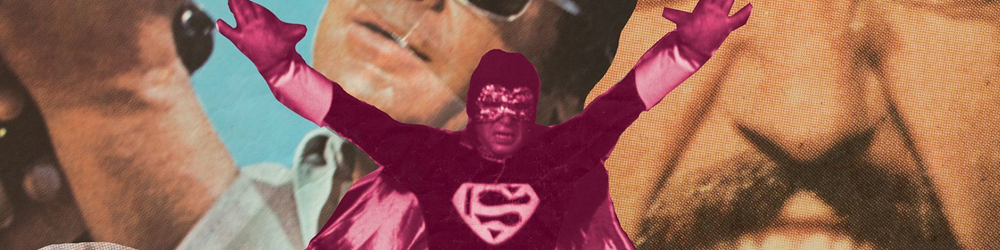
The Contemporary Femme Fatale: Gender, Genre and American Cinema

By Katherine Farrimond
Routledge, 2018
Reviewed by Ana Maria Sapountzi

In The Contemporary Femme Fatale: Gender, Genre and American Cinema, Katherine Farrimond demonstrates how the femme fatale’s cinematic presence—commonly associated and discussed within the parameters of 1940s and 50s Film Noir—has remained buoyant and flexible in American cinema even after the post-war period. By charting the femme fatale’s articulation in a variety of film genres—particularly from the past twenty-five years—Farrimond argues for the figure’s significance as a site worthy of feminist discussion due to its complicated relationship with patriarchy and representation of female power. In doing so, Farrimond presents a new critical approach to the femme fatale and establishes her rightful position in current feminist discourse, whilst freeing her from the confines and limitations of Film Noir scholarship.

In the introductory chapter of The Contemporary Femme Fatale, Farrimond unpacks the femme fatale’s complex definition by working through how history, culture, industry, politics, and genre have shaped the cinematic character’s modality in public, cultural, and academic consciousness. By examining the femme fatale’s post-war noir origins from which she has gained her archetypal characteristics—mainly complicated sexual allure, danger, and mystery—Farrimond establishes a set of foundational attributes with which the figure can be retheorised and argued within the contemporary context. Observing how the femme fatale’s presence is made visible through various visual and narrative markers, such as being sexually demanding, morally ambiguous, heteronormatively beautiful, and ambitious to improve her status and circumstances, the figure can be read and witnessed in contemporary American cinema.

Before launching her thesis, Farrimond outlines the possibility of and necessity for a feminist study of the femme fatale, which when read through an early feminist lens can appear as a figure forged by patriarchy and its gaze. Acutely aware of the misogynistic implications of the figure, particularly in relation to her sexual presence and function within a film text, Farrimond refers to the shared ideology of third wave and post-feminism—which claims that women are entitled to use their bodies in any which way they like to gain power and success—to argue the possibility of a new, radically feminist reading for the femme fatale. Herein lies the femme fatale’s conflicted place between female empowerment and patriarchy, and consequently realism and fantasy. While early feminist theory understands the femme fatale’s sexuality in terms of male fantasy, fetish, image, symptom and projection, current critical feminist intervention sees her sexuality as a valuable source deserving of feminist revision.

Whether the femme fatale only appears for a fleeting moment in a film, or is fundamental to its action, her cinematic presence transcends genre and narrative and offers numerous representations of female agency and power. The Contemporary Femme Fatale is split into four parts of two chapters each: ‘Part I: Retro’, ‘Part II: Girls’, ‘Part III: Bisexuality’, and ‘Part IV: Monstrosity’.

‘Part I: Retro’ focuses on the femme fatales of retro noir films, identified and clustered together by how their physical presence in these films is built on visual systems of the past—nostalgia and glamour. In Chapter One, ‘The Femme Fatale Who Wasn’t There: Retro Noir’s Glamorous Ghosts’, Farrimond looks at films such as Sin City (Frank Miller et al, 2005), L.A. Confidential (Curtis Hanson, 1997), Devil in a Blue Dress (Carl Franklin, 1995) and Gangster Squad (Ruben Fleischer, 2013), and finds that although the femme fatale’s sexuality and agency is dissolved into the margins of the text, her feminism arises in her ability to offer visual pleasure for the female spectator. In Chapter Two, ‘Dead Girls on Film: Retro Noir and the Corpse of the Femme Fatale’, Farrimond looks at films such as Sin City, Shutter Island (Martin Scorcese, 2010), The Black Dahlia (Brian De Palma, 2006) and Mullholland Falls (Lee Tamahori, 1996) whose narratives are centred on the image of a dead but beautiful woman. Farrimond argues that although such an image is at first seemingly patriarchal and misogynistic, the femme fatale attains power in the film from her ability to hold men in an erotic thrall even from beyond the grave, and thus dominate the narrative.

‘Part II: Girls’ centres on the emergence of the femme fatale in the image of the teenage girl. Chapter Three, ‘Bad Girls Don’t Cry? Desire, Punishment and Girls in Crisis’, Farrimond observes the trajectory of the teenage femme fatale throughout the decades to argue for her prominence in the 90s. Looking at incarnations of the teenage femme fatale in figures such as ‘Lolita’ or ‘Girls at Risk’, in which her identity is inherently linked to her body, Farrimond contends that although the femme fatale’s body is presented as physically desirable it functions as a site of vulnerabilities and anxieties which ultimately problematises its sexual function and meaning. Chapter Four, ‘Getting Away with It: Postfeminism and the Victorious Girl’, examines how the certain teenage femme fatales in films such as Knock Knock (Eli Roth, 2015) and Spring Breakers (Harmony Korine, 2013) to argue how, unlike the early femme fatale of film noir, these specific figures emerge as triumphant victors offering thus a different representation of female agency and power.

‘Part III: Bisexuality’ examines films in which the femme fatale’s sexuality and sexual activities are explicitly put on display. In Chapter Five, ‘Bisexual Detection: Visibility, Epistemology and Contamination’, Farrimond argues that the while the femme fatale’s bisexual behaviour in films such as Basic Instinct (Paul Verhoeven, 1992) and Bound (The Wachowskis, 1996) becomes a synonym for her duplicity, it is also a source of anxiety for the male spectator as there is ambiguity surrounding her sexuality. In Chapter Six, ‘Bisexual Fragmentation: Failures of Representation’, Farrimond complicates her findings in the previous chapter by looking at films which employ complex fragmented narratives and visual aesthetics to further subvert the notions of monosexuality. By analysing the femme fatale’s sexual conduct in films such as Black Swan (Darren Aronofsky, 2010) and Femme Fatale (Brian De Palma, 2002), Farrimond suggests that visual and narrative fragmentation dilutes and contaminates her presence in relation to the male gaze.

‘Part IV: Monstrosity’ studies, arguably for the first time in film and feminist criticism, the figure of the femme fatale in science fiction films. Chapter Seven, ‘Bodies of Evidence: Possession, Science and the Separation of Power’, looks at the various types of femme fatales found in science fiction, and how they are invoked when the female body is combined with alien, animal, or technology to become a source of threat and sexuality in films like Blade Runner (Ridley Scott, 1982) and Men in Black II (Barry Sonnenfeld, 2002). Farrimond details through examples of ‘the monstrous body’, ‘the leaky body’, and ‘the possessed body’ that the unnaturality the femme fatale’s body presents is a powerful agent which is oppositional to her feminine sexuality. Lastly, in Chapter Eight, ‘Bodies without Origins: Beyond the Myth of the Original Woman’, explores the possibilities of subversion and problematisation the femme fatale in science fiction films presents to patriarchy and its structures, in films such as Alien Resurrection (Jean-Pierre Jeunet, 1997) and Ex Machina (Alex Garland, 2015).

The figure of the femme fatale has been long contested in feminist film criticism, yet the discussion surrounding her has consistently remained within the strictures of Film Noir. Farrimond’s The Contemporary Femme Fatale recognises the femme fatale as a female presence in film that traverses decades and genres, thus liberating her from an ossified attachment to her noir origins. By providing postfeminist analysis of femme fatales in American cinema from the past twenty-five years, Farrimond offers a new critical discourse to the figure of the femme fatale, establishing her as a feminist image in her own right.

Popular Cinemas in East Central Europe: Film Cultures and Histories

Edited by Dorota Ostrowska, Francesco Pitassio and Zsuzsanna Varga
I.B. Tauris, 2017
Reviewed by Diana Popa, University of Edinburgh

On the front cover of Popular Cinemas in East Central Europe: Film Cultures and Histories, framed against a pale green background, appears a cowboy-like figure, one with a sieve for a body and a horseshoe for legs. Reproducing the poster for Limonádový Joe aneb Konská opera / Lemonade Joe (Oldrich Lipský, 1964) – a highly popular film from the former Eastern bloc – this cover design illustrates appropriately the key concerns of this volume. On the one hand, familiarity with the film, as well as the extremely appealing, colourful and humorous cover, highlights the focus on a little discussed aspect of filmmaking from the region, namely popular cinemas. On the other hand, reference to this film, described by Dina Iordanova as “a Czech spoof Western”[1], includes genre filmmaking in this region’s film cultures and histories.

The collection matches its attractive, playfully pleasing cover design with a selection of carefully written and well-argued chapters on a timely topic, popular cinemas in four, formerly communist, countries: Poland, Hungary, Czech Republic and Slovakia. The volume represents a first effort to map such a concept in cinemas most famous internationally for their art-house output. The topic is not without its challenges, not least because of the regional approach undertaken in this volume. Research on the popular cinemas in East Central Europe exists, albeit in local languages (mostly). This becomes evident when one looks at the bibliography of each chapter, where articles, chapters and books written in national languages dominate. This should not be surprising. Richard Dyer and Ginette Vincendeau remarked in 1992 that “highly popular European films seldom travel well beyond their national boundaries; and when they do […] they are repackaged for art cinemas”[2]. In this context, the regional focus of the volume represents an exciting proposal.

Unfortunately, this proposal is not met by the essays included in this volume, which mostly rely on a country-by-country approach. Nevertheless, connections (similarities and differences) emerge gradually and across the volume from the individual chapters. For instance, it emerges not only that comedy has a tradition in the film cultures of the region, but also that genre analysis can illuminate significant continuities, as well as differences, across a longer period within one film culture. For example, Balázs Varga convincingly argues for the importance of the operetta for the Hungarian musical comedies of the 1950s (91). He shows that, contrary to what one might expect, the genre of musical comedy under communism maintains the tradition of the 1930s instead of discarding it. He astutely points out that “[t]he idealised worlds of the musicals were well suited to the aims of Socialist Realism, namely depicting contemporary reality from the utopian perspectives of the Communist future” (91).  With reference to the same period, Šárka Gmiterková argues for a continuity of the Czech star’s Oldřich Nový career into the 1950s based on the actor’s particular type of performance, which included singing, dancing and acting (70). It is not surprising, therefore, that the star played in musical comedies, the so-called operettas that Varga referred to in the Hungarian context too. At the same time, focusing on Hungarian popular cinema alone, three chapters across the volume – Zsuzsanna Varga’s “Starlets and Heart-throbs: Hungarian Cinema in the Interwar Period”, Balázs Varga’s “Transformations: Hungarian Cinema in the 1950s”, mentioned earlier, and Andrea Virginás’ “The ‘Hollywood Factor’ in the Most Popular Hungarian Films of the Period 1996-2014” – discuss the evolution and transformation of comedy in Hungary before, during and after communism.

Exceptionally within the volume, Jan Hanzlik’s “The Exhibition of Popular Cinema in the Czech Republic and Slovakia: After 1989 Within the Context of the European Union” illustrates perfectly the advantages of a regional and transnational approach between the four countries. The discussion goes beyond the bilateral cooperation stated in the title and transcends the confines of the East Central European region (as defined by the collection). Hanzlik’s chapter looks at distribution patterns after 1989 and uses data from Romania and Bulgaria, as well as Southern European countries, in order to argue for a connection between the four countries on which this collection focuses. Hanzlik succinctly summarises his findings: “film exhibition in the Czech Republic and Slovakia shares certain conditions with that in Poland and Hungary and in some ways develops differently from other countries of the European Union” (291). Thus, he provides evidence for the distinctiveness of the film industries from the region, fulfilling the stated aims of the volume.

For this reviewer, the section on popular filmmaking under communism was the most anticipated part of the collection. Inevitably, this section provides ample discussions of what the popular can mean within a centralised economy that is not market or audience driven. Paul Coates’ chapter entitled “How To Be Loved? Three Takes on ‘The Popular’ in Socialist and Non-Socialist Cinema: The Popular and The People” represents just one such attempt at defining the popular in this context and in this volume. He argues that the popular under communism may refer to both art-house and genre films. He uses films made by Andrej Wajda as a case study in order to show how his work attempts to create “popular art cinema” (127). While this notion may seem contradictory, it is more common than one might think. Monica Filimon has previously – in her study, “Popular Cinema in the late 1960s Romania” – defined the popular as characterised by both box office success and underground fame[3], and, on this basis, discussed Sergiu Nicolaescu’s historical epic drama Dacii / Dacians (1966) alongside Lucian Pintilie’s dissident, art-house film Reconstituirea / Reenactment (1968). This approach manages to by-pass successfully the more interesting, in my opinion, issue of genre filmmaking under communism.

That is precisely the reason why I consider Gábor Gelencsér’s fascinating study of “socialist crime movie” a novelty in this field. The chapter addresses “crime movies”, a genre considered largely inexistent under communism. According to the official propaganda of the times, crime, especially murder, only afflicted the decadent western world and was entirely eradicated by socialism. In this context, this study analyses a distinct genre, the socialist crime movie. Gelencsér points out how the kind of crimes that were allowed under socialism determined the kind of crime films that were made. These films also had to convey a strict ideological message: “first, that crime did exist in state socialism but the criminal always came from abroad [….], and second that private detectives did not exist in state socialism, therefore the task of fighting crime is fulfilled by a state organisation in an organised and collective manner” (204-205). Using the example of Dögkeselyű / The Vulture (Ferenc András, 1982), Gelencsér shows how, exceptionally within the genre, this film, “while using generic conventions, manages to articulate a complex and relevant social meaning” (206), i.e. genuine social commentary usually associated with art-house cinema. I can only imagine how this discussion could open up the field for an analysis of Sergiu Nicolaescu’s rarely discussed, yet very popular, gangster film Cu mâinile curate / With Clean Hands (1972)[4]and its sequels.

The significance of this volume cannot be overstated. It represents a very successful attempt at offering a nuanced view on the popular cinemas of the region across several significant historical periods. One of the greatest merits and benefits of this volume is that it makes available scholarship and debates on the popular cinemas of the region, while also tapping into English language scholarship on the notion of the popular in cinema. It is this reviewer’s hope that more publications like this will continue to appear, not least because popular cinema from Romania, currently one of the most exciting post-communist cinemas from the region, did not make it into this volume. The absence of Romanian and Bulgarian popular cinemas, for example, attests to the variety and complexity of the former Eastern bloc and shows how far scholarship has come in displaying the diversity of the film histories and cultures of the region.


Notes:

[1]Dina Iordanova, The Industry and Artistry of East Central European Film(London and New York, Wallflower, 2003), 27.

[2]Richard Dyer and Ginette Vincendeau, “Introduction,” in Popular European Cinemaed by Richard Dyer and Ginette Vincendeau (London and New York: Routledge, 1992), 1.

[3]Monica Filimon, “Popular Cinema in the late 1960s,” inCinema, State Socialism and Society in the Soviet Union and Eastern Europe, 1917 – 1989. Re-visionsed by Sanja Bahun and John Haynes (London and New York: Routledge, 2014), 94.

[4]Sergiu Nicolaescu was a prolific filmmaker from Romania who worked almost exclusively within genre filmmaking both during and after communism. The filmmaker and his films represent a perfect example of auteur driven popular filmmaking characteristic of the region as Coates and, to some extent, Gelencsér suggest.


Bibliography:

Dyer, Richard and Vincendeau, Ginette, eds. Popular European Cinema. London and New York: Routledge, 1992.

Iordanova, Dina. The Cinema of Other Europe. The Industry and Artistry of East Central European Film, London and New York: Wallflower Press, 2003

Filimon, Monica. “Popular Cinema in the late 1960s Romania.” In Cinema, State Socialism and Society in the Soviet Union and Eastern Europe, 1917 – 1989. Re-visions, edited by Sanja Bahun and John Haynes, 94-115. London and New York: Routledge, 2014.


Notes on Contributor:

Diana Popa (Diana.Popa@ed.ac.uk) received her PhD in Film Studies from the University of St Andrews (2018). Currently, she is a postdoctoral research fellow working on the ERC-funded project entitled “Illuminating the ‘Grey Zone’: Addressing Complex Complicity in Human Rights Violations.” As part of this project, Diana explores the relation between cinema and totalitarianism in Romania (1945-1989).

Introduction: Wu Tianming at St Andrews

The cluster of video and written essays dedicated to the life and work of this great Chinese cineaste is a direct consequence of the great opening up that we are witnessing.

In the past two years, I have received several doctoral students who have been sponsored by the China Scholarship Council (CSC) – some are in the UK to pursue a degree, whilst others are visiting for a year. In the Fall of 2017, I sat in a meeting with them and suggested that, as part of the work of the Institute for Global Cinema and Creative Cultures (IGCCC), we would organise a showcase for a lesser-known aspect of Chinese cinema. Perhaps it could be something in the series of workshops dedicated to high profile cinema personalities who have passed recently, like the ones we already held for Abbas Kiarostami, Andrzej Wajda, or Om Puri?

The students immediately proposed Wu Tianming (1939-2014), a great director and producer they said, known as the father of the Fifth Generation of directors and yet a man whose work is not as well known. It was time to correct the record, they said. And indeed, some months into the academic year, we were able to hold a workshop dedicated to Wu. This took place on 9 April 2019, and was organised with the assistance of visiting doctoral student Lifei Liu from East China Normal University in Shanghai (https://www.st-andrews.ac.uk/filmstudies/event/wu-tianming-st-andrews-an-igccc-workshop/). The materials presented here first featured in the context of this event.

Two aspects in the life trajectory of Wu make him stand out:

First, the fact that he opted to take on the management of a large film studio, the one in Xian, near his native Shaanxi province. This choice meant that he made fewer films as director, as so much of his energies were taken up by administrative and management duties. There was a pay-off for this, however: as the key decision maker at Xian, Wu became key enabler for a number of other directors who were now empowered to making films in the nurturing milieu he provided. Whilst producing various mainstream blockbusters, Wu was able to finance and see through the nascent new independent cinema of China, which enjoyed a widely acclaimed international break through in the 1980s and triumphed at festivals all over.

Secondly, Wu is one of the Chinese directors who found himself at one point as an émigré to the USA, but who then returned to China where he worked until his death. Wu happened to be in America in 1989, at the time when the Tiananmen Square protests took place. Due to the overall political insecurity at the time, he opted to stay on in the US and await further developments. This stay lasted five years, which he spent living in California, on the fringes of society. Here he was not the respected studio head, but is known to have made ends meet by running a video rental service for the Chinese diaspora, as well as for having been connected with some of the diasporic directors and even had a small role in the Wayne Wang Joy Luck Club (1993). Wu had his doubts about the USA, but also said he learned a lot from his exposure to American and Western cinema in general. The film King of Masks (1996), which he made after returning to China, reflects these new influences.

During the workshop we managed to bring to light new information and discuss different aspects of Wu’s life and work. Having started as an actor and having been involved with film all throughout his life, his most important legacy is one as film director. Here I would like to present a few brief notes related to some of his films, which were subject of our discussion.

Connoisseurs of the work of Wu Tianming often quote his Life (1984) as the most important film of the director  – not least as this film was widely discussed at the time of its release and is still regarded as one of the most influential discourse-producing cinematic texts of the new Chinese cinema. Told in an extraordinarily audacious and frank manner, it is the story of a young male teacher who makes pragmatic career choices and who is similarly inauthentic in his personal relationships.A remarkable film that marks the beginning of a new period in Chinese cinema.

However, we chose to screen in full his award-winning Old Well (1987), an exemplary film to view and one of outstanding stylistic quality. It is a story of rivalry between two villages over limited resources, showing a rural China quite different from the sanitized propaganda image, and depicting the Chinese as ordinary people who are as much in the grip of human passions as everyone else. Zooming in on everyday life upheavals and challenging life conditions, the film is a pre-cursor of later films that are stylistically very similar and yet better known. One could discover the roots of China’s Fifth Generation filmmaking in the approach taken by this older director – the mise-en-scene, the camerawork, the colour choices, and the dramatic line proved much closer to the style of the younger directors than to the typical socialist realism canons that supposedly restricted innovative filmmaking. Director Zhang Yimou may have graduated as a cameraman, but due to his interesting looks he was known to have been in great demand as an actor – and indeed, we see him in the male lead on Old Well, a role for which he has been widely acclaimed. The film won awards for best film, best director, best male star and best female supporting actress, at China’s authoritative Golden Rooster awards, as well as best film and best actor at the Tokyo International Film Festival in 1988.

King of Maks may appear to be one of the director’s most polished films, and indeed it features unforgettable and multiple award-winning performances by Zhu Xu and Zhou Renying. It tells the story of a traveling street performer who adopts a child in view to train a heir to his artistic skills, to soon discover that what he thinks is a young boy is actually a girl, and thus ‘useless’ in his patriarchal frame of mind. It is a complex story of confrontations and endurance where the protagonist does come to terms with his inner contradictions. Crisp colours and immaculate framing make this a memorable film, which is also of importance as it presents a radical critique of traditional attitudes to the female gender.

Song of the Phoenix was Wu’s last film, and he passed away without being able to complete it. The film is based, in part, on Wu autobiography: as child, he was trained to play the suona, a traditional Chinese instrument. The story accounts the experiences of a youth whose formative years are spent cultivating respect to traditions and heritage whilst the outside context inevitably leads to confrontations with the fast-paced realities of modernising China. It is a film about Confucianism and capitalism, about generations gap, and about finding one’s place in the world. Wu could not complete the film, so it was only after his passing that several of his friends managed to wrap up the project and make it available (one can find it in full on YouTube, with English subtitles, as well as a tribute to the film by director Martin Scorsese). Song of the Phoenix was released across cinemas in China during the winter of 2016, but did not attract as many viewers as expected. One of the distributors of the film posted a video in which he made a teary plea to audiences to go see the film – this went viral and is regarded as one of the curious incidents in modern-day Chinese cinema promotion. At our event in St Andrews, Jinuo Diao discussed the industry aspects of the finishing and post-humous distribution of this film.

And now, a brief discussion of what this cluster of contributions to Frames Cinema Journal contains:

First, colleagues contributed several video essays, which cover different aspects of remembering Wu Tianming. Prof. Chris Berry, UK’s leading specialist on Chinese cinema, gives a vivid account of Wu’s great personality and his idiosyncratic approach to cultural bureaucracy, and highlights his ability to navigate the treacherous waters of dealing with the stringent control of culture in China. Effectively it was this ability that permitted Wu, in the period between 1983 and 1989, to enable the completion of some of the most important films that opened Chinese cinema to the world, in close collaboration with Zhang Yimou an Chen Kaige, among others.

Then, famous director Xie Fei, a contemporary of Wu and himself a celebrated Fourth generation director of well-known films such as Black Snow (1990) and A Girl from Hunan (1988), gives a personal account of his memories in this heartfelt tribute. This interview was recorded courtesy of Wang Yao from the Beijing Film Academy. Due to the work of Wang Yao, we also have the video essay by Prof. Wu Guangping, Chair of the Film Studies Department at Beijing Film Academy, who discusses the lifepath and creative trajectory of Wu Tianming and aims to assess the legacy of the director in the pantheon of Chinese cinema.

Yet it is the video essay by Peize Li, who is in the second year of her doctoral studies at St Andrews, that Wu Tianming’s complex personality comes alive. She weaves together in the different strands of Wu’s studio engagements and remarkable oeuvre. Li uses numerous images as well as excerpts from films that he produced, to chart Wu’s contributions as teacher at the Beijing Film Academy and director of the Xian film studio, and thus enabler of the Fifth-generation directors.

Last but not least, we also include two pieces of writing dedicated to specific aspects of Wu’s work. In a highly original essay, September Liu explores the formative years of the director and analyses some of the important cinematic influences, such as Alberto Cavalcanti and various Soviet directors. Deng Huimin’s text scrutinizes one of the most interesting films by Wu, A River Without Buoys (1983), which subtly addresses the repercussions of the Cultural Revolution on the lives of ordinary people.


Dina Iordanova, Director of the Institute of Global Cinema and Creative Cultures (IGCCC)


Video Essay: Remembering Wu Tianming

Notes on Contributor

Chris Berry is Professor of Film Studies at King’s College London. In the 1980s, he worked for China Film Import and Export Corporation in Beijing as a translator. His curating work includes the 2011 Cultural Revolution in Cinema season in Vienna (with Katja Wiederspahn) and the 2017 Taiwan’s Lost Commercial Cinema: Recovered and Restored project on taiyupian (with Ming-Yeh Rawnsley). Film Festival jury service has included Hawai’i, Pusan, Singapore, and, in 2017, the Golden Horse in Taipei. Primary publications include: (with Mary Farquhar) Cinema and the National: China on Screen (Columbia University Press and Hong Kong University Press, 2006); Postsocialist Cinema in Post-Mao China: the Cultural Revolution after the Cultural Revolution (New York: Routledge, 2004); (co-edited with Luke Robinson) Chinese Film Festivals: Sites of Translation (Palgrave Macmillan, 2017); and (co-edited with Koichi Iwabuchi and Eva Tsai) Routledge Handbook of East Asian Popular Culture (Routledge, 2016).


Video Essay: Wu Tianming and the Xi’an Film Studio in China


Notes on Contributor

Peize Li is currently a PhD student in Film Studies Department in University of St Andrews, supervised by Professor Dina Iordanova. Her thesis focuses on how film festivals utilise festival venues and how these venues influences film cultures. She previously studied in Queen’s University Belfast and conducted case study on the Belfast Film Festival and the film cultures of Northern Ireland. When she was studying in China, she did her dissertation exploring the Mongolian films in China, Russia and Mongolia after the year of 2000. She has presented and published a video essay on Wu Tianming and Xi’an Film Studio in the IGCCC workshop and the Frames journal.

Video Essay: The Legacy of Wu Tianming


Notes on the Contributor

Professor Wu Guangping is Chair of the Film Studies Department at the Beijing Film Academy.

Recorded by Wang Yao from the Beijing Film Academy

In Memorial of Wu Tianming: An Anecdote and Some Notes

Below are an anecdote and some notes that I shared at the Wu Tianming workshop. An outstanding filmmaker, Wu Tianming (1939-2014) directed many widely acclaimed works, headed Xi’an Film Studio in the 1980s, and mentored many Fifth-Generation filmmakers. A 1988 award winner at Tokyo International Film Festival, Old Well (Figure 1), was shown at the workshop.

Here I transcribe my contribution that focuses on the starting point of Wu’s film career and compares his Old Well with two foreign films. Wu’s film career started from a performing apprenticeship at Xi’an Film Studio. To enrol for this programme, Wu summarised and commented on a film that he watched for multiple times on a cold winter day. In the morning, the young Wu did not go to school.

He went into Heping Cinema (Figure 2[1])and watched a film that left him an impression as such: “(At that time) I found this film so strange that I could hardly understand: it did not proceed in either a chronical or a causal order. Household stories were loosely related, and imaginative scenarios were interwoven. This was so strange for me: ‘What a film this is! No, I cannot understand this.’ But indeed, I found it quite interesting”[2].

Longing to see it again, Wu hid in the toilet and planned to sneak into the screening hall. The staff spotted him and threw him out. With no money left, Wu decided to sell his new cotton shoes. Unfortunately, no one was interested. Depressed as he was, Wu had no other option but to resort to a shoe-repairer, who, to his surprise, accepted his shoes. Wu then spent all the money he received on the tickets, watching the very film for two more times.

The film is identifiable. According to his memoir, the film is Hai zhi Ge, the Chinese version of Poema o more/ Poem of the Sea (1959) by Alexander Dovzhenko and his wife Yuliya Solntseva. This film accounts for a Soviet dam project that would bury many villages.Imaginative episodes frequently break the narrative, just like the disco scene (Figure 3) that flows alongside the plot in Wu’s Old Well.

The following two sets of screen shots (Figure 4) will display this narrative discontinuity. The left set (15:52-17:15)shows the character performing a radical surgery. An imaginary scene fades in and shows the character turning around in bandage and staring at the battlefield. Undeniably, the second scene can be the imagination of the character who feels sympathetic to injured soldiers and deplores the war.

Nevertheless, the second scene suspends the surgery and breaks the chronical order. The right set (1:40:00-1:40:30)shows a similar disavowal of the chronical order. Sleeping with his family, the character becomes caricatured amidst a group of soaring swans and a dreamy effect is achieved. Again like the disco scene, the imagination seems like an extra episode that severs the narrative and inserts a borrowed time-space.

Memory may not always serve us well. His alleged experience in 1958 notwithstanding, Dovzhenko’s film had not been released in China until 1959. Two reasons can explain: either Wu mistook the year or the film he watched was another one. Evidence shows that the former cause is more reasonable, whereas an unexpected discovery of another film with the same Chinese title makes this story more interesting. This film is Alberto Cavalcanti’s O Canto do Mar/Song of the Sea (1952), a water-searching story similar to Wu’s Old Well.

This film is set in Brazilian drought area where people migrate around to find a better place to live. A quick glance at its cinematography will allow us to notice the similarities between its middle shots of the dead woods (Figure 5) and Wu’s extremely long shot of the barren landscapes in north-western China (Figure 6).

I am not implying that Wu’s work is influenced by either Dovzhenko’s or Cavalcanti’s work. Showing the anecdote of Wu’s teenage experience and the two films about water, I would like to suggest that despite our different cultural backgrounds, we all have stories about water and share some film languages that travel beyond national borders. Wu Tianming thought much of film languages. His achievements are so unique that can hardly be overshadowed by anyone in Chinese film history. Let us say: Wu is dead, long live Wu. Farewell, great filmmaker.

[1]Photo credit to Zhang Chenglong.

[2]Cited from Sun Bo and Chen Mo, “The Interview with Wu Tianming”, Contemporary Cinema 4 (2014), 28-37: p. 33-34. My own translation.

Notes on Contributor

September Liu is a PhD candidate in the Department of Film Studies, University of St. Andrews. His current research focuses on nostalgia and New Chinese Cinemas. He has received an MPhil in Asian and Middle Eastern Studies at Downing College, University of Cambridge, and two BAs in English and Chinese Literature at Peking University.

Movie-Made Japan: Japanese Modernity and Narrative Space in Naruse Mikio’s Wife! Be Like a Rose! and Every-Night Dreams

As Donald Kirihara observes, Western scholars have long attributed the distinctiveness of Japanese cinema—or more precisely, the distinctiveness of a handful of exemplary auteurs (Mizoguchi Kenji, Ozu Yasujiro, et al.)—to the country’s unique culture and history.1 Noël Burch, for instance, has argued that the conventions of “representational,” illusionist theatre (the proscenium arch, extensive scenery and props, the invisible “fourth wall” between the drama and the auditorium) that emerged in the West in the late 17th century, and which subsequently formed the basis of the classical Hollywood cinema, did not fully take hold in Japan until after World War II, with the result that pre-1945 Japanese cinema was “in essence unlike that of any other nation.”2 Similarly, although Catherine Russell rejects Burch’s thesis for its Orientalism, in claiming that the films of Naruse Mikio perform “a constant process of negotiation between modern and traditional values, between a new visual landscape of urban modernity and an older one of Japaneseness,” she implicitly assumes the existence of a monolithic national essence that preceded contact with the West.3 Accordingly, Russell praises Naruse’s Wife! Be Like a Rose! (Tsuma yo bara no yo ni, 1935) as “a clever hybridization of American and Japanese styles of representation—and styles of being in the modern world.”4

However, as Arif Dirlik writes:

To the extent that orientalism had become a part of “Western” ideas by the early nineteenth century, [the Euro-American impact on Asia] included also the impact on Asian societies of European ideas of the orient. How Euro-American images of Asia may have been incorporated into the self-images of Asians in the process may in the end be inseparable from the impact of “Western” ideas per se. One fundamental consequence of recognizing this possibility is to call into question the notion of Asian “traditions” which may turn out, upon closer examination, to be “invented traditions,” the products rather than the preconditions of contact between Asians and Europeans.5

The question then is not how a timeless Japaneseness is manifested or negotiated in the work of this or that director, but how did filmmakers like Naruse, who specialised in gendai-geki (stories with contemporary, typically urban settings), participate in its construction, particularly during the interwar period? Juxtaposing an urban, everyday life permeated, in Russell’s words, by “modern characters, fashions, and consumer culture” with a rural, essentially premodern lifestyle,6 Wife! Be Like a Rose! locates an authentic Japanese essence in the memory of an earlier mode of existence that, by the mid-1930s, already no longer existed.7 That said, far from suggesting the values it associates with the Japanese countryside are irreconcilable with modernity, the film implies that they are eternal and thus essential so as to “anchor contemporary life in a fixed and authentic ground.”8

Given then that Japaneseness is not an inert fact of nature but a social construct,9 how might we account for the idiosyncratic style of Naruse’s films of the 1930s? According to Russell, Naruse’s experiments were motivated by “a desire to find an appropriate means of expression for modern Japanese life.”10 And to be sure, the distinctive approach to découpage developed at Shochiku’s studio in the Tokyo suburb of Kamata, which David Bordwell has termed “piecemeal découpage,” and which Naruse employed throughout his career, is associated almost exclusively with gendai-geki; modelled after the “one-bit-of-information-per-shot approach” of 1920s Hollywood films such as A Woman of Paris (Charles Chaplin, 1923) and The Marriage Circle (Ernst Lubitsch, 1924), piecemeal découpage breaks down each scene into a great many shots, singling out faces, body parts, and details of setting.11 However, as not every gendai-geki of the interwar period employs this approach, Mizoguchi’s Osaka Elegy (Naniwa ereji, 1936) being one notable counterexample, it is evident that Russell’s hypothesis—which builds upon Miriam Bratu Hansen’s assertion that “modernization inevitably provokes the need for reflexivity,” and that there is ample evidence, “in American and other cinemas of the interwar period, of an at once modernist and vernacular reflexivity”12—is too broad to account for Naruse’s particular stylistic choices. To do so, we must ask: What are the uses of piecemeal découpage? As Naruse’s silent Every-Night Dreams (Yogoto no yume, 1933) admirably demonstrates, as well as being a suitable style for psychologically-oriented melodramas and a stable backdrop against which expressive and decorative flourishes stand out all the more vividly,13 the piecemeal approach can also facilitate an overt, playful narration that foregrounds its own operations—a style that contemporary Japanese critics considered both realistic and uniquely “cinematic.”14 Through an analysis of space in Wife! Be Like a Rose! and Every-Night Dreams, this article will demonstrate how Naruse’s films of the interwar period participated in the construction of a modern Japanese identity and refine our understanding of the relationship between film style and urban modernity.


Constructing Authenticity

As Julia Adeney Thomas observes, in the late 19th and early 20th centuries, the concept of nature underwent a radical redefinition in Japan, with the successive conceptions of a universal nature dominant in the Tokugawa and early Meiji periods giving way to a new, more jingoistic theory which held that “Japan existed in a coalescent intimacy with a [national] nature known to itself alone”—a notion that came about paradoxically through an engagement with Western ideas, images, and activities such as mountaineering.15 Accordingly, certain cultural traits and practices, such as Shinto (or at least a particular interpretation of it), became at this time emblematic of an ahistorical national essence.16 During the same period, however, Japan was becoming increasingly an urban nation. In the aftermath of the 1923 Kanto earthquake, the national government oversaw the reconfiguration of Tokyo so as to absorb the scads of new arrivals who had swarmed into the capital from the surrounding countryside following World War I.17 And with the emergence of a modern consumer culture in the 1920s, Westernised young people known as moba and moga (modern boys and girls) started to appear on the streets of large cities,18 prompting a conservative backlash as their behaviour implied that “identities produced through acts of consumption could be autonomous and even inimical to the national, homogeneous identity.”19 Accordingly, Naruse’s Wife! Be Like a Rose! offsets the potential threat posed by its moga-ish heroine by suggesting that her consumerism is compatible with the timeless morality of the Japanese countryside.

Based upon Nakano Minoru’s popular shinpa play Futari zuma (Two Wives), the film begins in Tokyo where its heroine, Kimiko (Chiba Sachiko), lives with her mother, Etsuko (Ito Toshiko), a poetess who writes obsessively of her longing for her errant husband, Shunsaku (Maruyama Sadao). Fifteen years prior, Shunsaku fled to a remote village outside Nagano with a former geisha, Oyuki (Hanabusa Yuriko), whom Kimiko’s uncle Shingo (Fujiwara Kamatari) believes will leave Shunsaku when he runs out of money. In the meanwhile, Kimiko’s dream of marrying her beau, Seiji (Okawa Heihachiro), is on hold indefinitely as the latter’s father refuses to give his approval before meeting Shunsaku. Yet it is not until Etsuko agrees to be the go-between (nakodo) for the marriage of an acquaintance’s daughter—an office customarily held by married couples and therefore requiring Shunsaku’s presence at the wedding ceremony, lest Etsuko be publicly humiliated—that Kimiko boards a train to Nagano to drag her father back home.

Upon her arrival, however, Kimiko learns that, far from using Shunsaku for his money, it is Oyuki who is supporting him by working as a hairdresser, and that it is she, not Shunsaku, who sends a money order to Etsuko each month. Additionally, Kimiko learns that Oyuki and Shunsaku have two children together, Shizue (Horikoshi Setsuko), a sullen girl who is a little younger than Kimiko, and a son, Kenichi (Ito Kaoru), who is roughly the same age as the errand boy in Kimiko’s office. Seeing how content her father is with his new family, Kimiko temporarily abandons her intention of reuniting him with Etsuko. But when Shunsaku submits to return to Tokyo briefly to discharge his parental and husbandly obligations, Kimiko suffers a relapse and renews her efforts to bring about a reconciliation. Ultimately, she is thwarted in this aspiration by Etsuko’s inability to be the kind of wife Shunsaku wants her to be, and after fulfilling his duties to his legitimate family, Shunsaku avails himself of the first opportunity to skip town. At the last moment, Uncle Shingo materialises in order to offer him a proper job in the city and to berate him for his shabby treatment of Etsuko, but he cannot be coerced into staying, and both Kimiko and Etsuko have already resigned themselves to his departure.

Before introducing any of the major characters, Wife! Be Like a Rose! opens with a brief, quasi-documentary prologue set to percussive, uptempo music that drops the spectator into a modern urban landscape of concrete office buildings, crowded train stations, street vendors, and salarymen wearing Western suits and brimmed hats. Indeed, when the film opened in New York in 1937 under the title Kimiko, a reviewer for the Nation, Mark Van Doren, described this sequence and the subsequent dialogue between Kimiko and Seiji as nothing less than a revelation:

The first five minutes of Kimiko are startling. The streets of Tokyo look like the streets of Detroit, and the people going up and down them look exactly like the people we see every day, except they are a trifle shorter. Even the first interior is familiar—a very ‘modern’ sort of office which a girl in a grey suit is preparing to leave at the end of her day’s work so that she may meet a young man, also in a grey suit, downstairs at the corner. The two of them step briskly along, quarrelling and making up as if they were natives of Hollywood, then quarrelling again and refusing to walk together.20

However, as Harry Harootunian points out, in Japan during the interwar period, modernity was perceived as a perpetually incomplete process with different forms of everyday life coexisting both in the public and private spheres.21 Accordingly, while Kimiko dons a slightly androgynous suit and tie in the office and when she travels to the countryside to retrieve her father, at home with her mother and when paying a visit to Uncle Shingo, she is more frequently dressed in a kimono.22 Furthermore, the film’s dialogue places particular emphasis on Kimiko’s practicality and domestic skill. In the first dramatic scene, the errand boy tasked with lowering the curtains at the end of the workday spies Kimiko writing something at her desk and is disappointed to learn that it is not a love letter but a grocery list. Thus, Kimiko’s modernity is kept within respectable bounds, balancing consumption with propriety and familial obligation.23

Ironically, it is Etsuko who behaves more like a stereotypical moga,24 splurging on a new kimono she cannot afford on her meagre income as a poetess. Indeed, the film gently satirises her consumption of traditional Japanese art and clothing to signify refined taste, which echoes the vogue for Japonisme in Europe and America in the late 19th and early 20th centuries,25 suggesting Etsuko lacks an authentic feeling for Japanese culture. Accordingly, when Kimiko defends her mother by describing her as a fine woman, Shunsaku replies that she is “too fine,” and as Audie Bock observes, all of her poems are dedicated to “a husband with whom she cannot stand to live.”26 Thus, the film likens Etsuko to the white roses her students give her in lieu of payment for her poetry lessons and which the more practical Kimiko resents having to water every day. Likewise, Uncle Shingo’s gidayu singing is merely a pastime for a bored “modern” husband whose wife spends her evenings playing mahjong. When a graphic match humorously compares Uncle Shingo wobbling his head as he sings with a teetering sake pitcher, what is being lampooned is not aristocratic Japanese art per se, as Russell claims,27 but the urban characters’ lack of connection with traditional Japanese culture.

Wife! Be Like a Rose! appeared at the tail end of a period of rapid urban development following the Kanto earthquake when the government’s plan to reconfigure the capital and its surroundings led to “the huge expansion of Tokyo to its current size, subsuming five counties and eighty-two towns in 1932 and two more towns in 1936.”28 Tellingly, it was during this period that the concept of a “hometown” (furusato) first gained popular currency in Japan, and the contrast between the gay life of the city and the truer morality of the countryside became a recurrent theme in film, literature, and popular music.29 However, as Mitsuyo Wada-Marciano points out, the image of rural life in Wife! Be Like a Rose! and other films of the interwar period is “less a reflection of actual life in the countryside [at this time] than an intentionally created nostalgic space,” designed to satisfy an urban gaze.30 In fact, the folklorist Yanagita Kunio observed in 1926 that, “[i]n both the countryside and the remote islands, residents already observe the cultural norms and average living standards that have extended [there] from urban city life during the Taisho period.”31 Thus, the rural village in the mountains to which Shunsaku flees with Oyuki conforms to Mikhail Bakhtin’s conception of the idyllic chronotope as a limited spatial world that is “sufficient unto itself, not linked in any intrinsic way with other places, with the rest of the world.”32 Tellingly, the narration elides Kimiko’s arrival at the train station, instead moving directly from Seiji’s apartment in Tokyo to a river in the mountains where Shunsaku is panning for gold to a shot of Kimiko walking down a village road carrying a suitcase, as if she had just teleported there.

According to Bakhtin, the idyll assumed a great significance in European literature in the 18th century when a new idea of time was emerging in the West: In several novels of this period, “[t]he real organic time of idyllic life is opposed to the frivolous fragmented time of city life.”33 Accordingly, in Wife! Be Like a Rose!—a film that not only bears witness to the emergence of a new urban middle-class in Japan but also helped to shape the image of that class in the popular imagination34—the portions of the film set in Tokyo move freely back and forth in time, whereas the film’s middle section is entirely linear, suggesting that people in the countryside live in an eternal present without past or future. In other words, the rural lifestyle represented in the film is implicitly a fully achieved state, incapable of any change or modification other than perhaps gradual deterioration and extinction. Significantly, both Oyuki and Shizue earn money through reproductive labour (cutting hair and mending clothes, respectively) that serves to perpetuate the status quo rather than altering it. The first time we see Oyuki, she is dressing a young woman’s hair in the style of a traditional Japanese bride rather than something more fashionable. Furthermore, by making Oyuki a hairdresser, the film associates her with a job Japanese women have performed since premodern times.35 On the other hand, Shunsaku’s dream of getting rich by panning for gold (a venture that requires him to make occasional business trips to Tokyo) and the Western-style suits he wears on the job both imply that he has been less successful at shaking off the temptations of modern life than Oyuki. Indeed, the latter frankly admits to Kimiko that she knows Shunsaku will eventually leave her and return to Etsuko, suggesting that the rural idyll is fated to disappear in the face of encroaching industrialisation.

That said, as Bakhtin writes of the sentimental novel, here there is no doomed attempt to preserve a dying way of wife; rather, Naruse’s film makes of the rural idyll “an ideal for the future and sees in it above all the basis, a norm, for criticizing the current state of society.”36 In one scene, Kenichi recites passages on “filial piety” and “wifely duties” from a lesson book that cites mythical figures from the past as models of proper conduct and provides an historical precedent for Oyuki supporting Shunsaku financially in the story of a woman married to a poor samurai who worked in the fields to feed her family. Furthermore, as Kenichi is reading, Oyuki notices Shunsaku’s back is aching from a hard day’s work and offers to give him a massage, spontaneously embodying the Confucian virtue of wa (harmony), wherein people cooperate with one another not out of self-interest but out of a mutual concern for the interests of the other.37 Conversely, in their interactions with one another, Shunsaku and Etsuko demonstrate a mutual lack of sensitivity to each other’s needs and interests (kiten ga kiku).38 When they go on a day trip together, Etsuko drags Shunsaku to a calligraphy exhibition, indifferent to his lack of interest in high culture, and he in turn takes her to an inn where he proceeds to get drunk on sake, much to Etsuko’s consternation. Indeed, even before setting off for the countryside, Kimiko remarks to Uncle Shingo that Etsuko is partly to blame for her parents’ estrangement, observing that, even when they lived together, she did not seem to care much about Shunsaku: “When he’d come home at night, she didn’t even help him change his clothes. She hardly spoke to him. I don’t think she was a good wife.” It is this insight that not only enables Kimiko to recognize Oyuki’s moral superiority to her mother when she travels to the countryside but also ensures the future success of her marriage to Seiji since, unlike Etsuko, Kimiko knows not to stray too far from traditional Japanese gender roles, which the film implies are both natural and timeless.

According to Wada-Marciano, as Japan transitioned into an urban society, the cinema, literature, and popular music of the interwar period all strove to integrate and manage the scores of new arrivals then pouring into the capital, soothing middle-class anxieties through the creation of a nostalgic hometown space.39 However, rather than elegising a quaint rural lifestyle that had already ceased to exist by the time of the film’s release,40 Naruse’s Wife! Be Like a Rose! contrasts an everyday modern life with the memory of an earlier mode of existence in order to emphasise the continuity of an atemporal national essence, thereby helping to define that essence in the popular imagination. Given how deeply Naruse’s cinema is implicated in the invention of modern Japanese life (which includes the concept of traditional Japanese culture), it would seem to follow that the peculiar style of his films of the 1930s could be productively understood as responding to the sensorial experience of Japanese modernity.41 But, as we shall see below, this thesis is too broad to account for the specificity of Naruse’s filmmaking practice.


Beyond the Modernity Thesis

Writing about Chinese and Japanese films of the 1930s, Hansen observes that films from both countries share a tendency to foreground material objects, ranging from glamorous consumer goods to trash, thereby gesturing toward “a modernist, non-anthropocentric [aesthetic] of contingency.”42 In other words, Hansen argues, as in Hollywood, commercial filmmakers in East Asia developed a vernacular modernist idiom which provided to mass audiences “an at once aesthetic and public horizon for the experience of capitalist-industrial modernity and modernization.”43 That one also finds stylistic experimentation in Japanese films set in premodern times (jidai-geki) does not invalidate this thesis since, as Hansen puts it, “modernism does not reduce to a matter of style.”44 By the same token, however, style does not reduce to a matter of modernity. Therefore, while Russell may be correct that Naruse’s films of the 1930s were at the apex of Japanese modernity,45 they are not merely a symptom of it. What are the functions of Naruse’s style? In Every-Night Dreams (one of the films cited by Hansen as an example of Japanese vernacular modernism),46 piecemeal découpage facilitates a performance style characterised by a high degree of psychological depth and serves as a foil for expressive and decorative flourishes,47 while also calling attention to the narration’s regulation of the flow of story information.

As the film opens, Omitsu (Kurishima Sumiko) has just returned to Yokohama after a short vacation to resume work as a hostess in a seedy dockside bar so as to support her son, Fumio (Kojima Teruko).48 On her first night back, Omitsu asks the bar’s stingy owner (Iida Choko) for an advance without success, but when a sinister ship’s captain (Sakamota Takeshi) offers her a loan, she is reluctant to accept. That night, Omitsu comes home to find her estranged husband, Mizuhara (Saito Tatsuyo), who abandoned her two years earlier, waiting in her apartment. But while she initially rebuffs him, for reasons left unexplained, Omitsu abruptly changes her mind and takes him back. At the bar, the captain continues to pester her, but as Mizuhara is unable to find work, in part because he is too physically frail for manual labour, Omitsu cannot quit her job and go straight. To make matters worse, Fumio is run over by a car, and Mizuhara resorts to theft in order to pay the hospital bill, leaving the money with Omitsu before disappearing into the night. The next morning, she learns that Mizuhara has drowned himself in the harbour, and after rebuffing the captain’s advances one last time, Omitsu runs home to exhort Fumio to be strong. The film ends with a series of location shots similar to the opening sequence of Wife! Be Like a Rose!, moving from Omitsu’s ramshackle neighbourhood to the harbour where the story opened and where Mizuhara committed suicide.

Describing the title character (Tanaka Kinuyo) in Ozu’s Dragnet Girl (Hijoson no onna, 1933), Hansen observes that, “[w]hile the plot steers her toward traditional Japanese femininity…, the comic performance of the steps she takes in that direction suggest less a return to authenticity and tradition than a continuation of the modernist masquerade.”49 Still more radically, in Osaka Elegy, the heroine, Ayako (Yamada Isuzu), adopts in succession the guise of a submissive traditional concubine and a flashy moga, and Mizoguchi’s long-take style and Yamada’s performance deny us access to Ayako’s sincere emotions. Conversely, although Omitsu has a similar double identity, being at once a bar hostess who is at ease smoking with sailors by the harbour and a devoted mother to Fumio,50 her appearance and facial expressions clearly indicate when she is acting and when she is being herself.51 In one early scene, the film dissolves from Omitsu as mother looking at herself in the mirror, her hair dishevelled and a slightly haggard look on her face, to Omitsu as hostess with her hair neatly arranged and her face made up with cosmetics, implying that the former represents her private, “true” self and that the latter is an artificial persona she adopts in public. More subtly, even when she is not at work, Kurishima’s expressions often convey the impression of a woman struggling to suppress an overflow of spontaneous emotions.52

Figure 1

Following the robbery, Mizuhara gives Fumio a small coin as a present, and the film cuts to a close-up of Omitsu—who is still in shock after finding Mizuhara bleeding from a bullet wound—with a pained expression on her face, her eyebrows furrowed and her lips slightly pursed (Figure 1). A point-of-view shot shows Fumio holding up the coin for her to see. Cut back to Omitsu giving a forced smile and wiping away a tear (Figure 2). Thus, in contrast with Mizoguchi’s film, where Ayako ultimately remains unknowable, here Kurishima’s facial expressions in close-up leave no doubt as to Omitsu’s genuine emotions.

Figure 2

That said, as Russell points out, “in the Japanese context, ‘modernity’ involved the emergence of the bourgeois individual and the coextensive adoption of realist modes of representation,” such as the shishosetsu (“I-novel”).53 Seen from this perspective, it is Every-Night Dreams—and by extension, Omitsu—that emerges as more modern than Osaka Elegy, where it is only in the climatic close-up, after breaking decisively from all social ties, that Ayako emerges as a true bourgeois subject. It is perhaps significant then that, in the aftermath of the Kanto earthquake when it was the only studio to continue operating in Tokyo,54 Shochiku Kamata encouraged its contract directors to adopt American-style continuity editing for use in shoshimin-geki (stories about the lower middle-classes), leading to the development of a distinctive house style that Bordwell terms “piecemeal découpage.”55

As we have seen, the piecemeal approach—which dissects each scene into a series of neat, static shots56—is highly conducive to an acting style based in psychological realism, although as Bordwell points out, it could also become “a vehicle for expressive and decorative elaboration as well.”57 In particular, he cites Naruse’s manner of stressing the interplay between sharp and unfocused planes throughout Every-Night Dreams,58 a device that underscores Omitsu’s emotional estrangement from the other characters—most often Mizuhara but also a female neighbour (Yoshikawa Mitsuko) when she suggests that Omitsu find herself a proper job. As Bordwell observes, this technique not only urges the spectator to “notice the switch of foreground and background elements from shot to shot but also to appreciate the way a figure jumps from clear outline to indistinctness.”59 Additionally, piecemeal découpage provides a stable backdrop against which isolated stylistic flourishes stand out more vividly as departures from the norm. Naruse’s oft-noted track-ins at moments of great drama,60 the lateral tracking shots surveying the bar where Omitsu works, the canted angles in the robbery sequence, and the abrupt introduction of nonlinear editing in the scene where Omitsu and Mizuhara learn of Fumio’s accident only register as flourishes in a context where static, level framings and linear editing are the intrinsic norm.61

As Bordwell observes, such stylistic flourishes make the film more self-conscious.62 By calling attention to the image as a graphic composition, the interplay of sharp and unfocused planes in Every-Night Dreams—like the comparison of Uncle Shingo with a wobbling sake pitcher in Wife! Be Like a Rose!—violates the rule in classical Hollywood cinema that framing, cinematography, and editing should strive to efface the picture plane, transforming the screen into a transparent window onto the diegesis.63 Furthermore, Naruse’s tight framings often withhold significant areas of scenographic space, thereby foregrounding the narration’s regulation of story information. After establishing Omitsu’s easy rapport with a pair of comic sailors (one whom casually invites her to come aboard their boat to “have some fun”), the film follows her back to her neighbourhood where a woman is chasing two children with a stick. Naruse cuts from a shot of Omitsu walking down an alley away from the camera to an intertitle reading, “Mom!” As Omitsu enters her neighbour’s apartment, the camera tracks in from a medium shot to a medium close-up of her looking down and offscreen right. The next shot is an insert of small feet running across the screen from right to left over some toy blocks on the floor. In medium shot, Fumio runs to Omitsu as the neighbour looks on in the background out of focus. Then, as Omitsu bends down to give Fumio a kiss, the camera tracks in again from a medium long shot to a close-up. Only in retrospect do we infer that it was Fumio, rather than one of the children in the alley, who was calling out to his mother. As this example indicates, Naruse’s découpage emphasises the autonomy of each shot, somewhat in the manner of Soviet montage cinema. In the film’s penultimate sequence, as Omitsu tears up Mizuhara’s suicide note and paces up and down her apartment, the film intersperses tightly framed shots of Omitsu (each one from a different camera position) with inserts of crumpled bits of paper on the floor and intertitles reading, “Weakling!,” “Coward!,” and “Dying like that!,” although at no point do we see her lips moving.

Does Naruse’s self-conscious style here support Hansen’s claim that “modernization inevitably provokes the need for reflexivity and that if sociologists considered cinema in aesthetic and sensorial terms… they would find ample evidence, in American and other cinemas of the interwar period, of an at once modernist and vernacular reflexivity”?64 Insofar as I understand her argument, Hansen is not referring here to a “formalist self-reflexivity” that emphasises the physical properties of the medium per se, but a sensory reflexivity that mirrors the conditions of urban modernity more broadly, providing spectators with “an aesthetic horizon for the experience of industrial mass society.”65 How then might we account for the presence of the former kind of reflexivity, not only in Every-Night Dreams, but also in other films produced by Shochiku Kamata during the same period, such as Ozu’s Tokyo Chorus (Tokyo no gasho, 1931) and Shimizu Hiroshi’s Japanese Girls at the Harbour (Minato no Nihon musume, 1933)?

While it may not be possible to answer this question definitively, the discourse of the Pure Film Drama Movement (jun’eiga-geki undo) was likely a significant influence. Disparaging the kabuki– and shinpa-style films of the 1910s, intellectuals associated with the movement championed the adoption of the technical norms of post-1917 Hollywood cinema as part of the larger Taisho-era project of transforming Japan into a modern industrial society.66 Founded in 1920, the Shochiku Cinema Company was the first studio in Japan to consciously model itself after American production methods,67 and as noted earlier, piecemeal découpage is a variant on the editing style of early 1920s Hollywood cinema68—an approach that Japanese critics of the time considered both more realistic and more “cinematic” than that of pre-1920 Japanese films, which favoured tableau staging and a histrionic acting style.69 Thus, Naruse’s technique in Every-Night Dreams can be understood as doubly modern in the context of interwar Japan, facilitating psychological realism while also stressing the unique properties of the medium. Tellingly, in a contemporary review of the film, Kitagawa Fuyuhiko described the scene of Omitsu’s grief alluded to above as “extremely natural,”70 despite—or perhaps in part because of—Naruse’s highly fragmented découpage.


Conclusion

As Russell correctly points out, Western film scholars have tended to “emphasize the Japaneseness of Japanese cinema at the expense of its modernity.”71 However, in opposing Japaneseness with modernity, she obscures how the concept of traditional Japanese culture was itself an invention of the modern era.72 Ironically, as Japan began to modernise itself in the late 19th and early 20th centuries, its people became increasingly estranged from many of the cultural practices (noh theatre, flower arrangement) that came to define Japan for the outside world73—a phenomenon Naruse gently satirises in Wife! Be Like a Rose!, where traditional culture has become just another consumer fetish for the urban bourgeoisie. However, rather than rejecting modernity tout court as a foreign intrusion incompatible with the national character, the film follows the lead of writers and intellectuals of the interwar period in trying to uncover, beneath the surface of everyday modern life, the memory of an earlier mode of existence still capable of “providing meaning to Japanese life in a bewildering time of speed, spectacle, and shock.”74 Accordingly, Kimiko comes to embody a new type of Japanese woman whose participation in the modern consumer economy—unlike that of the stereotypical moga—does not pose a threat to either conventional gender roles or the homogeneous national identity but remains firmly within respectable bounds.75

That said, although there is some truth in Russell’s claim that the idiosyncratic style of Naruse’s 1930s films was motivated by “a need to find an appropriate means of expression for modern Japanese life”76—perhaps no non-comic filmmaker before Jean-Luc Godard had as many car accidents in his films, reflecting the development of modern infrastructure in Tokyo following the Kanto earthquake77—it can only account for his filmmaking practice in a very general way. As well as responding, and making sensually graspable our responses, to “the set of technological, economic, social, and perceptual transformations associated with the term modernity,”78 Naruse’s piecemeal découpage in Every-Night Dreams facilitates a high degree of psychological realism, serves as a stable backdrop against which expressive and decorative flourishes stand out more vividly,79 and calls attention to the narration’s regulation of story information. The same is also true of other films produced by Shochiku Kamata and Naruse’s subsequent work at PCL (including Wife! Be Like a Rose!) but not of all Japanese films made during the same period, to say nothing of films from neighbouring East Asian nations. In Osaka Elegy (produced by Nikkatsu), Mizoguchi’s long-take style renders Ayako psychologically opaque, while in Wu Yanggang’s The Goddess (Shennu, 1934), the psychological realism of Ruan Lingyu’s performance as a prostitute and single mother is not complimented by a self-reflexive film style, despite a preponderance of tight framings. Thus, it is likely that Naruse and his contemporaries (Ozu, Shimizu, et al.) were responding in their work as much to the discourse of the Pure Film Drama Movement as they were to the lived experience of urban modernity. In other words, if Naruse’s 1930s films were “at the apex of Japanese modernity,”80 this did not come about through a kind of osmosis wherein his style unselfconsciously reflected the unevenness of Japanese modernity, but as a result of a studio policy informed by the intellectual discourse around cinema and modernisation in the Taisho era. In sum, rather than hybridizing Japanese and American styles of representation and styles of being in the modern world whose essential difference from one another can be taken for granted,81 Naruse’s films of the 1930s represent a site where the meanings of Japaneseness and modernity were negotiated, both in terms of the films’ representation of urban and rural spaces and their construction of narrative space.


Notes

  1. Donald Kirihara, “Reconstructing Japanese Film,” in Post-Theory: Reconstructing Film Studies, eds. David Bordwell and Noël Carroll (Madison: University of Wisconsin Press, 1996), 501-503.
  1. Noël Burch, To the Distant Observer: Form and Meaning in the Japanese Cinema (Berkeley: University of California Press, 1979), 11, 68-69, 274 [emphasis in the original]; James Naremore, Acting in the Cinema (Berkeley: University of California Press, 1988), 28.
  1. Catherine Russell, The Cinema of Naruse Mikio: Women and Japanese Modernity (Durham: Duke University Press, 2008), 4-5; Akhil Gupta and James Ferguson, “Beyond ‘Culture’: Space, Identity, and the Politics of Difference,” Cultural Anthropology 7, no. 1 (1992): 8.
  1. Russell, The Cinema of Naruse Mikio, 5.
  1. Arif Dirlik, “Chinese History and the Question of Orientalism,” History and Theory 35, no. 4 (1996): 104.
  1. Russell, The Cinema of Naruse Mikio, 5.
  1. Yanagita Kunio, cited in Mitsuyo Wada-Marciano, Nippon Modern: Japanese Cinema of the 1920s and 1930s (Honolulu: University of Hawaii Press, 2008), 25.
  1. Harry Harootunian, Overcome by Modernity: History, Culture, and Community in Interwar Japan (Princeton: Princeton University Press, 2000), 213.
  1. See David Bordwell, Poetics of Cinema (New York: Routledge, 2008), 352-354.
  1. Russell, The Cinema of Naruse Mikio, 99.
  1. Bordwell, Poetics of Cinema, 359-360; David Bordwell, Ozu and the Poetics of Cinema (Princeton: Princeton University Press, 1988), 23-24.
  1. Miriam Bratu Hansen, “The Mass Production of the Senses: Classical Cinema as Vernacular Modernism,” in Reinventing Film Studies, eds. Christine Gledhill and Linda Williams (London: Arnold, 2000), 342.
  1. Bordwell, Ozu, 23-24; Bordwell, Poetics of Cinema, 359-360.
  1. Daisuke Miyao, Sessue Hayakawa: Silent Cinema and Transnational Stardom (Durham: Duke University Press, 2007), 242-243.
  1. Julia Adeney Thomas, Reconfiguring Modernity: Concepts of Nature in Japanese Political Ideology (Berkeley: University of California Press, 2001), 30, 169.
  1. Ibid., 188-193; Bordwell, Poetics of Cinema, 352-354; Dirlik, “Chinese History,” 104.
  1. Bordwell, Ozu, 38-39; Wada-Marciano, Nippon Modern, 18-19.
  1. Russell, The Cinema of Naruse Mikio, 39.
  1. Hideaki Fujiki, Making Personas: Transnational Film Stardom in Modern Japan (Cambridge: Harvard University Asia Center, 2013), 259.
  1. Quoted in Okubo Kiyoaki, “Kimiko in New York,” translated by Guy Yasko, Rouge, 2006, accessed 6 May 2018, http://www.rouge.com.au/10/kimiko.html.
  1. Cited in Russell, The Cinema of Naruse Mikio, 51.
  1. Ibid., 102.
  1. Fujiki, Making Personas, chapter 9.
  1. As Hideaki Fujiki observes, although “the young women who were labelled ‘modern girls’ and / or moga tended to be described as anonymous, stereotypical, and homogeneous, predominantly associated with consumer culture and sexuality,” modern girl actresses were not anonymous but had distinctive star images. Incidentally, over the course of her four films with Naruse, Chiba’s onscreen persona rapidly shed its modern girl associations once she became a star. In The Actress and the Poet (Joyu to shijini, 1935), where Chiba has a small but important supporting role, it is only at the end of the film that her character, a flashy actress who earns more than her husband, submits to male authority. Conversely, in The Girl in the Rumour (Usawa no musume, 1935), which Naruse made shortly after Wife! Be Like a Rose!, Chiba plays the respectable, kimono-clad older sister and Umezona Ryuko the gold-digging moga who is coincidentally named Kimiko. Likewise, in Morning’s Tree-Lined Street (Ashita no namikimichi, 1936), Chiba—once again dressed in a kimono—plays a naïve country girl confronted with the temptations of life in the city. Fujiki, Making Personas, 253.
  1. Miyao, Sessue Hayakawa, 31-32.
  1. Audie Bock, Japanese Film Directors (New York: Kodansha International, 1978), 110; quoted in Russell, The Cinema of Naruse Mikio, 101-102.
  1. Ibid., 102.
  1. Wada-Marciano, Nippon Modern, 18-19.
  1. Narita Ryuchi, cited in ibid., 25; Bordwell, Ozu, 38.
  1. Other examples cited by Wada-Marciano are Gosho Heinosuke’s The Dancing Girl of Izu (Koi no hana saku Izu no odoriko, 1933), Shimizu Hiroshi’s Mr. Thank You (Arigato-san, 1935), and Ozu’s The Only Son (Hitori musuko, 1936). Wada-Marciano, Nippon Modern, 26-27.
  1. Quoted in ibid., 25.
  1. Mikhail Bakhtin, The Dialogic Imagination: Four Essays, trans. Caryl Emerson and Michael Holquist (Austin: University of Texas Press, 1981), 224-225; quoted in Paula J. Massood, Black City Cinema: African American Urban Experiences in Film (Philadelphia: Temple University Press, 2003), 14.
  1. Bakhtin, The Dialogic Imagination, 208.
  1. Russell, The Cinema of Naruse Mikio, 104; Wada-Marciano, Nippon Modern, 42.
  1. Barbara Sato, The New Japanese Woman: Modernity, Media, and Women in Interwar Japan (Durham: Duke University Press, 2003), 2.
  1. Bakhtin, The Dialogic Imagination, 231.
  1. Yutaka Yamamoto, “A Morality Based on Trust: Some Reflections on Japanese Morality,” Philosophy East and West 40, no. 4 (1990): 453.
  1. Ibid., 459.
  1. Wada-Marciano, Nippon Modern, 25-26.
  1. Yanagita, cited in ibid., 25.
  1. Miriam Bratu Hansen, “Vernacular Modernism: Tracking Cinema on a Global Scale,” in World Cinemas, Transnational Perspectives, eds. Nataša Ďurovičova and Kathleen Newman (New York: Routledge, 2010), 294.
  1. Ibid., 291.
  1. Ibid., 294; see also Hansen, “The Mass Production of the Senses,” 341-342.
  1. Hansen, “Tracking Cinema,” 301.
  1. Russell, The Cinema of Naruse Mikio, 5.
  1. Hansen, “Tracking Cinema,” 287-288.
  1. Bordwell, Poetics of Cinema, 359-360, 380-385; Bordwell, Ozu, 21-24.
  1. As the film does not explain where Omitsu went or how she could afford to go on holiday, Wada-Marciano infers that she spent the night in jail for prostitution. However, upon returning to her apartment, she tears several pages from a wall calendar, indicating that she has been away for a week and a half (12 June to 23 June). Wada-Marciano, Nippon Modern, 40.
  1. Hansen, “Tracking Cinema,” 289.
  1. Ibid., 287-288.
  1. Naremore, Acting in the Cinema, 70.
  1. Ibid., 76.
  1. Russell, The Cinema of Naruse Mikio, 27.
  1. Wada-Marciano, Nippon Modern, 4-5.
  1. Bordwell, Poetics of Cinema, 359-360; Bordwell, Ozu, 23-24.
  1. Ibid.
  1. Bordwell, Poetics of Cinema, 359.
  1. Ibid., 384.
  1. Ibid.
  1. Ibid., 384-385; Bordwell, Ozu, 25.
  1. Ibid., 52; Bordwell, Poetics of Cinema, 388.
  1. Ibid.
  1. David Bordwell, Janet Staiger, and Kristin Thompson, The Classical Hollywood Cinema: Film Style and Mode of Production to 1960 (New York: Colombia University Press, 1985), 50.
  1. Hansen, “The Mass Production of the Senses,” 342.
  1. Ibid.
  1. Miyao, Sessue Hayakawa, 242-243.
  1. Joseph L. Anderson and Donald Richie, The Japanese Film: Art and Industry, 2nd ed. (Princeton: Princeton University Press, 1982), 40-41.
  1. Bordwell, Ozu, 24; Bordwell, Poetics of Cinema, 359.
  1. Miyao, Sessue Hayakawa, 242-243; see also Fujiki, Making Personas, 53-69; Roberta E. Pearson, Eloquent Gestures: The Transformation of Performance Style in the Griffith Biograph Films (Berkeley: University of California Press, 1992), 18-27.
  1. Quoted in Russell, The Cinema of Naruse Mikio, 71.
  1. Ibid., 25.
  1. Bordwell, Poetics of Cinema, 352-356.
  1. Ibid., 352.
  1. Harootunian, Overcome by Modernity, 213.
  1. Russell, The Cinema of Naruse Mikio, 4-5; Fujiki, Making Personas, 259.
  1. Russell, The Cinema of Naruse Mikio, 99.
  1. Bordwell, Poetics of Cinema, 352.
  1. Hansen, “Tracking Cinema,” 294.
  1. Bordwell, Poetics of Cinema, 388.
  1. Russell, The Cinema of Naruse Mikio, 5.
  1. Ibid.


Notes on Contributor

Michael Sooriyakumaran is a Ph.D. student in Cinema Studies at the University of Toronto. His research interests include East Asian cinemas, experimental film, melodrama, documentary, and the films of Carl Theodor Dreyer. He is a frequent contributor to the online journal Offscreen.


Bibliography

Anderson, Joseph L. and Donald Richie. The Japanese Film: Art and Industry. 2nd ed. Princeton: Princeton University Press, 1982.

Bakhtin, Mikhail. The Dialogic Imagination: Four Essays. Translated by Caryl Emerson and Michael Holquist. Austin: University of Texas Press, 1981.

Bock, Audie. Japanese Film Directors. New York: Kodansha International, 1978.

Bordwell, David. Ozu and the Poetics of Cinema. Princeton: Princeton University Press, 1988.

———. Poetics of Cinema. New York: Routledge, 2008.

Bordwell, David, Janet Staiger, and Kristin Thompson. The Classical Hollywood Cinema: Film Style and Mode of Production to 1960. New York: Colombia University Press, 1985.

Burch, Noël. To the Distant Observer: Form and Meaning in the Japanese Cinema. Berkeley: University of California Press, 1979.

Dirlik, Arif. “Chinese History and the Question of Orientalism.” History and Theory 35, no. 4 (1996): 96-118.

Fujiki, Hideaki. Making Personas: Transnational Film Stardom in Modern Japan. Cambridge: Harvard University Asia Center, 2013.

Gupta, Akhil and James Ferguson, “Beyond ‘Culture’: Space, Identity, and the Politics of Difference.” Cultural Anthropology 7, no. 1 (1992): 6-23.

Hansen, Miriam Bratu. “The Mass Production of the Senses: Classical Cinema as Vernacular Modernism.” In Reinventing Film Studies, edited by Christine Gledhill and Linda Williams, 332-350. London: Arnold, 2000.

———. “Vernacular Modernism: Tracking Cinema on a Global Scale.” In World Cinemas, Transnational Perspectives, edited by Nataša Ďurovičova and Kathleen Newman, 287-314. New York: Routledge, 2010.

Harootunian, Harry. Overcome by Modernity: History, Culture, and Community in Interwar Japan. Princeton: Princeton University Press, 2000.

Kirihara, Donald. “Reconstructing Japanese Film.” In Post-Theory: Reconstructing Film Studies, edited by David Bordwell and Noël Carroll, 501-509. Madison: University of Wisconsin Press, 1996.

Massood, Paula J. Black City Cinema: African American Urban Experiences in Film. Philadelphia: Temple University Press, 2003.

Miyao, Daisuke. Sessue Hayakawa: Silent Cinema and Transnational Stardom. Durham: Duke University Press, 2007.

Naremore, James. Acting in the Cinema. Berkeley: University of California Press, 1988.

Okubo Kiyoaki. “Kimiko in New York.” Translated by Guy Yasko. Rouge, 2006. Accessed 6 May 2018. http://www.rouge.com.au/10/kimiko.html.

Pearson, Roberta E. Eloquent Gestures: The Transformation of Performance Style in the Griffith Biograph Films. Berkeley: University of California Press, 1992.

Russell, Catherine. The Cinema of Naruse Mikio: Women and Japanese Modernity. Durham: Duke University Press, 2008.

Sato, Barbara. The New Japanese Woman: Modernity, Media, and Women in Interwar Japan. Durham: Duke University Press, 2003.

Thomas, Julia Adeney. Reconfiguring Modernity: Concepts of Nature in Japanese Political Ideology. Berkeley: University of California Press, 2001.

Wada-Marciano, Mitsuyo. Nippon Modern: Japanese Cinema of the 1920s and 1930s. Honolulu: University of Hawaii Press, 2008.

Yamamoto, Yutaka. “A Morality Based on Trust: Some Reflections on Japanese Morality.” Philosophy East and West 40, no. 4 (1990): 451-469.

Popeye Doyle in the Rearview Mirror: Has the POV Shot Lost its Human Identity?

In 1972, Gerald B. Greenberg won an Academy Award for editing The French Connection (William Friedkin 1971). His work in that film exemplifies a traditional editing technique for clarifying the human “identity” behind every Point-of-View (POV) shot or sequence: cutting to a facial close up shot and revealing an active “eyeline” or active “gaze” just before cutting to the POV. For example, in the film’s extended car-versus-elevated-train chase scene, Greenberg reveals brief shots of driver Popeye Doyle’s eyes and shifting gaze before showing his POV from behind the wheel.

In the decades that followed, however, this technique for “cueing” POV shots transformed in ways that are worthy of close study. Two significant changes in cinematic production seem to have unmoored this type of traditional editing technique for setting up POV shots, forcing editors to adopt new approaches. First, a shift toward the use of stabilized camera systems (specifically, Steadicam rigs starting in 1975 and drone systems in the last decade) has provided material with beautifully smooth but rather “inhuman” camera movement through space. Second, a parallel trend toward shooting action sequences with a “documentary approach” to camerawork has often resulted in productions where the editing team faces a lack of shots that can serve as “cues”. Consider, for example, the purposeful use of “documentary style” cinematography in the work of Paul Greengrass. His film Bloody Sunday (Paul Greengrass 2002) adopts a documentary cinematography look that is quite appropriate to the depiction of a protest march escalating into violence, recalling news coverage of the real events the film is based on. He follows this with The Bourne Supremacy (Paul Greengrass 2004), an action movie embracing the camera shake and lack of coverage characteristic of documentary production.

In 2015, Gerald B. Greenberg edited his final film: a remake of Point Break (Kathryn Bigelow 1991), the Hollywood blockbuster that had expanded on previous Steadicam technique and, by emphasizing Steadicam cinematography in several showcased set pieces, established stabilized POV material as central to Hollywood action sequences. Did Greenberg continue to use the editing techniques he developed in the pre-Steadicam era? Or did he address new ideas developed over four decades of editing? In this paper I will present a case study on Greenberg’s final edit and relate his practice to emerging contemporary theory on POV shots and the concept of “identity”.

Part One: The Practice, 1971

Gerald B. Greenberg is credited as editor on 44 films, including The Taking of Pelham One Two Three (Joseph Sargent 1974), Kramer vs. Kramer (Robert Benton 1979), The Untouchables (Brian De Palma 1987), and American History X (Tony Kaye 1998). Best known for his work on action films, in his long career he cut comedy (National Lampoon’s Christmas Vacation, Jeremiah S. Chechik 1989), drama (Awakenings, Penny Marshall 1990), and even music video (Bruce Springsteen’s “Dancing in the Dark” video, broadcast on MTV in 1984). From his apprenticeship with Dede Allen (which included cutting shootout scenes in Bonnie and Clyde, Arthur Penn 1967) through his collaboration and shared Oscar nomination with Walter Murch for Apocalypse Now (Francis Ford Coppola 1979), to his late-career collaborations with action cinematographer Ericson Core, Greenberg was an editor’s editor.

On 10 April 1972, at the age of 35, Greenberg won the Best Film Editing Academy Award for his work on The French Connection (William Friedkin 1971). In that film we see—if we look very closely at the craftwork—the cutting edge of cinematic editing practice during the early 1970s. Building on the chase editing techniques demonstrated in Bullitt (Peter Yates 1968), Greenberg worked to achieve director William Friedkin’s ambition: to create a sequence that would surpass the dramatic extended chases of Bullitt. The result, Friedkin claimed, was a sequence that “not only fulfilled the needs of the story, but that also defined the character of the man who was going to be doing the chasing—Popeye Doyle (Gene Hackman), an obsessive, self-righteous, driven man”.[i] As Friedkin wrote, in the Director’s Guild of America’s Action magazine:

At this point, I should say that I thought the chase sequence in Bullitt was perhaps the best I had ever seen. When someone creates a sequence of such power, I don’t feel it’s diminished if someone else comes along and is challenged to do better. The chase in Bullitt works perfectly well in its own framework, and so, I feel, does the one in French Connection. When a director puts a scene like that on film, it really stands forever as a kind of yardstick to shoot for, one that will never really be topped, that will always provide a challenge for other filmmakers.[ii]

Greenberg’s success, however, is notable as a controlled virtuoso performance rather than as a radical, if heartfelt, burst of wild creativity. Greenberg, always a paid craftsman at the service of a director or a film studio, never embraced the more intense experimentalism of his New York contemporary Ralph Rosenblum or the risk taking of an emerging set of international editors treating montage as an art form, rather than a last stage of refinement in a studio production model. (Later in his career, Greenberg would be brought in to “save” films that a studio perceived as at-risk in the hands of less-experienced film directors.)

Greenberg’s editing of the famous French Connection chase scene, then, should be thought of in the way classical music fans understand recordings by pianist Vladimir Horowitz: he is not the composer, but an interpreter, bringing a perfected version of a set of ideas that others have worked with, but never at such a refined level. This is an overstatement, but Friedkin supports this appraisal of Greenberg’s invisible craft:

I can’t say too much about the importance of editing. When I looked at the first rough cut of the chase, it was terrible. It didn’t play. It was formless, in spite of the fact that I had a very careful shooting plan that I followed in detail. It became a matter of removing a shot here or adding a shot there, or changing the sequence of shots, or dropping one frame, or adding one or two frames. And here’s where I had enormous help from Jerry Greenberg, the editor. As I look back on it now, the shooting was easy. The cutting and the mixing were enormously difficult.[iii]

What, exactly, had the Friedkin / Greenberg team done? It is essential to recognize that Greenberg could only cut together the shots provided to him by Friedkin’s filming, and while he structured, paced, and refined the chase, Friedkin and his cinematographer Owen Roizman made systematic choices on camera placement and the focal lengths of the lenses used. Friedkin:

The entire chase was shot with an Arriflex camera, as was most of the picture. There was a front bumper mount, which usually had a 30- or 50-millimeter lens set close to the ground for point-of-view shots. Within the car, there were two mounts. One was for an angle that would include Hackman driving and shoot over his shoulder with focus given to the exterior. The other was for straight-ahead points-of-view out the front window, exclusive of Hackman. Whenever we made shots of Hackman at the wheel, all three mounted cameras were usually filming. When Hackman was not driving, I did not use the over-shoulder camera. For all of the exterior stunts, I had three cameras going constantly.[iv]

In this initial description of his system, Friedkin is only telling us part of the story, but importantly he has described three camera angles we see in the film.

FRONT BUMPER CAMERA ANGLE: from the front bumper of the car, a view that acts as the driver’s POV. This is not through the windshield, and we do not see the hood of the car as the driver would in real life, but we accept it as communicating the experience of what it is like to drive forward on the New York street. There are two important technical considerations: first, that most cinematographers shooting on 35mm film (as Friedkin did) think of using a 50mm lens as approximating our normal human vision of the world (with the 30mm lens providing a wider view); and second, that placing the lens close to the ground gives an enhanced sense of speed and motion. A few years after this, Claude Lelouch would use this low-front-bumper technique to give a sense of intense high-speed racing through Paris in his nine-minute short Rendezvous (1976).

OVER-THE-SHOULDER CAMERA ANGLE: This is not, for the purpose of our discussion, a POV shot. In theory, we do not “identify” with the driver, but experience this view in the same way we experience any general camera view. This minor, but significant, distinction becomes essential to our understanding of the mechanics of “POV” shots when we consider how little difference there is between this shot and the next—which is thought of as the driver’s point-of-view. This is from almost the identical camera position, simply using a slightly wider focal length and revealing the driver’s shoulder.

THROUGH-THE-WINDSHIELD CAMERA ANGLE: This view acts as the driver’s POV. This is filmed from very close to the same camera position as the “over the shoulder” angle, but due to the use of a longer focal length, we simply see out the windshield without the inclusion of the driver’s shoulder. We are not in the back seat of the car now … we are seeing through the driver’s eyes. We can, the filmmakers hope, identify with the driver.

Watching the film, however, reveals that Friedkin’s claim that we see Popeye Doyle’s driving movements via the “over the shoulder” shot is incomplete. There are a range of views from the position of a camera operator in the car’s front right seat, giving us a more complete indication of our main character turning the steering wheel and reacting to the events of the chase. We can think of these as the PASSENGER-SEAT CAMERA ANGLES. Most importantly for our discussion, we also have shots of Doyle’s face and eyes, some made from a camera mounted on the car’s front hood and some in closer, from a camera inside the windshield, shot when the car was not moving. These CLOSE-UP SHOTS are essential to the film’s POV tactics.

During most of the chase, Doyle’s car is driving beneath an elevated train. The structure above him is reflected in the car’s windshield in the majority of the hood-mounted camera shots, giving an active sense of motion. Reflected shapes slide up the windshield, yet Doyle’s face is readable through the windshield glass. At a moment of higher intensity, however, a tighter close-up is used. Friedkin describes it:

To achieve the effect of Hackman’s car narrowly missing the woman with the baby, I had the car with the three mounted cameras drive toward the woman, who was a stunt person. As she stepped off the curb, the car swerved away from her several yards before coming really close. But it was traveling approximately 50 miles per hour. I used these angles, together with a shot that was made separately from a stationary camera on the ground, zooming fast into the girl’s face as she sees Doyle’s car and screams. This was cut with a close-up of Doyle as he first sees her, and these two shots were linked to the exterior shots of the car swerving into the safety island with the trash cans.[v]

Watching the film reveals the close-up of Popeye Doyle that Friedkin mentions, but it is worth noting that there is one more mechanism at work here: in some of these “Doyle’s face” shots we see not only a matched eyeline—Doyle looking in a direction that matches the POV shot—but often see his eyes move. The chase proceeds. We cut to Doyle; his eyes move. Then we cut to a POV shot revealing what he sees. This use of an eye-movement visual cue and other cues is essential to understanding the POV usage not only in this famous chase, but throughout the film. It is a very direct editing strategy. It works, and it proceeds in alignment with film theory. A close viewing of the film makes the technique obvious, but there is much to be gained by questioning it: why does this work, how does it work, and what are the limits of this editing mechanism?

Part Two: The Theory, 1975

Between 1973 and 1976 Christian Metz wrote Le Signifiant imaginaire. Psychanalyse et cinema, but before the complete book was published in 1977 an English translation of the first section (“The Imaginary Signifier”) was published in Screen in 1975. One might wish to imagine film editors like Greenberg lining up impatiently at a newsstand while stacks of the film journal were unloaded, but sadly, communication between theory and practice in film editing (despite shining moments in essays by Sergei Eisenstein and Dziga Vertov and François Truffaut) was mostly nonexistent in the world an editor like Greenberg inhabited.

If we cannot see a direct influence on filmmakers, we can, however, look to Metz to understand an emerging shift in academic thinking on how a viewer “identifies” during a film viewing experience—whether we care about that as a practical matter driving editing decisions or as a more philosophical problem. Whether we hope to devise an editing strategy to amplify a viewer’s emotional identification or to build a theoretical system for understanding film language itself, reading Metz kickstarts the process.

By simply making the assertion that there is an inherent identification function in the institution of cinema, in the apparatus of cinema, and (in a complex and problematic way) in the viewer of cinema, Metz opened new ground in editing room theory. Quite quickly, however, Metz’ conception of a mechanism allowing cinematic identification became a sort of easy target: if we identify with characters put forward by the dominant culture, is “identification” not prone to creating sympathy for mainstreamed racism, sexism, and homophobia, etc.?

Metz’ secondary concern—how one might connect with the “people” in a film—was read often, but his primary interest in the inherent strangeness that humans can “identify” with projected shadows at all, was lost in his complex explanations of “looks” and “codes” and “sub-codes.” Yet his primary concern provides the essential theory that relates to POV shots, and the essential background we need to consider if we wish to understand the conceptual framework of human identity implied in a point-of-view camera angle.

Picture Metz’ essay as the car that Popeye Doyle commandeers during the chase: it gets smashed, then smashed again, yet somehow carries us to the end of our path. What, then, did Metz actually say?

The ego’s position in the cinema does not derive from a miraculous resemblance between the cinema and the natural characteristics of all perception; on the contrary, it is foreseen and marked in advance by the institution (the equipment, the disposition of the auditorium, the mental system that internalises the two), and also by more general characteristics of the psychic apparatus (such as projection, the mirror structure, etc.), which although they are less strictly dependent on a period of social history and a technology, do not therefore express the sovereignty of a ‘human vocation’, but inversely are themselves shaped by certain specific features of man as an animal.[vi]

For Metz, these “specific features of man” included mental development shaped by a Lacanian “Mirror Stage” in which there is an “illusion of perceptual mastery”, and, he claims, cinema offers a parallel illusion.[vii] This assertion, like the side door of Doyle’s car, has become quite damaged over time. While Lacanian / Psychoanalytic film analysis carries on, few theorists today, if any, would enthusiastically argue for some sort of Mirror Stage development as the key to cinematic “identification” with a character, a camera, or an omniscient perceiver within a film.[viii]

Yet if we decide that Metz has the specific mechanism for identification wrong, we should still credit him with his insistence that identification happens through a complex mechanism, not a simple momentary confusion that a film shot is somehow, suddenly, real. While one of cinemas (doubtful) “origin stories” tells us that panicked viewers fled the theatre when the train neared in L’arrivée d’un train à La Ciotat (1896), we can imagine a difference between a jump-scare gimmick and a deeper moment where identification—seemingly being behind the wheel in the car chase, for example—makes the experience more than a shallow surprise. Surely our reaction in the cinematic instant we realize Popeye Doyle is driving directly at the woman with a baby carriage parallels our own complex and actual experiences of having an animal run in front of a car we are driving?

Metz’ specific discussion of point-of-view shots is convoluted. He is not wrong, but his discussion of how POV shots are perceived is quite different than we might expect if a film editor attempted the same explanation. He claims:

In a fiction film, the characters look at one another. It can happen (and this is already another ‘notch’ in the chain of identifications) that a character looks at another who is momentarily out-of-frame, or else is looked at by him. If we have gone one notch further, this is because everything out-of-frame brings us closer to the spectator, since it is the peculiarity of the latter to be out-of-frame (the out-of-frame character thus has a point in common with him: he is looking at the screen). In certain cases the out-of-frame character’s look is ‘reinforced’ by recourse to another variant of the subjective image, generally christened the ‘character’s point of view’: the framing of the scene corresponds precisely to the angle from which the out-of-frame character looks at the screen. (The two figures are dissociable moreover; we often know that the scene is being looked at by someone other than ourselves, by a character, but it is the logic of the plot, or an element of the dialogue, or a previous image that tells us so, not the position of the camera, which may be far from the presumed emplacement of the out-of-frame onlooker.)[ix]

Metz comprehends cinematic space differently than a film director like Friedkin would. Instead, he builds a mental scenario: the screen is a mirror, but I am not reflected in it. This complex conceptualisation of space leads to his strange explanation of the POV shot: he imagines off-screen characters in a virtual space. This virtual space overlaps the theatre in which we (actually) watch the film.

It is not an idea that a film editor would find valuable in any pragmatic sense. What makes it valuable is that it escapes from the ground level of POV theory: a POV happens when a character looks through a keyhole, a telescope, a gun sight, or the bottom of a glass. Metz’ theory begins to fly up into the air: a POV is part of a complex mental conception of cinematic space. If he is, unfortunately, intent on overlaying Lacan’s Mirror Stage as a metaphor for this space, he at least allows us to abandon the idea that a POV means locating a camera in place of a character’s eyes. Now, we’re locating a camera in place of a character’s mind.

And it is true that as he identifies with himself as look, the spectator can do no other than identify with the camera, too, which has looked before him at what he is now looking at and whose stationing (= framing) determines the vanishing point. During the projection this camera is absent, but it has a representative consisting of another apparatus, called precisely a ‘projector’. An apparatus the spectator has behind him, at the back of his head, that is precisely where phantasy locates the ‘focus’ of all vision.[x]

Metz’ reference to a “vanishing point” is connected to the analysis of his contemporary (and fellow Lacanian / Psychoanalytic film theory enthusiast) Jean-Louis Baudry. In reading Baudry, we see more clearly Metz’ leap forward in thinking. By 1970 Baudry questions existing ideas on cinematic space and the human perception of it, yet it is a critique of ideology, not an attempt to reconsider the deepest mechanisms of human perception.

In Baudry’s Ideological Effects of the Basic Cinematographic Apparatus, first published in 1970, we find a discussion of conventional cinematic space as ideologically regressive—mired in Renaissance perspective.[xi]

Of course the use of lenses of different focal lengths can alter the perspective of an image. But this much, at least, is clear in the history of cinema: it is the perspective construction of the Renaissance which originally served as model. The use of different lenses, when not dictated by technical considerations aimed at restoring the habitual perspective (such as shooting in limited or extended spaces which one wishes to expand or contract) does not destroy [traditional] perspective but rather makes it play a normative role. Departure from the norm, by means of a wide-angle or telephoto lens, is clearly marked in comparison with so-called “normal” perspective. We will see in any case that the resulting ideological effect is still defined in relation to the ideology inherent in perspective.[xii]

While Baudry intends this as critique—after all, how can a practice stuck in a centuries-old visual system produce revolutionary art?—his explanation of the production of cinema sounds strikingly similar to the process of Friedkin planning shots, Roizman choosing focal lengths, and Greenberg cutting together the resulting images.

Equally distant from “objective reality” and the finished product, the camera occupies an intermediate position in the work process which leads from raw material to finished product. Though mutually dependent from other points of view, découpage [shot breakdown before shooting] and montage [editing, or final assembly] must be distinguished because of the essential difference in the signifying raw material on which each operates: language (scenario) or image.[xiii]

Where Baudry moves theory forward—thus allowing Metz to take flight—is in his desire to shift the perceiving intelligence from “the eye of the subject” to a “transcendental subject.” At an early stop on this journey, he considers the implications of traditional perspective:

The conception of space which conditions the construction of perspective in the Renaissance differs from that of the Greeks. For the latter, space is discontinuous and heterogeneous (for Aristotle, but also for Democritus, for whom space is the location of an infinity of indivisible atoms), whereas with Nicholas of Cusa will be born a conception of space formed by the relation between elements which are equally near and distant from the “source of all life.” In addition, the pictorial construction of the Greeks corresponded to the organization of their stage, based on a multiplicity of points of view, whereas the painting of the Renaissance will elaborate a centered space. (“Painting is nothing but the intersection of the visual pyramid following a given distance, a fixed center, and a certain lighting.”-Alberti.) The center of this space coincides with the eye which Jean Pellerin Viator will so justly call the “subject.”[xiv]

Baudry here surfaces a part of the discussion that should be key in any consideration of cinematic identification: what happens when the camera moves?

Meaning and consciousness, to be sure: at this point we must return to the camera. Its mechanical nature not only permits the shooting of differential images as rapidly as desired but also destines it to change position, to move. Film history shows that as a result of the combined inertia of painting, theater, and photography, it took a certain time to notice the inherent mobility of the cinematic mechanism. The ability to reconstitute movement is after all only a partial, elementary aspect of a more general capability. To seize movement is to become movement, to follow a trajectory is to become trajectory, to choose a direction is to have the possibility of choosing one, to determine a meaning is to give oneself a meaning. In this way the eye-subject, the invisible base of artificial perspective (which in fact only represents a larger effort to produce an ordering, regulated transcendence) becomes absorbed in, “elevated” to a vaster function, proportional to the movement which it can perform. . . . And if the eye which moves is no longer fettered by a body, by the laws of matter and time, if there are no more assignable limits to its displacement-conditions fulfilled by the possibilities of shooting and of film-the world will not only be constituted by this eye but for it. The movability of the camera seems to fulfill the most favorable conditions for the manifestation of the “transcendental subject.”[xv]

Baudry continues quickly past this transcendental subject, ending in the same place Metz would: cinematic identification happens not in a subject’s eye, not in a subject’s mind or soul, but in some difficult-to-imagine moment where cinema acts as the “mother” in Lacan’s Mirror Stage, holding up the baby to see itself reflected, revealing the viewer and the viewer in relationship to the world in a mystical, illusionary play.

Metz says:

What I have said about identification so far amounts to the statement that the spectator is absent from the screen as perceived, but also (the two things inevitably go together) present there and even ‘all-present’ as perceiver. At every moment I am in the film by my look’s caress.[xvi]

He then uses an odd word about this presence: hovering. Like Ralph Waldo Emerson’s “Transparent Eyeball”, the subject—our awareness—floats along, seeing everything.ì

Part Three: The Rig, 1972-2002

Let us, for a moment, abandon the Mirror that Metz and Baudry wish to sell us, and pause in this moment where the camera and our awareness simply hovers. It is, after all, an easy thing to imagine and a common dream. Yet the reality of film cameras has always been the opposite: a camera is a heavy, shaky box that is difficult to move smoothly. Much of film technology’s history can been seen as working to counter this problem: the tripod, the fluid head, the dolly, dolly tracks, cranes, the shoulder mount, and the Steadicam. In “‘DANCING, FLYING CAMERA JOCKEYS’: Invisible Labor, Craft Discourse, and Embodied Steadicam and Panaglide Technique from 1972 to 1985”, Katie Bird traces the development of early Steadicam practice and, more importantly, how this practice connects to the characteristics of human movement rather than mechanical action.

In 1972, out of a desire to produce a handheld shot that looked as stable as a dolly shot, Philadelphia-based camera operator and commercial producer Garrett Brown set to work on a series of experimental designs for an apparatus that could mimic the way that humans see and move around in space. . . . In 1974 Brown returned to Philadelphia to make a 35mm “Brown Stabilizer” prototype and updated demo reel to promote the device to potential large-scale manufacturers. In the demo reel, Brown wore the rig and produced a series of “30 impossible shots”: rambling around the Pennsylvania hills near his barn workshop and a sequence with Brown chasing his girlfriend, Ellen, up and down the stairs of the Philadelphia Art Museum. . . . The art museum stair footage would go on to captivate manufacturers and directors alike, and it directly inspired John Avildsen and Sylvester Stallone’s now infamous sequence ascending the very same Philadelphia stairs in Rocky.[xvii]

Claiming that a camera operator in a Steadicam rig is, essentially, a “hovering” consciousness (to paraphrase, and perhaps distort, the theory of Baudry and Metz) may at first seem to be a bit of a stretch. Consider, however, documentary practice before and after the mainstreaming of Steadicam stabilization in high-budget documentary filmmaking.

Consider two moments before:

  • A handheld 35mm Eyemo camera walks along with troops in John Huston’s documentary on The Battle of San Pietro (John Huston 1945)
  • A shoulder-mounted 16mm Auricon camera follows John F. Kennedy from a car through a crush of political supporters to deliver a speech in Robert Drew’s Primary (Robert Drew 1960)

And consider two moments after:

  • A drone floats a camera into and out of a wooded area in Michael Madsen’s Into Eternity: A Film for the Future (Michael Madsen 2010)
  • A helmet-mounted GoPro camera drifts through a series of snowboard jumps on a training course in Lucy Walker’s The Crash Reel (Lucy Walker 2013)

While one can develop a list of documentaries using a Steadicam operator—Russian Ark (Aleksandr Sokurov 2002), Pina (Wim Wenders 2011), Cathedrals of Culture (Karim Aïnouz, Michael Glawogger, Michael Madsen, Margreth Olin, Robert Redford, Wim Wenders 2014) —these films remain a small percentage of mainstream documentary releases. There has been more of a conceptual change than a “takeover” by Steadicam operators. The idea of stabilization has expanded documentary practice. But it is the audience acceptance of Steadicam motion and Steadicam identity that has been the most significant change.

What, exactly, is the difference between the handheld camera work of Ricky Leacock in Jazz Dance (Roger Tilton 1954) and Primary (Robert Drew 1960) and the Steadicam operation of Torben Meldgaard in Cathedrals of Culture (Karim Aïnouz, Michael Glawogger, Michael Madsen, Margreth Olin, Robert Redford, Wim Wenders 2014) and Into Eternity: A Film for the Future (Michael Madsen 2010)? Katie Bird’s “DANCING, FLYING CAMERA JOCKEYS” delves into complicated explanations of the “embodied” camera, comparing Steadicam practice to dance and puppeteering:

This intuitive recognition is built on a knowledge of personal quirks (ways of moving in space), as well as the weight and placement of load by the operator’s body. In other words, no Steadicam shot performed by different operators would look alike even if filmed under the exact same shooting conditions, flight path, and start and stop marks.[xviii]

A more direct claim is found in a 1992-1993 American Cinematographer article by Brooke Comer: “Steadicam Hits Its Stride”. Comer quotes Steadicam operator Jeff Mart’s simpler take:

Even though Mart believes that Steadicam is one of the most unusual inventions the film world has seen in many years, he’s sure that its use has not even begun to be fully explored. “There’s something very special about its capabilities”, he says. “A Steadicam shot is very close to what you experience as a human being because of the slightly less-than-perfect motion. It rocks a bit, but that’s how a human moves through space in life. We don’t glide like dollies. We move with our heads bobbing slightly, and this imperfect perspective is something that filmmakers are forever after. If used correctly, Steadicam is a priceless addition to film.”[xix]

In 1991, James M. Muro, Steadicam operator, worked with James Cameron on Terminator 2: Judgment Day (James Cameron 1991). It was his 22nd credit in this role. Comer’s article includes a long section quoting Jimmy Muro:

“Terminator 2 epitomizes the total integration Steadicam can have within a film”, he submits. “The Steadicam was totally intertwined in the picture. It was the tool that moved you from scene to scene, and it was cut so nicely that it flowed, it took you for the ride of your life.” He and Cameron were in sync when they planned their Steadicam shots: “We didn’t like it for full-on running, and Jim didn’t want to do fast-tilts. With so much mass, you can’t be on someone’s face and tilt quickly to the floor. But we could do whip pans by getting medium close, whipping the camera to what the character is seeing, then stopping on a dime – which is tough to do.”[xx]

Cameron naturally hired Muro for his next release: Point Break (Kathryn Bigelow 1991), directed by Kathryn Bigelow.  How was Muro’s skilful work integrated into the action of that film?

I have looked at a sequence of 56 shots that make up the most famous chase in the film. In the sequence, after a bank robbery, Bodhi (played by Patrick Swayze) is separated from his gang and pursed by Johnny Utah (played by Keanu Reeves), a former athlete who has joined the Federal Bureau of Investigation. The footchase travels through a tightly-packed neighbourhood, moving through alleys and backyards, and into and through homes as well. The majority of the shots used are clearly recorded from a Steadicam rig. Does this create viewer identification with Bodhi and Utah? Do we embody the chase experience? Are we in the action even more so than in The French Connection? Roger Ebert thought so:

Bigelow and her crew are also gifted filmmakers. There’s a footchase through the streets, yards, alleys and living rooms of Santa Monica; two skydiving sequences with virtuoso photography, powerful chemistry between the good and evil characters, and an ominous, brooding score by Mark Isham that underlines the mood. The plot of “Point Break,” summarized, invites parody (rookie agent goes undercover as surfer to catch bank robbers). The result is surprisingly effective.[xxi]

There is no question that Bigelow’s chase, built on Muro’s energized camera, is cinematically equal to Friedkin’s intense car action, despite its inherent silliness. Bodhi struggles against a boy on a bike, and Utah is attacked with a vacuum cleaner, but the movement through backyard passageways is full of adrenaline and surprise. We run along with the pair throughout the chase.

Still, the specifics of the sequence, if we consider Baudry’s “decoupage” and “montage” analysis, present a hybrid form clearly planned and edited to take advantage of the excitement and possibilities of the Steadicam but without any commitment to presenting the Steadicam view as an ongoing POV of a single character.

Our view chases the chasers, but sometimes jumps ahead. We have POV experiences (Bodhi runs into a flying towel and our view goes dark when it covers his face; we inhabit Utah’s eyes when a dog is thrown at him) but there is no rigorous practice. The Steadicam view can at any moment represent either Bodhi, Utah, or an omniscient perceiver. Bigelow’s use of cinematic space in action scenes is not vastly changed in character from her work on Near Dark (Kathryn Bigelow 1987) or Blue Steel (Kathryn Bigelow 1990), just amplified. The Steadicam use here is a bit like Bob Dylan switching to the electric guitar: a difference in intensity, rather than a difference in the essential concerns of the artist.

There are two technical questions to consider.

First, are the POV shots in The French Connection (William Friedkin 1971) and Point Break (Kathryn Bigelow 1991) essentially different with regard to the “smoothness” of the motion? Interestingly, the answer is that they are not. A dolly shot is smooth and gliding, but both Bigelow’s Steadicam and Friedkin’s car-mounted cameras give more sway and bounce.

Second, are the POV shots “cued” in Point Break (Kathryn Bigelow 1991)? Consider the last section of the chase:

  • From a low angle, we see Johnny Utah go over a tall wall, and land hard, injuring himself. Then, with Utah on the ground behind him, Bodhi’s feet splash in the flood control channel as he runs close toward us. As Utah struggles to his feet, we cut to a reverse shot of Bodhi running away from us.
  • Utah falls back down, rolling around and grabbing his knee. He struggles to his feet, pulls out his gun, then falls, but points the gun toward the camera view, approximately toward Bodhi’s position.
  • Bodhi runs along to a chain link fence, then leaps onto it and climbs up. At the top of the fence, he looks back toward Utah’s position. He is not looking directly to the camera, but off to screen left. This is potentially a POV cue.
  • On the ground, Utah is pointing a gun toward the camera.
  • Bodhi, still at the top of the fence, is still looking to screen left, at Utah.
  • A tighter view of Utah and his gun.
  • Bodhi’s eyes, direct to camera. This is potentially a POV cue.
  • In a tight shot, Utah’s gun is in focus, but Utah’s face is not. Interestingly, this shot can be interpreted as a cued POV, revealing what Bodhi is noticing—yet it is not an “exact” POV since the gun is not pointed directly at the camera.
  • Bodhi’s eyes again. He begins to turn his head, and we see him climb away. Utah is still on the ground, still pointing the gun. He rolls onto his back, then fires the gun at the sky.

Perhaps Point Break (Kathryn Bigelow 1991), then, is at the midpoint between The French Connection (William Friedkin 1971) and Hardcore Henry (Ilya Naishuller 2015), where the basic production technique involved wearing a headset of two GoPro Hero3 Black cameras—so that every shot in the film would be a POV shot.

Still, the novelty of using only POV shots—and this is only novel if we ignore Lady in the Lake (Robert Montgomery 1946)—is not the advancement in film language we are intent on understanding here. The documentary Russian Ark (Aleksandr Sokurov 2002) consists of a single 96-minute Steadicam shot. We know it gains all the value a POV shot can offer, but we also know it reveals nothing about the intercutting of POV shots into shots depicting traditional cinematic space. It does not use that technique at all. No POV shots are “cued” if everything is one long POV. Identification may happen, but it is not used to amplify key moments in the film.

Our interest is in understanding what our best editors might decide to do after the dust the Steadicam kicked up settles down, and once the youth movement of GoPro cameras and flying drones matures a bit. In 2018, the Steadicam’s function has evolved into the new lifeform of the DJI Ronin-S, a single-handed stabilizer allowing practically untrained operators to run, climb stairs, or charge through Santa Monica backyards with incredible fluidity. It will compete for holiday sales with the GoPro Hero 7 Black, an action camera with internal stabilization so good it is labelled HyperSmooth. Both of these systems will sit alongside aerial drones that work amazingly well, but which create an inhuman floating motion.

Metz understood our perception to “hover,” but it is unlikely he meant that a camera should. Our test case for the future of editing, then, needs very close study. Documentary camera motion (as Friedkin, who made several documentaries, was well aware) is often “shaky” in a way that is perceived as authentic, human, and without artifice. As Steadicam technique has become a celebrated mode of production in fiction film—consider Emmanuel Lubezki’s work in Tree of Life (Terrence Malick 2011), Birdman (Alejandro G. Iñárritu 2014), The Revenant (Alejandro G. Iñárritu 2015)—we should be careful about its acceptance leading to our considering all stabilization as the same. We may be at an inflection point, where “embodied” stabilization and “robotic” stabilization (for example, drone cameras) need to be recognized as two separate modes. This becomes understandable when we focus on the issue of identification.

 Part Four: The Cut, 2015

Rob Cohen directed The Fast and the Furious (Rob Cohen 2001), an immensely popular action film that earned over $200 million at the box office. His follow up, xXx (Rob Cohen 2002), made even more. Cohen discussed that film’s cinematographic and editing style in The Cutting Edge: The Magic of Movie Editing (Wendy Apple 2004), explaining that he considered his approach “cubist” for its use of multiple camera angles and repetition to reveal and emphasize key moments of action. One can see an influence from popular sports media: the slow-motion instant replay techniques used in X-Games broadcasts.

Ericson Core was the Director of Photography on The Fast and the Furious (Rob Cohen 2001). When he expanded his work to film directing, he served as his own cinematographer on Invincible (Ericson Core 2006) and then Point Break (Ericson Core 2015), his big-budget remake of Kathryn Bigelow’s film. On both of these films, he worked with Gerald B. Greenberg.

A close watch of Greenberg’s edit of Point Break (Ericson Core 2015) reveals a shock: there are few POV shots present, and most of these are informational views, rather than views in the action sequences. As well, there are cases where the traditional technique seems called for but is purposefully avoided. At about one hour and eleven minutes into the film, for example, our characters Bodhi (played by Edgar Ramírez) and Utah (Luke Bracey) race away from a mountain landslide on motorcycles. When the dust settles, they pause in a confrontation on two mountainous peaks, with one character near the camera and the other at a distance. The near character, Bodhi, is at screen right, and Utah, at a distance, coasts his motorcycle a bit further into the frame, facing the same direction as Bodhi (toward screen left).

This standoff is a perfect opportunity for a POV shot. The moment is exactly parallel to the confrontation between the men in the original film, where, as we have seen, POVs cued appropriately were used to heighten the emotional moment. To mark the changing relationship between the men, we might see—and identify with—Bodhi’s view of Utah now that he knows his “friend” is an FBI agent. Or we might see Utah’s view of Bodhi now that he knows Bodhi will endanger lives to achieve his goals.

We do not see either of these possibilities. Bodhi, near us, begins to turn his head. This could be a perfect cue for a POV, but it is not used. We cut to a standard over-the-shoulder view.

If we think of Baudry’s discussion of “découpage [shot breakdown before shooting] and montage [editing, or final assembly]”, there are two obvious possibilities. First, editor Greenberg, a champion of cued POV shots, is no longer interested in the technique. Second, director Core, trained by Rob Cohen’s externally-based shot selection, did not choose to gather the POV shots Greenberg might have wanted. There is a third, less obvious scenario: since the beautiful cinematography of the film is shot on top-of-the-line digital cinema cameras (an Arri Alexa XT plus and a Red Epic Dragon, according to IMDb) any use of the GoPro cameras produced in 2015 would have meant a jarring drop in visual quality. This restriction limits the available angles in difficult locations.

While there may be a few GoPro camera shots placed somewhere in the film, the primary “action cam” strategy depended on the use of a Blackmagic Pocket Cinema Camera. The weight of this unit is far lighter than a Red or Alexa but still quite significant compared to a tiny GoPro. The camera can (almost) match the look of the full-quality cinema cameras, and it is possible to wear it on a helmet mount. Since this can result in exhaustion, strain, or injury, however, it is often only used for the most critical shots. If a POV isn’t considered critical, it is simply not recorded, lost in the difficult mountainside tripod setups for the primary cameras.

What, then, of testing Gerald “Jerry” Greenberg’s editing choices at the end of his decades-long career? We think of a film editor as the person who will cut out all that is unnecessary and then make music with what remains. Yet, when an editor is not given the material needed, there are elements of film language that simply become impossible, inexpressible. In The French Connection (William Friedkin 1971), the use of cued POVs was key to Friedkin’s shooting strategy and central to the film’s expression. In Point Break (Kathryn Bigelow 1991), Bigelow provided her editor (Howard E. Smith) with POV shots to add effect or emphasis, humour and surprise. In Point Break (Ericson Core 2015) we discover that technological advances are often paired with setbacks, as when early sound film techniques meant camera movement had to be rethought.

In documentary production it is expected that low budgets and limited access and the need to work in “real” space rather than imagined, repeatable, “cinematic space” will leave us missing shots and working with imperfect and problematic material. It is difficult to imagine a documentarian seeking out shots that will cue a POV, for example.

So what, then, is to be done with all the footage from helmet cams and the cameras held by our subjects? Is achieving “identification” by POV simply a dream?

Part Five: Documentary Identification, 2018

Baudry claims, “The movability of the camera seems to fulfill the most favorable conditions for the manifestation of the “transcendental subject”.[xxii] In the “Stairway to Heaven” (Errol Morris 2001) episode of First Person, the documentary series directed by Errol Morris, the camera moves, and, indeed, a transcendental subject is made manifest. But it is not as simple as that. We see, in an interview shot, Temple Grandin. “I think in pictures,” she says. “Pictures is my first language, and, you know, English is my second language.”[xxiii] As the camera begins to move through a livestock chute, at the level of a cow’s eye, she tells us:

I can be a cow walking through that system. I can be a person walking up and down the catwalk. I can be in a helicopter over the system. It’s just that simple; it’s just like having a video tape of it in your head.[xxiv]

Morris “flies” his camera along. It takes the identity of a cow. It takes the identity of Temple Grandin. It takes the identity of a dreamer. It takes the identify of a conceptualizer. It is a brilliant conflation of several identities at once, a perfect visual for his story on Grandin, “an autistic expert on the humane slaughter of cattle.” It is not cued. It is assumed. The style of the shot, when it is presented, the context, our understanding that the projected pictures on a wall or screen are structured by a language and intended to communicate to us—all of this replaces traditional cueing shots. What matters, if we are to have empathy, is that we read a view as connected to an identity, not simply as an artefact from a surveillance camera. It is this distinction, in fiction or nonfiction, that presents us with a chance to think and feel along with another human identity.

[i] William Friedkin, “Anatomy of a Chase – The French Connection,” DGA Quarterly (Fall 2006): n.p. http://www.dga.org/Craft/DGAQ/All-Articles/0603-Fall-2006/Feature-Anatomy-of-a-Chase.aspx. Original publication: Director’s Guild of America, “Anatomy of a Chase – The French Connection.” Action Magazine (March-April 1972).

[ii] Ibid.

[iii] Ibid.

[iv] Ibid.

[v] Ibid.

[vi] Christian Metz, Psychoanalysis and Cinema: The Imaginary Signifier, trans. Celia Britton (London: The Macmillan Press Ltd, 1982), 53.

[vii] Ibid.

[viii] Metz, “Identification, Mirror,” in Psychoanalysis and Cinema, 42-57.

[ix] Metz, Psychoanalysis and Cinema, 55.

[x] Ibid., 49.

[xi] Jean-Louis Baudry, “Ideological Effects of the Basic Cinematographic Apparatus,” Film

Quarterly 28, No. 2 (Winter, 1974-1975): 39-47.

[xii] Ibid., 41.

[xiii] Ibid., 40.

[xiv] Ibid., 41.

[xv] Ibid., 43.

[xvi] Metz, Psychoanalysis and Cinema, 54.

[xvii] Katie Bird, “‘Dancing, Flying Camera Jockeys’: Invisible Labor, Craft Discourse, and Embodied Steadicam and Panaglide Technique from 1972 to 1985,” The Velvet Light Trap 80 (2017): 48-65.

[xviii] Ibid., 51-52.

[xix] Brooke Comer, “Steadicam Hits Its Stride,” American Cinematographer 74, No. 2 (1993): 77.

[xx] Brooke Comer, “Steadicam Hits Its Stride,” American Cinematographer 73, No. 9 (1992): 82.

[xxi] Roger Ebert, “Point Break Movie Review & Film Summary (1991),” Roger Ebert, July 12,

  1. https://www.rogerebert.com/reviews/point-break-1991.

[xxii] Baudry, “Ideological Effects of the Basic Cinematographic Apparatus,” 43.

[xxiii] Temple Grandin, Interview by Errol Morris, First Person, October 26, 2001, accessed October 28, 2018, https://www.youtube.com/watch?v=8QCWeMHU6y0.

[xxiv] Ibid.

Notes on Contributor

Ted Fisher is a film director specializing in arts and culture documentaries. His short films have screened at over 30 festivals around the world. He produced 32 episodes of the ìFrugal Travelerî series for The New York Times, winning the Webby Award in the Travel Category for Online Film and Video in both 2008 and 2009. He earned an M.F.A. in Photography in 2003 from Claremont Graduate University. In 2017 he returned to school, attending the Filmmaking M.F.A. program at the University of Edinburgh. Filmography: http://www.imdb.com/name/nm3299032/

Bibliography 

Baudry, Jean-Louis. “Ideological Effects of the Basic Cinematographic Apparatus.” Film Quarterly 28, No. 2 (Winter, 1974-1975): 39-47.

Bird, Katie. “”Dancing, Flying Camera Jockeys”: Invisible Labor, Craft Discourse, and

Embodied Steadicam and Panaglide Technique from 1972 to 1985.” The Velvet Light Trap 80 (2017): 48-65.

Comer, Brooke. “Steadicam Hits Its Stride.” American Cinematographer 73, No. 9 (1992): 82.

Comer, Brooke. “Steadicam Hits Its Stride.” American Cinematographer 74, No. 2 (1993): 77.

Ebert, Roger. “Point Break Movie Review & Film Summary (1991).” Roger Ebert, July 12, 1991. https://www.rogerebert.com/reviews/point-break-1991.

Foundas, Scott. “The Cutting Edge: The Magic of Movie Editing.” Variety, October 14, 2004.https://variety.com/2004/film/reviews/the-cutting-edge-the-magic-of-movie-editing-1200530187/.

 Friedkin, William. “Anatomy of a Chase – The French Connection.” DGA Quarterly, Fall 2006.http://www.dga.org/Craft/DGAQ/All-Articles/0603-Fall-2006/Feature-Anatomy-of-a-Chase.aspx. Original publication: Director’s Guild of America, “Anatomy of a Chase – The French Connection.” Action Magazine (March-April 1972).

Metz, Christian. Psychoanalysis and Cinema: The Imaginary Signifier. Translated by Celi Britton. London: The Macmillan Press Ltd, 1982.

Filmography:

American History X. 1998. Directed by Tony Kaye.

Apocalypse Now. 1979. Directed by Francis Ford Coppola.

Awakenings. 1990. Directed by Penny Marshall.

Birdman or (The Unexpected Virtue of Ignorance). 2014. Directed by Alejandro G. Iñárritu.

Bonnie and Clyde. 1967. Directed by Arthur Penn.

Bloody Sunday. 2002. Directed by Paul Greengrass.

Blue Steel. 1990. Directed by Kathryn Bigelow.

Bullitt. 1968. Directed by Peter Yates.

Cathedrals of Culture. 2014. Directed by Karim Aïnouz, Michael Glawogger, Michael Madsen, Margreth Olin, Robert Redford, Wim Wenders.

First Person (episode: Stairway to Heaven). 2001. Directed by Errol Morris.

Hardcore Henry. 2015. Directed by Ilya Naishuller.

Into Eternity: A Film for the Future. 2010. Directed by Michael Madsen.

Invincible. 2006. Directed by Ericson Core.

Jazz Dance. 1954. Directed by Roger Tilton.

Kramer vs. Kramer. 1979. Directed by Robert Benton.

Lady in the Lake. 1946. Directed by Robert Montgomery.

L’arrivée d’un train à La Ciotat. 1896. Directed by Auguste Lumière, Louis Lumière.

National Lampoon’s Christmas Vacation. 1989. Directed by Jeremiah S. Chechik.

Near Dark. 1987. Directed by Kathryn Bigelow.

Pina. 2011. Directed by Wim Wenders.

Point Break. 2015. Directed by Ericson Core.

Point Break. 1991. Directed by Kathryn Bigelow.

Primary. 1960. Directed by Robert Drew.

Rendezvous. 1976. Directed by Claude Lelouch.

Russian Ark. 2002. Directed by Aleksandr Sokurov.

Terminator 2: Judgment Day. 1991. Directed by James Cameron.

The Battle of San Pietro. 1945. Directed by John Huston.

The Bourne Supremacy. 2004. Directed by Paul Greengrass.

The Cutting Edge: The Magic of Movie Editing. 2004. Directed by Wendy Apple.

The Crash Reel. 2013. Directed by Lucy Walker.

The Fast and the Furious. 2001. Directed by Rob Cohen.

 The French Connection. 1971. Directed by William Friedkin.

The Revenant. 2015. Directed by Alejandro G. Iñárritu.

The Taking of Pelham One Two Three. 1974. Directed by Joseph Sargent.

The Tree of Life. 2011. Directed by Terrence Malick.

The Untouchables. 1987. Directed by Brian De Palma.

Getting Hung Up on Continuity: Noisy Space in Michael Bay’s Transformers Series

Making sense of the Transformers series (Michael Bay, 2007-2017) might seem a senseless task. The action sequences in these films present impossible and incomprehensible spaces, often hovering at the limits of our ability to make sense. Bay has stated that he does not “get hung up on continuity”, arguing rather that the “intensity of the action on screen doesn’t allow [the audience] to keep track of all these details”.[i] Thus, instead of spatially orienting the spectator in a scene, these films aim for a maximum of action and affect, a cacophony of movement and metal where space once was. The notion of continuity itself, and its purpose for the spectator, comes into question.

This article will stage the debate between the idea that Bay’s techniques are a form of “intensified continuity” – a term David Bordwell coins while analysing shortening average shot length of Hollywood films after 1960 – and the possibility that jettisoning the rules of continuity portends a favour of excessive affect.[ii] This latter position is developed by Steven Shaviro, who analyses “post-cinematic” films such as Gamer (Mark Neveldine and Brian Taylor, 2009). The crux of this terminological dispute is the status of continuity and the role it plays in the spectator’s engagement with a film – what kinds of sense and understanding do these films offer despite the speed of shots and broken trajectories of movement? Do we need cognitive traction on space to engage with the narrative, or are these films completely ignoring the basic tenets of classical Hollywood editing conventions, whereby the narrative becomes superfluous?

A clearly defined spatial sense forms an understanding of characters and identities that inhabit these spaces. With classical continuity editing, space is formed alongside the actions of characters on screen. Space is dictated by the whims and wiles of players in the drama, their attentions and vectors of intention; as André Bazin describes, a man awaiting his executioners directs his fear onto the door of his cell, and the subsequent close-up onto its handle is “justified psychologically by the victim’s concentration on the symbol of his extreme distress”.[iii] When the space of the film is haphazard and noisy, what does this mean for character psychology, the identities they attempt to forge in these messy spaces? My article will analyse this spatial noisiness in Bay’s films, figuring noise as a certain inaccessibility, a block to our normal ways of thinking and perceiving. When the editing is orthogonal to the psychology of characters there is an overload of information, whereby what is meant to be meaningful is not demarcated clearly by the film. This is what I am calling noise, and I will use its genealogy in both aesthetics and scientific discourses to argue for new ways of approaching the seemingly senseless nature of Bay’s films.

Against the proposition that Bay’s films index a general “dumbing-down” in society, it is important to emphasise that, as Michel Serres states, noise is “a sign of the increase in complexity”.[iv] Cecile Malaspina, in her recent work on noise as a problem of knowledge in the face of increasing complexity, expands on this by tracing the ambiguities of the concept of noise in information theory and cybernetics. Eschewing the urge to place noise on the negative side of a Manichean dichotomy, Malaspina focuses instead on the “constitutive role of noise in the formation of knowledge”, arguing that “noise can become possible information”.[v] Thus, instead of seeing the lack of spatial continuity in the Transformers films as a mistake or an aberration from good filmmaking, this article will read the noisiness of Transformers as a kind of information. If noise is a form of possible information, then perhaps Bay’s noisy films are indicative of future identities and modes of social reproduction. Encountering the groundlessness of noise and finding signal is the way “reason emancipates itself with acts of self-grounding”, contributing to a violent form of learning that this article will interrogate.[vi]

What is that Noise?

Noise is typically, in the analogue arts, denoted by the intrusion of the medium itself into the content of the work, it is the material basis of the form that makes itself heard or visible. With photography and cinema this entails a disruption of the indexicality of the image, as the content (that which was there in front of the apparatus) is haunted by the malfunctions of the machinic medium. Demarcating noise is thus a case of working out what was there and what the apparatus has added to this index. This is complicated when the digital conversion of light into 1s and 0s produces a form of pure information, a nonindexical ontology of images where noise cannot be so easily marked. This leaves an interesting position for noise in the digital paradigm.

Noise as an aesthetic technique has a long history in analogue arts, from Luigi Russolo to Stan Brakhage. As Juan A. Suarez evocates in the realm of structural film of the 1960s, there is often a fascination with “the dust, scratches, and lesions that the passage of time leaves on the strip”.[vii] He posits this as a direct opposition to mainstream film practices that sought to eliminate these forms of noise. Indeed, experimental filmmakers from Peter Gidal to Bill Morrison and Peter Tscherkassky have built their works around the intrusive side-effects of the film strip, the noise of the medium becoming the content. Tscherkassky’s Outer Space (1999), for example, applies these aesthetic techniques to the already-existing film The Entity (Sidney J. Furie, 1982) in order to bring out latent psychological trauma by confusing content and form, the threat to the characters on screen becoming an attack of the film strip itself. As Michele Pierson writes, the film “turns all the aggression that the cinema is capable of against its source material, but not without having to acknowledge this aggression as its own.”[viii] There is thus an inevitable grappling with the medium of film itself and its ramifications for the content being screened. These practices have also influenced art house cinemas from David Lynch to Gaspar Noé, who both utilize actual sonic noise for its disquieting effects, but also draw attention to mediation. Noise is thus engaged with for its modernist distancing effects and meta-cinematic properties.

Noise thus embodies a more fundamental aspect of communication in socio-cultural practice writ large. This is explored by Michel Serres in his 1980 work The Parasite, which plays on the multiple definitions of parasite in French: a biological intruder, a spatial demarcation (para-site), and static noise. Serres commits to a “rigorously fuzzy” evaluation of this term, emphasising noise as that which adheres in every interaction, the background which is always invisible.[ix] Importantly for my later analysis of the Transformers series, Serres emphasises the perspectival nature of noise, where “noise and message exchange roles according to the position of the observer and the action of the actor”.[x] Despite holding true to the messiness of communication, the pitfall of Serres’ approach to noise is precisely its lack of precision, making it an unwieldy concept. In Serres’ text Genesis, noise becomes a full-blown metaphysical principle, “the ground of our perception”.[xi] This is mirrored in Greg Hainge’s philosophy of noise whereby, like the universal orchestra depicted by string theory,[xii] noise is thus everywhere: “since all matter naturally vibrates in an elastic medium – a vacuum not being a natural earthly phenomenon –, all matter produces sound, its vibrations propagating vibrations in the medium surrounding it, creating sound waves”.[xiii] Noise is everything.

This approach can be hugely useful for conceptually solidifying analyses of invisible aspects of discourse, and indeed reality, as it was vital as a modernist art practice in bringing to the fore mediation. However, the evocative use of noisy and fuzzy conceptualization, and the often-haphazard way the concept is said to bridge the aesthetic and scientific domains, can lose its discursive efficacy in a similar sense to how Eugenie Brinkema depicts and criticises the turn to affect in the humanities. Brinkema evocates this theoretical obfuscation thus:

“Affect,” as turned to, is said to: disrupt, interrupt, reinsert, demand, provoke, insist on, remind of, agitate for: the body, sensation, movement, flesh and skin and nerves, the visceral, stressing pains, feral frenzies, always rubbing against: what undoes, what unsettles, that thing I cannot name, what remains resistant, far away (haunting, and ever so beautiful); indefinable, it is said to be what cannot be written, what thaws the critical cold, messing all systems and subjects up.[xiv]

This is not to imply, of course, that analyses of noise ignore form, or that they use their concept with little concern for its epistemological boundaries. However, it is imperative that noise not become too mysterious as a concept; whilst admitting and embracing aspects of the conceptual noisiness that it implies, it is important not to allow noise to simply become a synonym for transgression. Noise can also often become a merely pseudo-scientific concept, but it is the tension between its scientific and aesthetic manifestations that creates the epistemological motor of the concept’s efficacy. Instead of using noise to ignore disciplinary boundaries and to homogenize concepts from an inevitably limited perspective, noise as a paradigm can create contradictions between ideas and fields that need to be engaged with. Along these lines, Malaspina posits that “to accept metaphorical warping […] must not mean to accept the intrusion of concepts coming from other fields of knowledge uncritically or without precision”.[xv] Noise can be resonant across the different fields that are incorporated, but the dissonances that arise through this messy metaphor and its analogical application must be appreciated. The paradigm of noise can be a mediating concept in the relations that pertain between practices, as long as it is not presumedo be a master key for conceptual clarity. Noise as evoked in aesthetic practices can be read alongside its formation as a concept in information theory in order to explore the resonances between these disciplines, and it is precisely the advent of digitality in cinema that makes this possible.

As opposed to noise as the flaws of the material, manifested by the analogue medium itself and revealing hidden aspects of discourse and indeed metaphysical reality, digital mediation does not add noise to the signal in the same way; it is “totally free of any imperfections”.[xvi] As the digital image becomes pure information, it is the epistemological problem of noise that will be my conceptual foothold for understanding the digitality of the Transformers series. If, as Dai Vaughan suggests, the indexical photograph is defined by a relation to its object which is a “necessary rather than a contingent one”, then the digital image is an introduction of further contingency into the image, it is the difficulty of separating the real and the fake.[xvii] Maintaining an epistemological framework for approaching this ontological ungroundedness of the digital is of utmost importance, even more true when we understand the notion of information as a phenomenon that pervades contemporary life. This leads us to the political imperative of studying these images, which, as Tiziana Terranova posits, become “types of bioweapons that must be developed and deployed on the basis of a knowledge of the overall informational ecology”.[xviii] Thus, understanding digital cinema as information requires placing it in the context of the so-called information age in which we live.

Cinema provides a set of images that interact with other images that flood the contemporary citizen from myriad screens and interfaces. As William Brown posits, with this “neverending information flow” we are required to “never be offline, always to be on call, always to be ready for work/action, even if we can never truly overcome the Sisyphean tasks beset us”.[xix] An information fatigue, coupled with the labour it necessitates, is a state where demarcating the line between the informative and the noisy is even more vital. Indeed, how we define information in the first place becomes of critical political importance, as its often naïve association with certainty leads to incoherent parroting of “facts”, “data” and “statistics” that ignore the constructed nature of these realities, and indeed the dogmatic image of thought which filters information through contingent mechanisms of demarcating information from noise. As Malaspina argues:

It is thus necessary to remain vigilant of the conflation of information and data especially in light of today’s culture of socially networked personal confessions, paired with the means for statistical data mining and hyper surveillance, which become all the more sinister when information is treated as a given, when data are treated as facts, and when information effectively eclipses uncertainty. We have the carelessness of rhetorical persuasion to thank for, if the era of ‘post-truth’ can fall back on the brandishing of statistics.[xx]

These political logics of information and the digital find a new dimension in modern culture through images, cinematic and otherwise. Using notions of noise developed by information theory in relation to the growing presence of the digital will allow new epistemological means of understanding the information stored in these proliferating images.

The birth of information as a concept can be traced to mathematician Claude Shannon. During the Second World War, Shannon was a cryptanalyst, and utilized research on code breakers to further his work on the “analysis of some of the fundamental properties of general systems for the transmission of intelligence”.[xxi] He discovered that “a secrecy system is almost identical with a noisy communication system” and this work thus fed into a broader creation of a mathematical theory of information.[xxii] Shannon’s insight was to divorce information from meaning, defining information, according to Warren Weaver in his introductory essay published alongside Shannon’s, as “a measure of one’s freedom of choice when one selects a message”.[xxiii] With this notion of information comes the possibility of noise in a system: something added to the message in the process of its mediation through channels. Noise here is the opposite of information – when trying to decode and decipher information, it is the extraneous noise that needs to be eliminated. However, this process of deciding information from noise, signal from distortion, is far from simple, and meets conceptual difficulties when the definition of information – as freedom of choice – is examined more closely.

This is indeed what Cecile Malaspina has done in her recent book on the topic, An Epistemology of Noise. Malaspina analyses how, for Shannon and Weaver, information is a measure of uncertainty, as higher levels of uncertainty in a system means a larger freedom of choice for the one selecting the message. Noise is actually an adding of further uncertainty in a message which paradoxically produces more freedom of choice in a noisy system. Weaver explains it thus:

If noise is introduced, then the received message contains certain distortions, certain errors, certain extraneous material, that would certainly lead one to say that the received message exhibits, because of the effects of the noise, an increased uncertainty. But if the uncertainty is increased, the information is increased, and this sounds as though the noise were beneficial![xxiv]

The problem of deciding noise from information is complicated when both are measurements of uncertainty in a system. Malaspina declares that the result of this is that Shannon “prepared the ground for a philosophy of noise that evades the Manichean opposition between information and noise”.[xxv] Weaver attempts to escape this conceptual bind through a concept of intentionality, whereby “some of this information is spurious and undesirable and has been introduced via the noise. To get the useful information in the received signal we must subtract out this spurious portion.”[xxvi] However, Malaspina argues that intention “pertains only to semantic communication, where some form of consciousness can be presumed. But information theoretical concepts of information and noise have proven their relevance in fields that far outstrip problems of intentional communication.”[xxvii] For Malaspina, this means that deciding and dividing information from noise takes on new resonances, arguing that “the distinction between information and noise is a problem of ground or foundation of knowledge”.[xxviii] This fundamental challenge to knowledge and epistemology that noise presents will be vital in understanding the Transformers series, which revels in the excessive and the noisy.

Identity in Noise

The first film of the Transformers series was released in 2007, followed by Revenge of the Fallen (2009), Dark of the Moon (2011), Age of Extinction (2014), The Last Knight (2017) and most recently a spin-off prequel Bumblebee (Travis Knight, 2018). Unusually, all these films, except the most recent, have been directed by the same person, Michael Bay. The films are based on action figures created by Hasbro in the 1980s, and they are the 13th-highest-grossing film series, totalling $4.3 billion. Despite a plethora of online video essays and criticism, there is little sustained academic engagement with the franchise, with Steven Shaviro and William Brown most notably touching on the films briefly in their discussions of digital cinema, as well essays on the series in the special issue of Senses of Cinema titled “The Cinema of Michael Bay: Technology, Transformation, and Spectacle in the ‘Post-Cinematic’ Era”. For Shaviro, Transformers is typical for its channelling of post-cinematic affect, eschewing narrative and continuity in favour of the onslaught of technological speed. For Brown, Transformers seemingly contains avant-garde cinematic techniques, and he argues that the film’s use of strategies of movement and abstraction of colour make them examples of thought-inducing cinema. I will analyse both Shaviro’s and Brown’s perspectives on the films, before taking their arguments further to propose a way of approaching the series through the framework of information and noise. First, however, it is vital to understand how Bay’s films do break continuity rules, and how the impossible spaces of his scenes operate.

An early action sequence in the first Transformers finds the protagonist chasing his car to an old junkyard. The scene begins with an establishing shot of Sam Witwicky’s (Shia LaBeouf) family house, the camera in motion as it cranes diagonally down to the right whilst tilting up fractionally. The movement continues into a shot of Sam’s new car, the motion reversed as the camera peers into the driver’s seat revealing no-one behind the wheel. The noise of the car wakes Sam up, and a ceiling shot reveals him in bed as the camera moves again in the opposite direction to the last shot. A frenetic hand-held camera tracks Sam through his house as he makes it to the balcony to observe his car driving away, cutting to follow him getting to the top of the stairs, before cutting again to Sam exiting the door of the house to retrieve his bike. We watch Sam chase the car down the street, and the 180-degree rule of editing is adhered to. Sam is on the phone to the police and is travelling to the left across the screen, whilst a cut to the car he is pursuing shows the vehicle travelling frame right. As Sam rides his bike onto the road there are cuts between medium shots of him riding whilst on the phone, and a close-up on the back wheels of the bike travelling away from the camera. Despite the relatively hide speed of cuts in this sequence, the space of the action is understandable; they are travelling down the suburban road at a medium speed.

There is then a cut to the junkyard, and this is where the editing starts to ramp up. The car enters the frame from screen right, the back wheels beginning to spin. A cut takes us to the other side of the car, its direction flipped as the car revs up further, this shot lasting around 1 second. The car begins to move towards a closed gate as there is another cut, the direction of the car now away from the camera which is positioned behind the vehicle. The car hits the gate after an edit that places the camera on the floor looking up from the right of the vehicle. The gate opens away from the camera, but there is an immediate cut to a position on the other side of the gate as it is now opening towards us, the car moving right across the screen in a full shot partly obscured by the wire of the gate. Completing this 9-second sequence of the car that began with the establishing shot of the junkyard, the camera is then positioned at a high angle as the car moves diagonally upwards to the left of the screen, narrowly missing an oncoming freight train; it is the sixth shot in this short sequence. A jarring shift to a camera attached to the back of Sam’s bike then follows him as he enters the gate, the following shots ignoring the 180-degree rule of action as he approaches the train from the right, before reversing this as he moves from the left to wait for the train to pass, a high-angled shot showing Sam crossing the tracks and moving from frame right to frame left. The pace of the shots does in fact slow down at this point as the car turns into a robot in the distance, the camera closing into Sam’s face of awe as he reacts to the situation. In the action that follows, the space of the junkyard becomes less cognitively navigable and the speed of cuts increases. The dogs on guard in the junkyard chase Sam to a dome-like structure before seemingly disappearing as the car rescues Sam, who is then arrested, completing the scene.

The speed and movement of these sequences is nearly constant. This chase scene can in a sense be justified in its chaotic techniques through the psychological perspective of the character, although of course there is a disproportionate amount of these films spent in action sequences of this kind. What is even more telling is the use of such kinetic editing techniques with less psychologically motivated narrative framing. The sequence that follows – after a brief excursion into the military reaction to the ongoing situation with the transformers – presents this clearly. An establishing shot of the police station where Sam is being held is a low angle shot with slightly canted framing. The camera moves frame right across the building, a flare of light from the sun creating a further sense of motion. There is a cut to Sam being interrogated, and as with the beginning of the last sequence, the motion of the camera is reversed as we move to the left before reaching an over-the-shoulder shot of Sam. It seems that it does not matter what the content of the frame is for Bay, but that the continuation of motion is the sole concern.

As we have seen in this chase scene in the first Transformers, a coherent sense of space is confused by the breaking of classical continuity rules. Matthias Stork has shown the difference between these forms of, what he calls, “chaos cinema” and earlier action films such as Ronin (John Frankenheimer, 1998) that, even in high speed car chases, make the space in the frame cognitively navigable.[xxix] Stork points to the use of sound in chaos cinema as that which allows sense to be made, but generally bemoans what he evaluates as the slipping standards of the action film genre. Stork does however analyse the use of chaotic cinematic techniques in films such as The Hurt Locker (Kathryn Bigelow, 2008) to argue for its possible positive uses. Kathryn Bigelow in this film uses chaos cinema in a psychologically motivated way, “to suggest the hyper-intensity of the characters’ combat experience and the professional warrior’s live-wire awareness of the lethal world that surrounds him”.[xxx] Stork argues that Bigelow “immerses viewers in the protagonists’ perspectives”.[xxxi] What Stork does not explore are the effects and corollaries of these spatially noisy films when it is not motivated by perspective.

Space in a film is clearly connected to character psychology, and the close-ups and cutaways of classical Hollywood are almost always employed to aid the development of on-screen identities. As Douglas Pye opines, “movies not only present a dramatic world but equally create and interpret it.”[xxxii] Spatial awareness is a factor in what Pye analyses as “point of view”, whereby the location of characters and place of the camera are important techniques for immersing the spectator in the fictional world. The editing of space was thus always a question of perspective, forging and putting into tension the points of view of filmic characters.

If the first half of Transformers can be said to have been the furthest Bay delved into character development, the following films shake off these concerns, and an analysis of how space is created in these films is vital for the understanding of these non-characters of the later Transformers films. William Brown argues that “characters in digital cinema no longer stand out as unique agents against the space that surrounds them, but instead become inseparable from that space”, and we can see this at work in Age of Extinction, the first of the franchise after Shia LaBeouf left the role as protagonist, replaced by Mark Wahlberg.[xxxiii]

Along with the idea of noisy space comes the creation of noisy identities, or rather characters who cannot take control of a situation which is always too much; it is their inability to properly react to noise that defines their identities. As Brown posits, “the contemporary Hollywood blockbuster does not really involve characters that willingly perform actions in pursuit of particular goals”.[xxxiv] Instead, there are only reactive characters, as can be seen by the series of events that befall Wahlberg’s protagonist, Cade Yeager. From the awakening of Optimus Prime, crashing through Cade’s house with him barely able to contain the situation, to the intrusion of government backed K.S.I. Industries soon after, where he, again, has to watch while exterior forces – including Optimus who makes an appearance just in time to save Cade’s daughter – run the show. When Cade does try to take matters into his own hands, infiltrating the K.S.I. Industries’ headquarters to gather information, he is captured and again the transformers come to the rescue.

Wahlberg’s character, defined mostly in relation to his daughter through the trope of the protective father, is purely reactive. Whereas films build character action and intention through psychologically motivated editing of space, the high speed of shots and resulting whir of frenetic movement leaves no space for character identity. Cade’s perspective is rarely grasped through editing, he can only react to changes and not develop his own agency or causal efficacy in the action sequences of the film.

This is true for all the characters in the Transformers series, as evidenced by the way other identities in the films are forged. Throughout the series, big-name actors are used, playing one-dimensional characters often riding on clichés and stereotypes. An example of this includes John Malkovich’s character in Dark of the Moon as an excessively ridiculous over-bearing boss-type. This is even more true of the transformers themselves, and the recourse to racial stereotypes that the films display. This ranges from robots that mimic caricatured “black” speech patterns, a samurai transformer, and a “Vietnam vet” robot voiced by John Goodman – a seeming reference to his character in The Big Lebowski (Joel and Ethan Coen, 1998). Due to the nature of the CGI effects that form the transformers, they are often hard to tell apart. Imbuing these robots with racist caricatures is a way of trying to distinguish them without the character development that would result from psychologically motivated editing. Thus, along with the senselessness of space in these films comes a lack of characters. If Michael Bay does not get hung up on continuity, he also does not get hung up on character development.

If continuity is available for directors to present the perspectives of their characters, when no such point of view is available in the onslaught of noise, the question becomes if this is indeed a form of heightened continuity or something else altogether. We can argue that, although the films in the Transformers series are often confusing as narratives, there is in the end some semblance of story being developed. Intensified continuity thus contains within it the continued development of narrative elements, and indeed the possibility of, as Bruce Isaacs analyses, a reading of Bay’s series as inscribing a form of experiential and phenomenological continuity despite its breaking of obvious continuity rules.[xxxv] The notion of intensification thus acknowledges the intrusion of excessive spectacular techniques into continuity. In this regard, Stork argues that chaos cinema “seems to mark a return to the medium’s primitive origins, highlighting film’s potential for novelty and sheer spectacle”. This allusion to Tom Gunning’s cinema of attractions brings with it the difficult relationship between spectacle and narrative. Drawing from the extensive literature of spectacle and narrative in cinema, William Brown concludes that “there is no absolute distinction between them”, and that narrative was always important even for early cinema.[xxxvi] Connecting continuity to this notion of narrative thus leaves little place for a “post-continuity” within narrative film – there must be some continuity for there to be any story at all. For Shaviro, the overriding focus changes with post-continuity, where “a preoccupation with immediate effects trumps any concern for broader continuity – whether on the immediate shot-by-shot level, or on that of the overall narrative.”[xxxvii] But this leads to a conceptually muddy means of analysis, that of weighing up if a film seems to be placing more emphasis on spectacular and excessive editing for affective purposes, or on techniques that further the plot.

Since, as we have seen, continuity is necessary for a sense of on-screen identity and psychology, then character creation can be one parameter for working out this distinction. In this sense, post-continuity could define a form of “post-agency” or “post-character”. Post-continuity indexes the difficulty of demarcating signal from noise that classical continuity intended to make clear but invisible, and the inability for characters to cope with an overload of information thus becomes their sole defining identity trait. This means that aspects of post-continuity have been present throughout the history of cinema, especially what Gilles Deleuze terms the “time-image,” which includes characters who lose agency: they stop being “doers” and become “pure seers”.[xxxviii] The reactive nature of characters in the Transformers series means they lack a fundamental agency. In the noise of Bay’s spatial incoherence, we thus find a different kind of signal. If the heroes of these films cannot react, this itself is something we must navigate as a symptom; agency is a problem, and the films dramatize a lack of agency through noisy spatiality. The overload of technology, both in the films with the constant invasions of alien robots, but also of the CGI-laden films themselves, are a ground that swallows the figures of the film. But we must ask what this means for a notion of spectator agency.

Information in Chaos

It is the place of the spectator in the Transformers series that can explicate the effect of the impossible spaces and characters of the films, asking how to make sense both affectively but also cognitively whilst engaging with the screen, and how this can be subsumable in the boundaries of reason. Shaviro takes the notion of post-continuity to suggest a surpassing of reason whereby it is merely an affective level at which these films work, and “editing no longer signifies”. For Brown, however, this amounts to a 21st-century sublime: “once the body is pushed to its cognitive limits, so too is reason left struggling to keep up. And yet it is only by having reason challenged that thought can move beyond its ‘automatic’ functioning and we actually come to think.”[xxxix] Thus, the importance of this intensified form of continuity is the ability for reason to re-ground itself; this section will expand on Brown’s assertion of these films as thought-inducing by applying the framework of information and noise, emphasising the ability to reappraise this boundary as the founding act of reason.

Whilst the characters in the Transformers series always only react to situations outside of their control – a corollary of a psychologically unmotivated sense of space formed through editing – it is here that the spectator finds a higher faculty at work. Noise is not a block on reason but an increased disorder which means a higher freedom of choice in the message; the films present us with too much to make sense, but it is precisely this that allows different kinds of sense to be deciphered in the noise – this is the way the films force us to think. Whilst we have analysed a lack of character agency, a lack of identity beyond stereotypes and star vehicles, it is thus a notion of spectator agency that will allow us to understand the kinds of thinking that these films produce. Added noise means more uncertainty; although this threatens to make the films “senseless” – in terms of space but also narrative and character as we have seen – it also paradoxically means greater possible information.

Through this understanding of new forms of spectator agency we can escape the simplistic assertion that films such as the Transformers series are merely “bad”, or as Stork opines on chaos cinema in general, “lazy, inexact and largely devoid of beauty or judgment”, where instead of engaging the audience “it bludgeons you until you give up”.[xl] Shaviro takes issue with the evaluative approach that Stork adopts, arguing that “it is inadequate simply to say that the new action films are merely vapid and sensationalistic”.[xli] The place of the spectator here is more interesting than a merely passive receptacle for mayhem; as Bruce Reid posits: “We the audience practically become co-creators of the film, which is so poorly constructed that organizing the disparate elements is left up to us.”[xlii] It seems that with noisy and chaotic space, we have to find the information, or as Aylish Wood argues in relation to digital imaging and innovations in screen culture, there is an emergence of new forms of agency: “The competing elements of interfaces offer a different mode of experience and perception, one in which agency can be gained through the process of making sense of the fragmented images.”[xliii] Instead of allowing Bay’s films to bludgeon us with affect, there thus becomes space for a different sense to be made.

This kind of sense that we can glean from Transformers thus moves beyond the purely affective register. For Shaviro, the excessiveness of post-continuity editing is an affective mapping of the future, a kind of aesthetic training, which entails accepting fate in relation to the runaway feedback loops of technological encroachment: “Intensifying the horrors of contemporary capitalism does not lead them to explode, but it does offer us a kind of satisfaction and relief, by telling us that we have finally hit bottom, finally realized the worst.”[xliv] This is darkly and ironically mirrored by Bay’s own announcement on the DVD extras of Armageddon (1998) that “I had to train everyone to see the world like I see the world.”[xlv] However, the framework of noise entails an epistemological function of information, where training can be understood as a form of learning. Noise as an epistemological paradigm is based on reason’s capability for self-grounding; an important aspect of the process of learning is the ability to forge a distinction between information and noise. The first step therefore in this labour of reason is to disrupt what is held commonly as an assumed demarcation between information and noise; the noisy space in the Transformers is a kind of possible information that we can decipher by re-grounding reason. We do not just feel the future, but these futural messages make us think differently.

The Transformers series presents its spaces and characters as much on the surface as possible, from the speed of its adrenaline-fuelled editing, to its caricatured one-dimensional characters. This also holds for the films’ ideological positions, that, without the invisible editing of classical Hollywood, must also remain on the surface, as opposed to being subsumed within the common-sense psychological motivations of the perspectives created partly through spatial orientation. In this way, it becomes possible to ignore Bay’s incessant championing of military forces, objectification of female characters, and insufferable flag-waving nationalism. In the noise of these problematic aspects, different signals can be found, and reason can be re-grounded.

This thus becomes a question of how we can cope with an overload of noise. For Shaviro, the mayhem of post-continuity films is felt as a cognitive catastrophe, a future shock that we can mostly feel. These films become prophecies for a progression into an inhuman capitalist world, affectively and cognitively mapping “the contours of the prison we find ourselves in”.[xlvi] Bay’s future is clearly seen in Transformers as it basks in the commercial extravagance of society, enacting even further technological development by envisioning this progression as an alien force; technology is divorced from a notion of human agency, and the alienness of the transformers dramatizes a world where technology is thinking about itself, with its own interests often orthogonal to ours. However, this thought can be pushed further as the process of cognitive mapping is a re-grounding of reason that needs to be explicated. These films do not just help us feel around in the dark cell of late capitalism, but this epistemic trauma is itself a vital aspect of learning. Malaspina elaborates on the parallels between learning and mental states of noise involved in anxiety-related conditions, stating that “noise is, like disorder, an inconceivable freedom of choice”. Whilst the information age demands a damaging passive form of openness to excessive stimuli, watching Transformers can be an intentional encounter with an anxiety-inducing freedom of choice in a message teaming with the increased uncertainty of noise.

What I am arguing for is not merely an “open-minded” approach to these films, or a meagre bromide on the importance of reading them against the grain. It is a form of willed openness to trauma that these films require, such that, as Malaspina opines, “in order to maintain one’s health one has to risk one’s health.”[xlvii] Making sense of Transformers is indeed a senseless task, an activity in dissolving one’s boundaries of self and sense, embracing a vertiginous freedom of choice precisely as a catalyst for reason’s self-grounding. The affective rush of the films cannot be an end in itself, but a progression into emancipating reason, redrawing the lines between information and noise. Coping with Transformers becomes an exercise in finding signal in noisy excess, a flexing of reason as a politically radical act, affirming agency over the reactive identities of the films’ characters. Transformers certainly contributes to a maddening overload of noise for the spectator, but it is precisely this epistemological state of noise that can keep us sane.

Notes

[i] Quoted in Frederick Tilby Jones, “Beyond Continuity  –  3. Post Continuity Cinema: Technology and Television,” Medium.com (August, 2013) < https://medium.com/hope-lies-at-24-frames-per-second/beyond-continuity-3-post-continuity-cinema-technology-and-television-b907064235dc > [Accessed October 31, 2018].

[ii] David Bordwell, “Intensified Continuity: Visual Style in Contemporary American Film,” Film Quarterly 55, no. 3 (2002): 16–28.

[iii] André Bazin, “Cinematic Realism and the Italian School of the Liberation,” in What Is Cinema? (Montreal: Caboose, 2009), 228.

[iv] Michel Serres, The Parasite [1980], trans. Lawrence R Schehr (Minneapolis: University of Minnesota Press, 2007), 67.

[v] Cecile Malaspina, An Epistemology of Noise (London: Bloomsbury, 2018), 9, 50.

[vi] Malaspina, 217.

[vii] Juan A. Suarez, “Structural Film: Noise,” in Still Moving: Between Cinema and Photography, ed. Karen Redrobe and Jean Ma (Durham: Duke University Press Books, 2008), 69.

[viii] Michele Pierson, “Special Effects in Martin Arnold’s and Peter Tscherkassky’s Cinema of Mind,” Discourse: Journal for Theoretical Studies in Media and Culture 28, no. 2–3 (2006): 29.

[ix] Serres, The Parasite, 57.

[x] Serres, 66.

[xi] Michel Serres, Genesis [1982], trans. Genevieve James and James Nielson (Ann Arbor: University of Michigan Press, 1997), 7.

[xii] “With the discovery of superstring theory, musical metaphors take on a startling reality, for the theory suggests that the microscopic landscape is suffused with tiny strings whose vibrational patterns orchestrate the evolution of the cosmos.” Brian Greene, The Elegant Universe: Superstrings, Hidden Dimensions and the Quest for the Ultimate Theory (London: Jonathan Cape Ltd, 1999), 366.

[xiii] Greg Hainge, Noise Matters (London: Bloomsbury, 2013), 1.

[xiv] Eugenie Brinkema, The Forms of the Affects (London: Duke University Press, 2014), xii.

[xv] Malaspina, An Epistemology of Noise, 96.

[xvi] Leo Enticknap, Moving Image Technology – from Zoetrope to Digital (London: Wallflower Press, 2005), 204.

[xvii] Dai Vaughan, For Documentary: Twelve Essays (Berkeley: University of California Press, 1999), 182.

[xviii] Tiziana Terranova, Network Culture: Politics for the Information Age (London: Pluto Press, 2004), 141.

[xix] William Brown, Supercinema: Film-Philosophy for the Digital Age (Oxford: Berghahn Books, 2015), 92–93.

[xx] Malaspina, An Epistemology of Noise, 142.

[xxi] Quoted in James Gleick, Information: A History, a Theory, a Flood (London: Fourth Estate, 2012), 215.

[xxii] Quoted in Gleick, 216.

[xxiii] Claude E. Shannon and Warren Weaver, The Mathematical Theory of Communication (Urbana: University of Illinois Press, 1963), 9.

[xxiv] Shannon and Weaver, 19.

[xxv] Malaspina, An Epistemology of Noise, 18.

[xxvi] Shannon and Weaver, The Mathematical Theory of Communication, 19.

[xxvii] Malaspina, An Epistemology of Noise, 63.

[xxviii] Malaspina, 26.

[xxix] Matthias Stork, “Chaos Cinema: The Decline and Fall of Action Filmmaking” (Video Essay, 2011), < https://www.indiewire.com/2011/08/video-Essay-Chaos-Cinema-the-Decline-and-Fall-of-Action-Filmmaking-132832/ > [Accessed October 30, 2018].

[xxx] Stork.

[xxxi] Stork.

[xxxii] Douglas Pye, “Movies and Point of View,” Movie 36 (2000): 3.

[xxxiii] Brown, Supercinema, 2.

[xxxiv] Brown, 92.

[xxxv] Bruce Isaacs, “The Mechanics of Continuity in Michael Bay’s Transformers Franchise,” Senses of Cinema 75 (June 2015).

[xxxvi] Brown, Supercinema, 86.

[xxxvii] Steven Shaviro, Post-Cinematic Affect (Winchester, UK: Zero Books, 2010), 123.

[xxxviii] Gilles Deleuze, Cinema 2: The Time-Image, trans. Hugh Tomlinson and Robert Gala (Minneapolis: University of Minnesota Press, 1989), 41.

[xxxix] Brown, Supercinema, 138.

[xl] Stork, “Chaos Cinema.”

[xli] Steven Shaviro, “Post-Continuity: An Introduction,” in Post-Cinema: Theorizing 21st-Century Film, ed. Shane Denson and Julia Leyda (Falmer: REFRAME books, 2016), 53.

[xlii] Reid, “Defending the Indefensible.”

[xliii] Aylish Wood, Digital Encounters (London: Routledge, 2007), 79.

[xliv] Steven Shaviro, No Speed Limit: Three Essays on Accelerationism (Minneapolis: University of Minnesota Press, 2015), 44.

[xlv] Quoted in Bruce Reid, “Defending the Indefensible: The Abstract, Annoying Action of Michael Bay,” Film Quarterly, July 6, 2000.

[xlvi] Shaviro, Post-Cinematic Affect, 137.

[xlvii] Malaspina, An Epistemology of Noise, 185.

Notes on Contributor

Laurence Kent is an LAHP-funded PhD candidate in the Film Studies department of King’s College London. Under the supervision of Professor Sarah Cooper, he is currently researching the metaphysics of Gilles Deleuze’s film-philosophy.

Bibliography

Bazin, André. “Cinematic Realism and the Italian School of the Liberation.” In What Is Cinema?, 215–49. Montreal: Caboose, 2009.

Bordwell, David. “Intensified Continuity: Visual Style in Contemporary American Film.” Film Quarterly 55, no. 3 (2002): 16–28.

Brinkema, Eugenie. The Forms of the Affects. London: Duke University Press, 2014.

Brown, William. Supercinema: Film-Philosophy for the Digital Age. Oxford: Berghahn Books, 2015.

Deleuze, Gilles. Cinema 2: The Time-Image. Translated by Hugh Tomlinson and Robert              Caleta. Minneapolis: University of Minnesota Press, 1989.

Enticknap, Leo. Moving Image Technology – from Zoetrope to Digital. London: Wallflower Press, 2005.

Gleick, James. Information: A History, a Theory, a Flood. London: Fourth Estate, 2012.

Greene, Brian. The Elegant Universe: Superstrings, Hidden Dimensions and the Quest for the Ultimate Theory. London: Jonathan Cape Ltd, 1999.

Hainge, Greg. Noise Matters. London: Bloomsbury, 2013.

Isaacs, Bruce. “The Mechanics of Continuity in Michael Bay’s Transformers Franchise.” Senses of Cinema 75 (June 2015).

Jones, Frederick Tilby. “Beyond Continuity — 3. Post Continuity Cinema: Technology and Television,” Medium.com, August 2013. Accessed 31 October, 2018. < https://medium.com/hope-lies-at-24-frames-per-second/beyond-continuity-3-post-continuity-cinema-technology-and-television-b907064235dc >

Malaspina, Cecile. An Epistemology of Noise. London: Bloomsbury, 2018.

Pierson, Michele. “Special Effects in Martin Arnold’s and Peter Tscherkassky’s Cinema of Mind.” Discourse 28, no. 2–3 (2006): 28-50.

Pye, Douglas. “Movies and Point of View.” Movie 36 (2000): 2–34.

Reid, Bruce. “Defending the Indefensible: The Abstract, Annoying Action of Michael Bay.” Film Quarterly, July 6, 2000.

Serres, Michel. The Parasite [1980]. Translated by Lawrence R Schehr. Minneapolis: University of Minnesota Press, 2007.

———. Genesis [1982]. Translated by Genevieve James and James Nielson. Ann Arbor: University of Michigan Press, 1997.

Shannon, Claude E., and Warren Weaver. The Mathematical Theory of Communication. Urbana: University of Illinois Press, 1963.

Shaviro, Steven. Post-Cinematic Affect. Winchester, UK: Zero Books, 2010.

———. No Speed Limit: Three Essays on Accelerationism. Minneapolis: University of Minnesota Press, 2015.

———. “Post-Continuity: An Introduction.” In Post-Cinema: Theorizing 21st-Century Film. Edited by Shane Denson and Julia Leyda, 51–64. Falmer: REFRAME books, 2016.

Stork, Matthias. “Chaos Cinema: The Decline and Fall of Action Filmmaking.” Video Essay, 2011. Accessed 30 October, 2018. < https://www.indiewire.com/2011/08/video-Essay-Chaos-Cinema-the-Decline-and-Fall-of-Action-Filmmaking-132832/ >.

Suarez, Juan A. “Structural Film: Noise.” In Still Moving: Between Cinema and Photography. Edited by Karen Redrobe and Jean Ma, 62–89. Durham: Duke University Press Books, 2008.

Terranova, Tiziana. Network Culture: Politics for the Information Age. London: Pluto Press, 2004.

Vaughan, Dai. For Documentary: Twelve Essays. Berkeley: University of California Press, 1999.

Wood, Aylish. Digital Encounters. London: Routledge, 2007.

Filmography

Armageddon (Michael Bay, 1998)

The Big Lebowski (Joel and Ethan Coen, 1998)

Bumblebee (Travis Knight, 2018)

The Entity (Sidney J. Furie, 1982)

Gamer (Mark Neveldine and Brian Taylor, 2009)

The Hurt Locker (Kathryn Bigelow, 2008)

Outer Space (Peter Tscherkassky, 1999)

Ronin (John Frankenheimer, 1998)

Transformers (Michael Bay, 2007)

Transformers: Revenge of the Fallen (Michael Bay, 2009)

Transformers: Dark of the Moon (Michael Bay, 2011)

Transformers: Age of Extinction (Michael Bay, 2014)

Transformers: The Last Knight (Michael Bay, 2017)